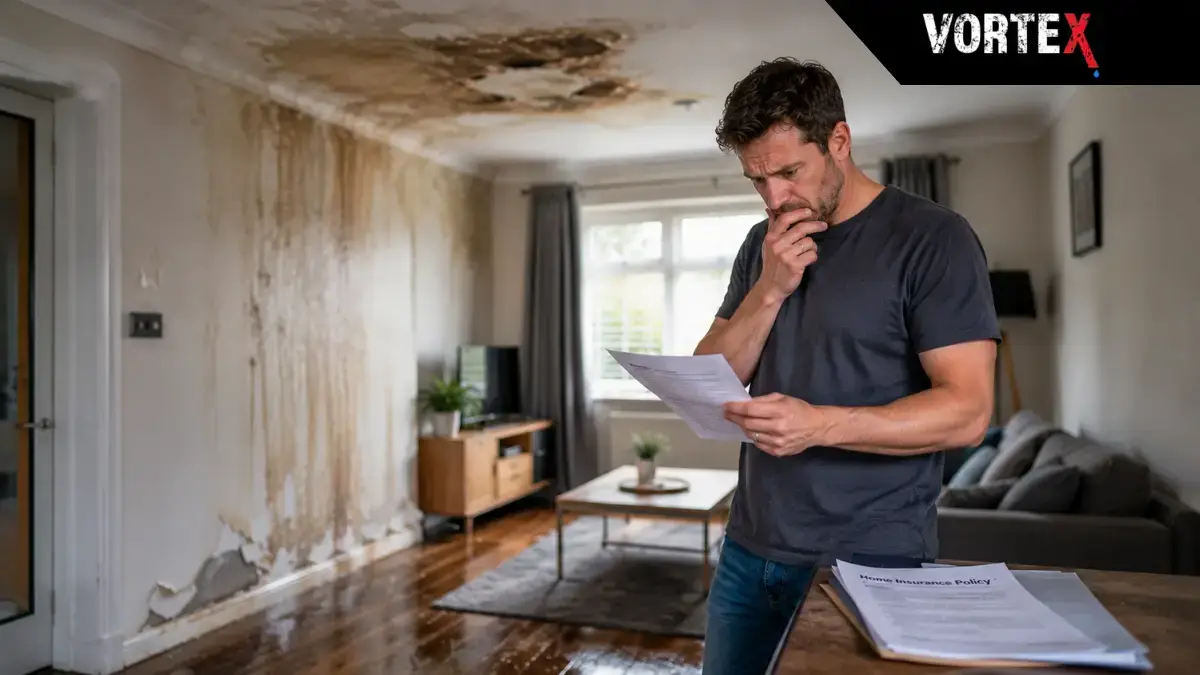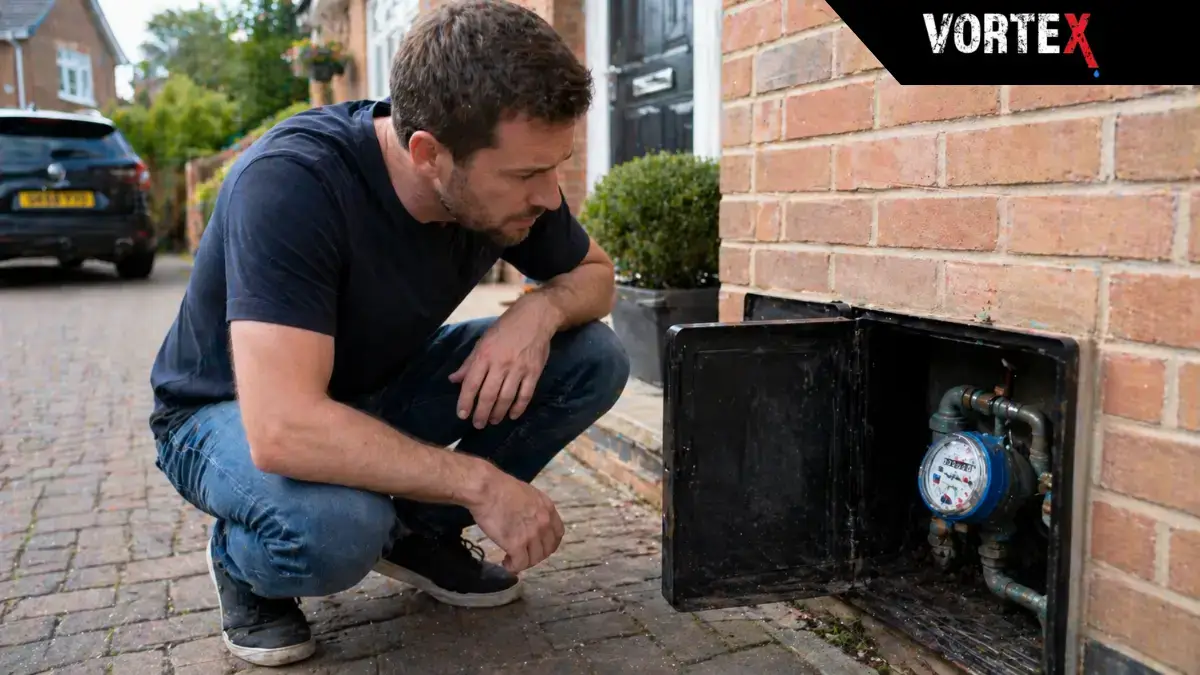

When a homeowner suspects a leak but no visible source can be found, calling a plumber is a natural first response. A plumber is a qualified professional who understands pipework, fittings, and water systems. If there is a leak, surely a plumber should be able to find it.
The difficulty is that this expectation rests on an assumption that does not hold for . Standard plumbing work, including the checks a plumber carries out during an inspection, is designed around pipework that is accessible. A leak in a pipe buried in a concrete floor, enclosed in a wall cavity, or running through a timber joist void is not accessible for visual inspection and cannot be reliably identified through the methods a standard plumbing inspection uses.
This is not a criticism of plumbers. A plumber who cannot find a buried leak is operating at the limit of what their tools and training are designed to do. Understanding why that limit exists is what helps homeowners make the right decision about when a specialist is needed.
Quick Answer Standard plumbing checks rely on visual inspection and accessible pipework. Hidden leaks in buried or enclosed pipes produce no visible surface evidence and cannot be identified by visual means alone. Specialist detection uses thermal imaging, acoustic equipment, and tracer gas to locate leaks that are invisible to conventional inspection.
What a Standard Plumbing Check Actually Involves
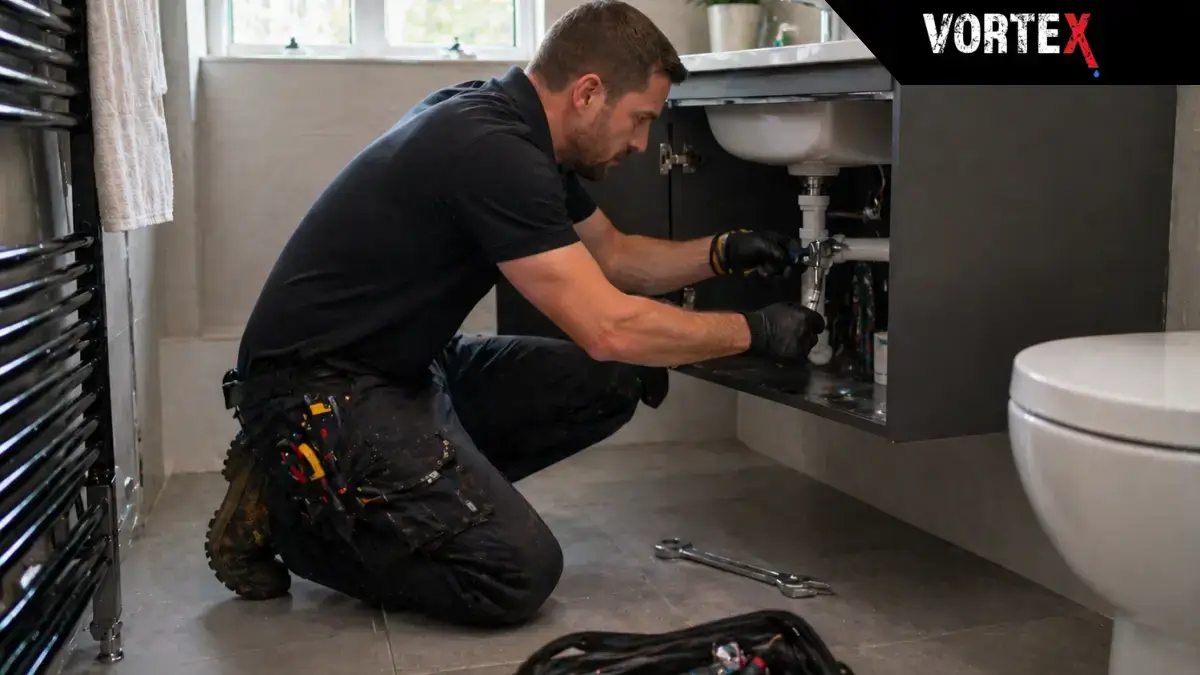
A standard plumbing inspection is a visual and functional assessment of the pipework, fittings, and systems a plumber can see and reach. During an inspection, a plumber will examine exposed pipes under sinks, around radiators, at joints, valves, and fittings, and at the immediately visible components of the boiler. They may carry out a pressure test on part of the system, check for drips, and assess the general condition of what is accessible.
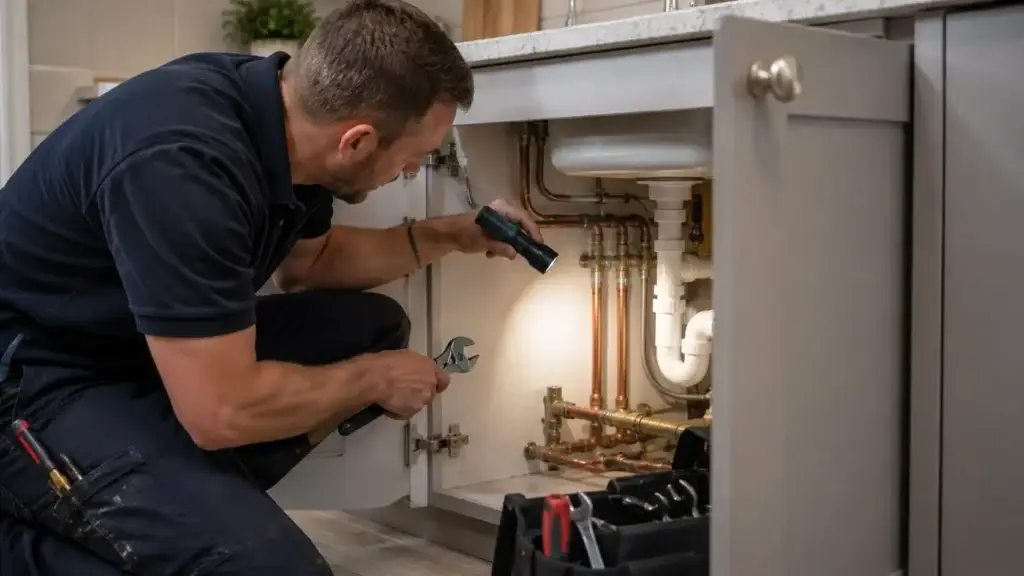
This is a capable and useful assessment for the class of problems it is designed to identify: weeping joints, failing valves, dripping taps, leaking overflow pipes, and other faults in the accessible parts of the plumbing system. For these everyday faults, a plumber is the right call.
What a Standard Check Is Not Designed to Do
A standard plumbing inspection is not designed to investigate pipework that cannot be seen. It has no mechanism to identify a leak in a pipe buried in concrete screed, enclosed in a wall cavity, running beneath a timber floor, or set into the ground outside. A pressure test can confirm that pressure is dropping, but it cannot indicate where in the pipe route the loss is occurring.
This scope limitation is entirely appropriate for most of what a plumber is asked to do. The limitation only becomes a problem when the leak is in a hidden location, which is precisely when homeowners often expect the plumber to be able to help.
Why Hidden Leaks Are Invisible to Visual Inspection
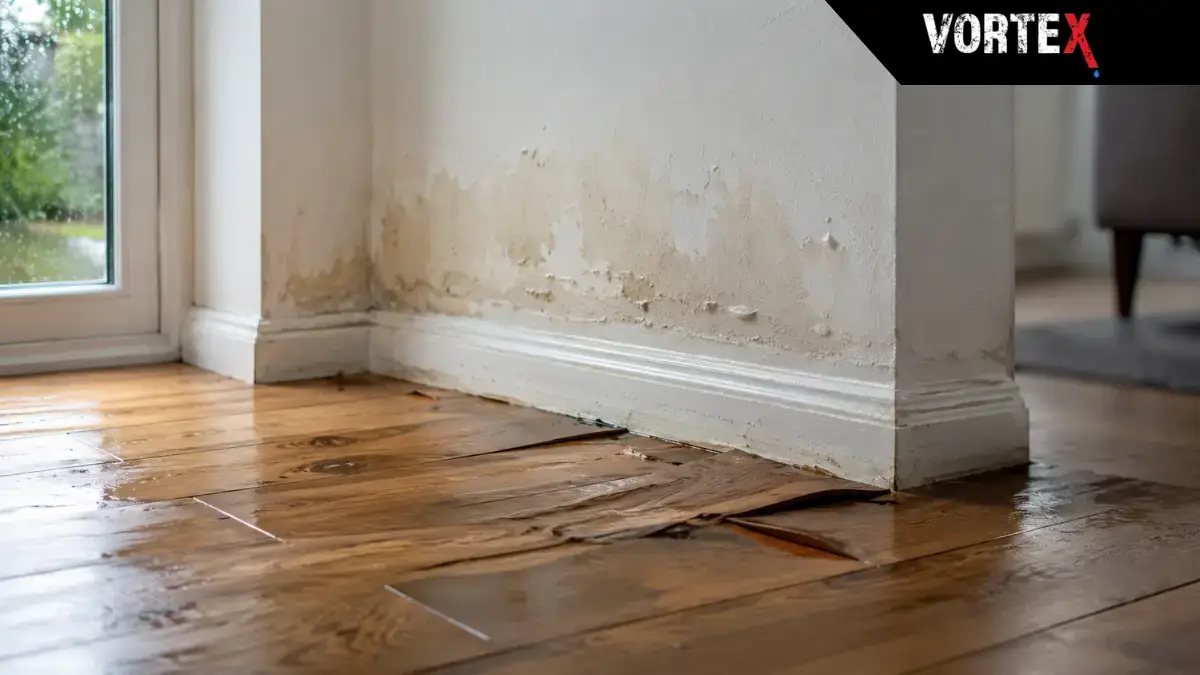
A occurs at a point in the pipework that is not accessible for normal inspection. The water does not travel directly to a visible surface. Instead it saturates the surrounding building material: concrete screed, timber, insulation, or plasterboard. This material absorbs the water, and the surface above often shows no visible sign until saturation has built to a significant level.
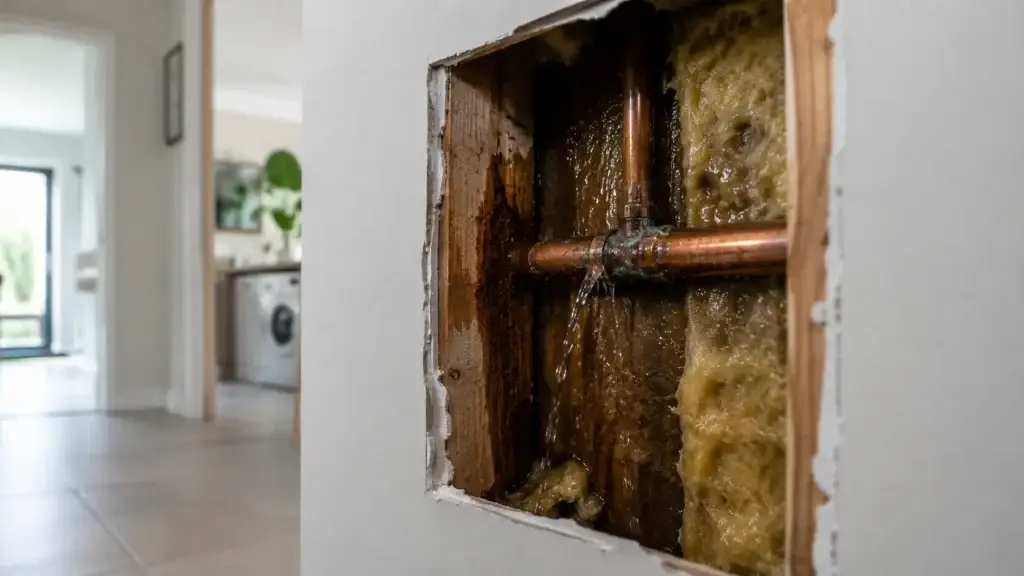
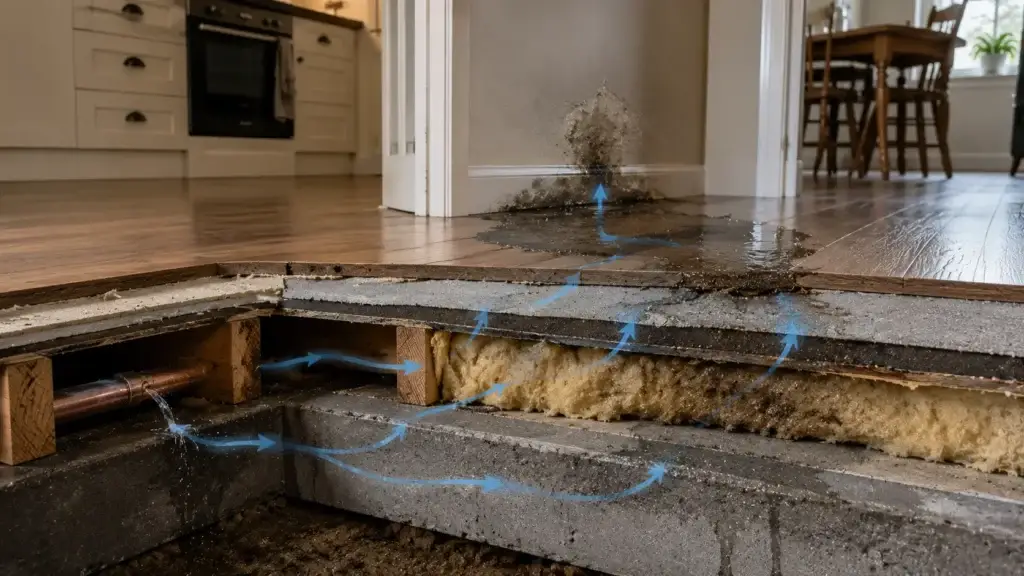
When surface signs do eventually appear, the visible moisture is rarely at the actual leak point. It has migrated through surrounding material, sometimes a considerable distance, before reaching a surface. This displacement between the leak location and the visible symptom is the principal reason visual inspection cannot reliably locate the source.
The Five Reasons Hidden Leaks Are Consistently Missed
Hidden Pipes Are Not Accessible During a Visual Inspection
The most straightforward reason is that the pipe is not visible. A plumber cannot see through a screeded floor, cannot look inside a wall cavity without opening it, and cannot trace a pipe route through the building fabric without detection equipment. If the leak is in concealed pipework, visual inspection will not find it.
Pressure Testing Has Limitations With Slow Leaks
Pressure testing confirms whether a system is losing pressure but does not indicate where. A very slow leak may not produce a dramatic enough drop within a short test period to be clearly detected, even though over hours and days it releases a meaningful volume of water. The test shows that pressure is being lost; it cannot show where.
Water Behaviour in Building Materials Is Not Always Predictable
Water escaping from a leak follows the path of least resistance through the surrounding material rather than flowing directly to the nearest surface. It may travel horizontally along a timber plate, migrate through insulation, or spread outward through screed before becoming visible at a different location entirely. Following a visible symptom to its apparent location is not the same as finding the actual leak origin.
Symptoms Are Often Attributed to Other Causes
The early symptoms of a hidden leak, recurring pressure loss, a gradually rising water bill, a faint damp smell, a slightly soft patch of flooring, each have plausible alternative explanations. Standard diagnostic logic applied to incomplete information from a visual inspection can reach a plausible but incorrect conclusion. This is not negligence but rather the natural result of working without specialist equipment.
The Right Equipment Is Not Part of a Standard Plumbing Kit
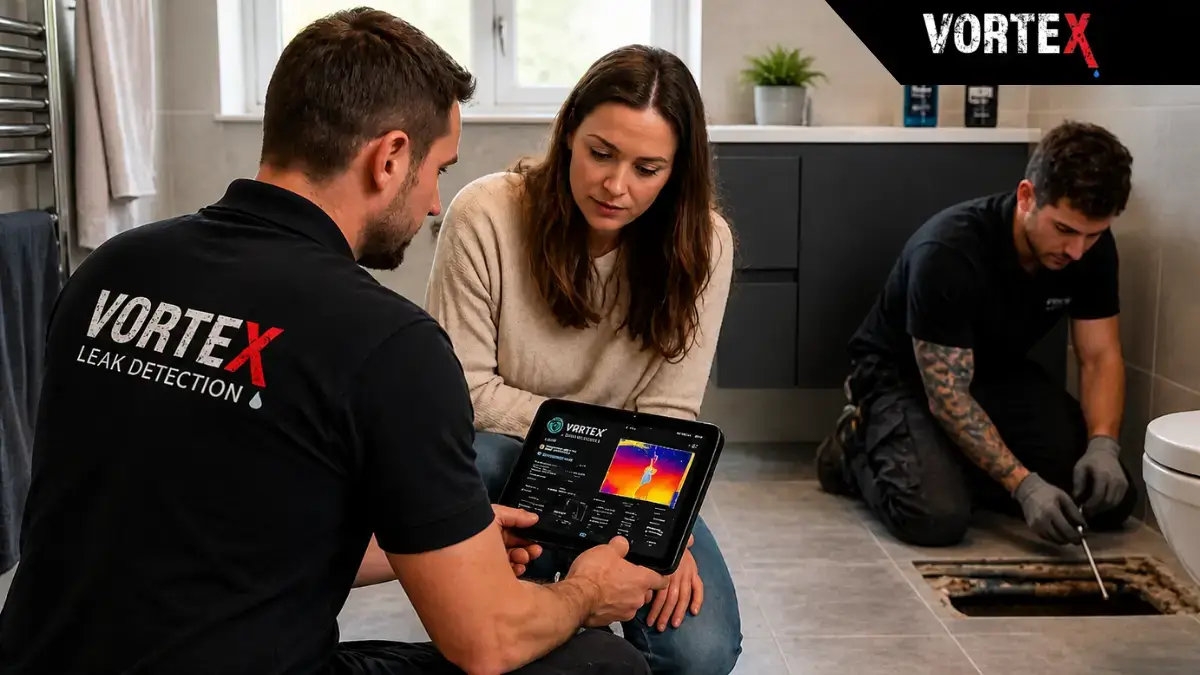
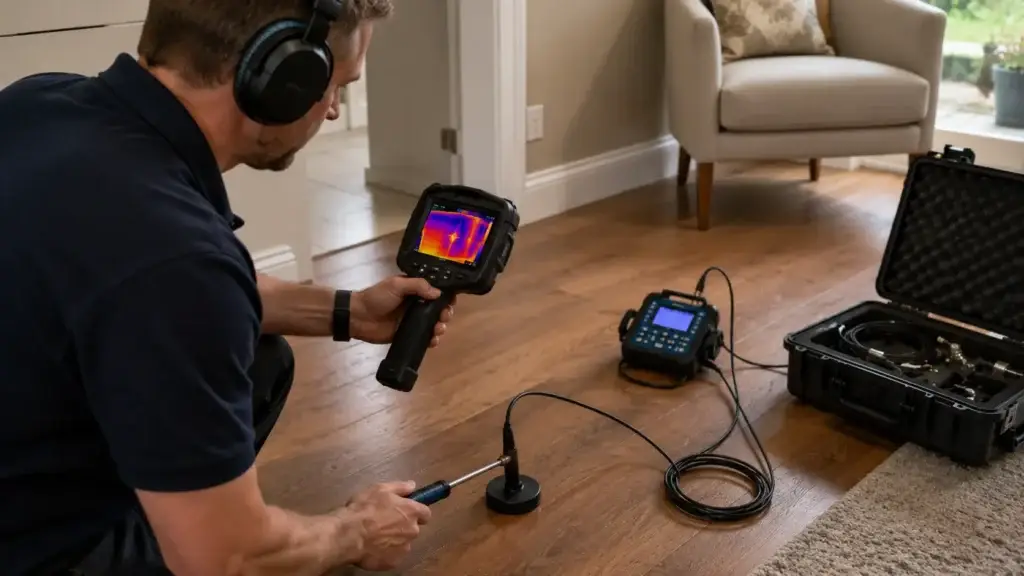
Thermal imaging cameras, acoustic listening devices, tracer gas systems, and sensitive moisture meters are specialist instruments requiring dedicated investment and trained operation. They are not part of a standard plumber’s toolkit, and they should not be expected to be. A specialist finds the leak; a plumber carries out the repair. The two roles are complementary.
| Capability | Standard Plumber | Specialist Leak Detector |
| Visual inspection of accessible pipes | Yes, full capability | Yes, but not the primary focus |
| Identify drips, weeping joints, running taps | Yes | Yes, but refers to plumber for repair |
| Locate leaks in buried or concealed pipes | No | Yes, core capability |
| Thermal imaging of floors and walls | No | Yes |
| Acoustic detection of pressurised leak sounds | No | Yes |
| Tracer gas to confirm exact leak position | No | Yes |
| Written detection report for insurance | No | Yes |
| Repair the confirmed leak location | Yes, core capability | No, refers to plumber |
What Happens When a Hidden Leak Is Missed for Too Long
A hidden leak that is not found continues releasing water into the building fabric for as long as it remains undetected. In the first weeks, structural impact is modest. Over months, concrete screed absorbs a significant volume of water and can soften. Timber elements in contact with saturated material begin to swell and degrade. Insulation becomes permanently waterlogged. Mould establishes itself. Over a year or more, the remediation required after finally locating the leak can be extensive.
The cost differential between finding a hidden leak early and finding it after months of undetected water loss is significant. In some cases it is the difference between a contained repair and a major renovation.
When a Standard Plumbing Check Is the Right Call
A general plumber is the correct first contact when the suspected leak has a visible, accessible, probable source. Dripping radiator valves, joints under sinks, running cisterns, leaking overflow pipes, and visible pipe connections are all appropriate for a plumber to assess and repair. A plumber is also the right contact after a specialist has confirmed and documented the leak location. Once the position is precisely identified, the plumber makes the targeted access and carries out the repair.
When Specialist Leak Detection Is the Right Call
Specialist detection is appropriate when any of the following apply:
- A plumber has already inspected the property without identifying the source
- Boiler pressure is dropping repeatedly with the expansion vessel and PRV confirmed as sound
- The water meter moves overnight with all usage turned off
- Unexplained damp appears at low level on walls or floors with no visible water source above
- A musty smell is present in a room with no obvious surface condensation
- Flooring is soft, spongy, or lifting in a localised area
- The water bill has risen significantly without any change in household usage
- An insurance trace and access claim requires a specialist written report
Call a specialist leak detection service when: A plumber has already checked and found nothing visibleBoiler pressure keeps dropping with no component fault identifiedThe meter moves overnight with all usage turned offDamp appears at low level with no visible source aboveA musty smell is present with no visible moistureFlooring is soft, spongy, or lifting in a localised areaThe water bill has risen unexpectedly without explanationUnderfloor heating or buried pipework is involvedAn insurance trace and access claim requires written specialist documentation
Quick Reference: Signs a Specialist Is Needed Rather Than a Plumber
What to Do Next
If a standard plumbing inspection has not identified the source of a suspected leak, that result does not mean no leak is present. It means the leak is likely in a location that is not accessible through visual inspection, which is exactly the scenario that specialist leak detection is designed to address.
The Vortex Leak Detection team uses thermal imaging, acoustic detection, and tracer gas technology to locate hidden leaks in buried and concealed pipework. If you have a suspected hidden leak that has not been located through standard plumbing inspection, get in touch to arrange a specialist assessment at vortexleakdetection.co.uk/contact-us-vortex/