
A sudden or unexplained rise in water usage is one of the clearest signals that something has changed in the way your property is consuming water. When there is no obvious household explanation for the increase, and when the meter is clearly registering higher consumption than your normal usage would account for, a mains supply pipe leak is one of the first possibilities worth investigating.
Mains supply pipe leaks are both more common and more overlooked than many homeowners expect. Because the pipe runs underground, and because the water it loses is typically absorbed into the surrounding soil before it reaches any visible surface, a mains leak can run continuously for weeks or months before producing any external sign that something is wrong. The meter and the bill are often the only early evidence.
This article explains what a mains supply pipe leak is, why it causes a measurable increase in water usage, what the signs are, how to check whether your supply pipe is the source of the problem, and what a specialist investigation involves.
Quick answer: Yes. A mains supply pipe leak draws water continuously from the supply regardless of whether any taps or appliances are in use, moving the water meter even when everything inside the property is turned off. It is one of the most common causes of a sudden or sustained rise in water usage with no clear household explanation.
What Is a Mains Supply Pipe and Who Is Responsible for It?
A mains supply pipe is the pipe that carries water from the water company’s main in the street into your property. It typically runs underground from the boundary of the property, beneath the front garden, path, or driveway, and enters the building through the floor or a wall close to floor level. Inside the property it connects to the internal stopcock, which is the main shut-off valve for the water supply to the whole building.
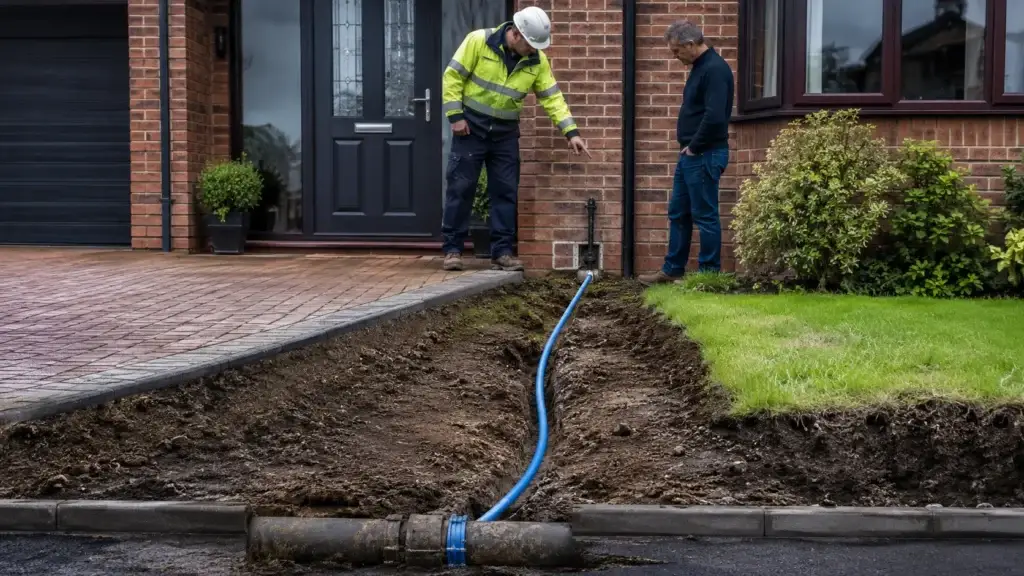
In most UK properties, the water company owns and maintains the water main in the street. The supply pipe that runs from the boundary of the property into the building is typically the homeowner’s responsibility. This section of pipe is sometimes referred to as the communication pipe or service pipe, and any leak occurring within it is generally the homeowner’s responsibility to find and repair.
This distinction matters because it affects who you contact when a leak is suspected and who bears the cost of investigation and repair. Responsibility boundaries can vary between water companies and individual property situations, so it is always worth confirming the position directly with your water company if you are in any doubt.
Can a Mains Pipe Leak Without Any Visible Sign at the Surface?
Yes, and in the majority of cases it does exactly that, particularly in the early stages.
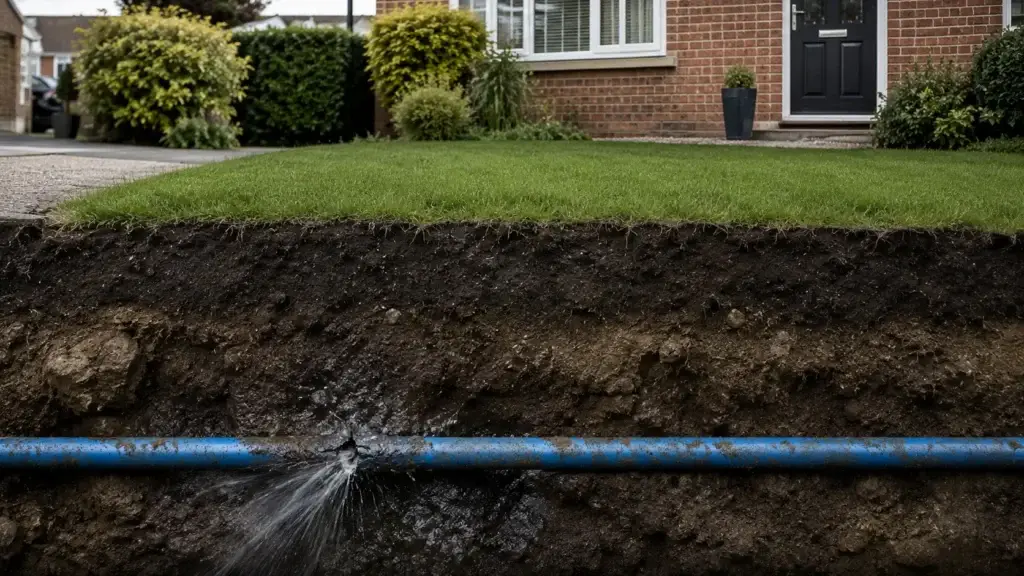
A mains supply pipe typically runs at least 750mm below the ground surface, though depth varies with age and local ground conditions. Water escaping from a buried pipe at that depth has a long distance to travel before it reaches the surface. In most soil types it is absorbed by the surrounding ground well before it gets there. The result is a pipe that is continuously losing water into the earth with no puddle, no wet path, and no visible evidence at ground level.
The absence of any surface sign is the principal reason mains pipe leaks are so frequently missed for prolonged periods. Homeowners who have not noticed a wet patch assume there is no leak. The only reliable early indicator that a mains pipe is losing water is the water meter continuing to register usage when everything inside the property is turned off.
As the leak continues and the surrounding ground becomes increasingly saturated, surface signs may eventually appear. A soft or boggy patch in the lawn, an area of unexpectedly lush green growth in dry weather, a section of path that appears damp despite dry conditions, or a localised area where frost is slow to form in winter can all indicate that water has been escaping underground in that area for some time. By the time these surface signs are visible, the leak has typically been running for weeks or months.
Mains Leak, Internal Plumbing Leak, or High Usage: Key Differences at a Glance
| Sign or Pattern | Mains Supply Pipe Leak | Internal Plumbing Leak | Genuine High Usage |
|---|---|---|---|
| Meter moves overnight with all usage off | Yes | Yes | No |
| Stop tap test shows leak on supply side | Yes | No | No |
| Wet or lush patch in garden above pipe route | Often | Unlikely | No |
| Damp at low level inside the property | Occasionally, near entry point | Common | No |
| Bill increase is sudden rather than gradual | Often | Can be either | Gradual |
| Boiler pressure dropping | No | No | No |
| Visible water source found inside | No | Sometimes | Sometimes |
What Are the Signs of a Mains Supply Pipe Leak?
Recognising the signs of a mains supply pipe leak requires looking across several different areas: the ground outside the property, the water meter, and occasionally the internal areas closest to where the supply pipe enters the building.
Signs in the Garden or External Grounds
A soft, waterlogged, or boggy area in the front garden or along the path or driveway, particularly in a location that sits above the approximate route of the supply pipe, is one of the most common eventual surface signs of a mains leak. The softness reflects the saturation of the surrounding soil over a prolonged period.
In dry weather, a patch of lawn that remains visibly greener and more lush than the surrounding area, without any obvious explanation such as shade or different grass type, can indicate that water has been feeding that area from below. The leaking pipe provides a continuous water source to that section of lawn even when the rest is drying out.
In winter, a localised section of path or driveway where frost or ice forms more slowly than elsewhere, or where snow melts faster, can indicate that warmth from an escaping supply is keeping that area fractionally warmer than its surroundings.
None of these surface signs is definitive on its own. They become significantly more meaningful when they coincide with a rising water bill or a meter that moves overnight.
Signs on the Water Bill and Meter
A water bill that has risen noticeably compared to the same period in the previous year, without any clear change in household occupancy or routine, is one of the most reliable early indicators of a supply pipe leak. The leak draws water continuously from the supply at a rate that accumulates significantly over the 90-day billing period.
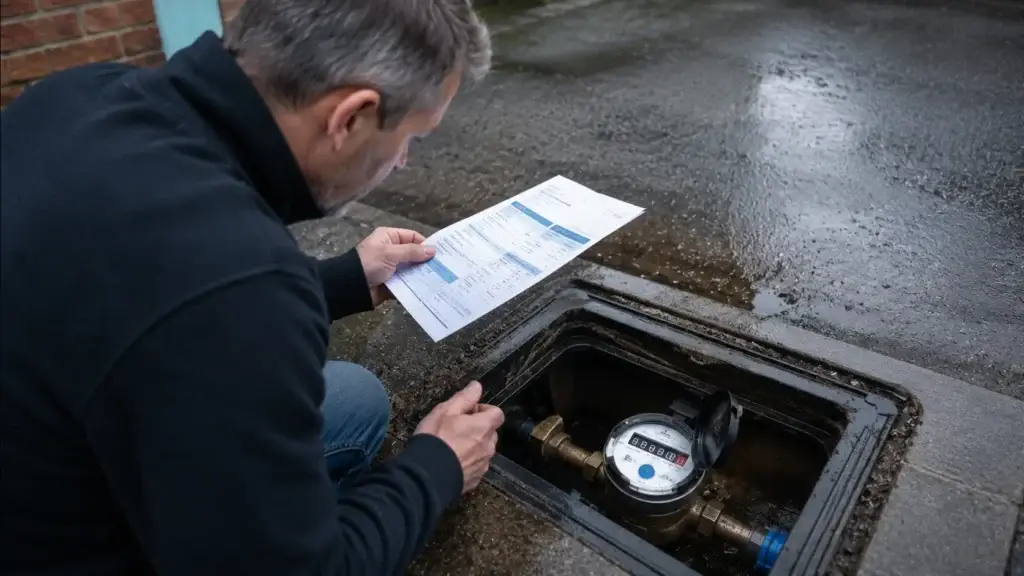
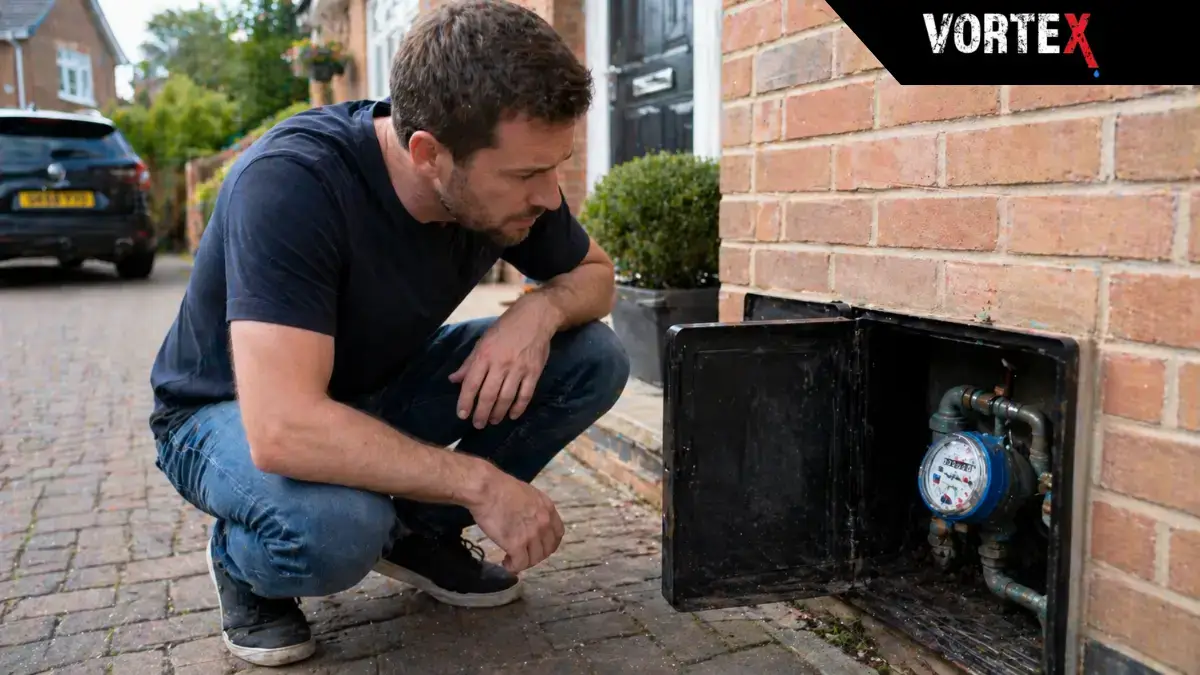
A meter that is visibly moving when all taps, appliances, and garden water are turned off is the most direct evidence available without specialist equipment. If the meter is registering consumption at a time when nothing inside the property is in use, water is leaving the system through a route other than normal usage.
Signs Inside the Property
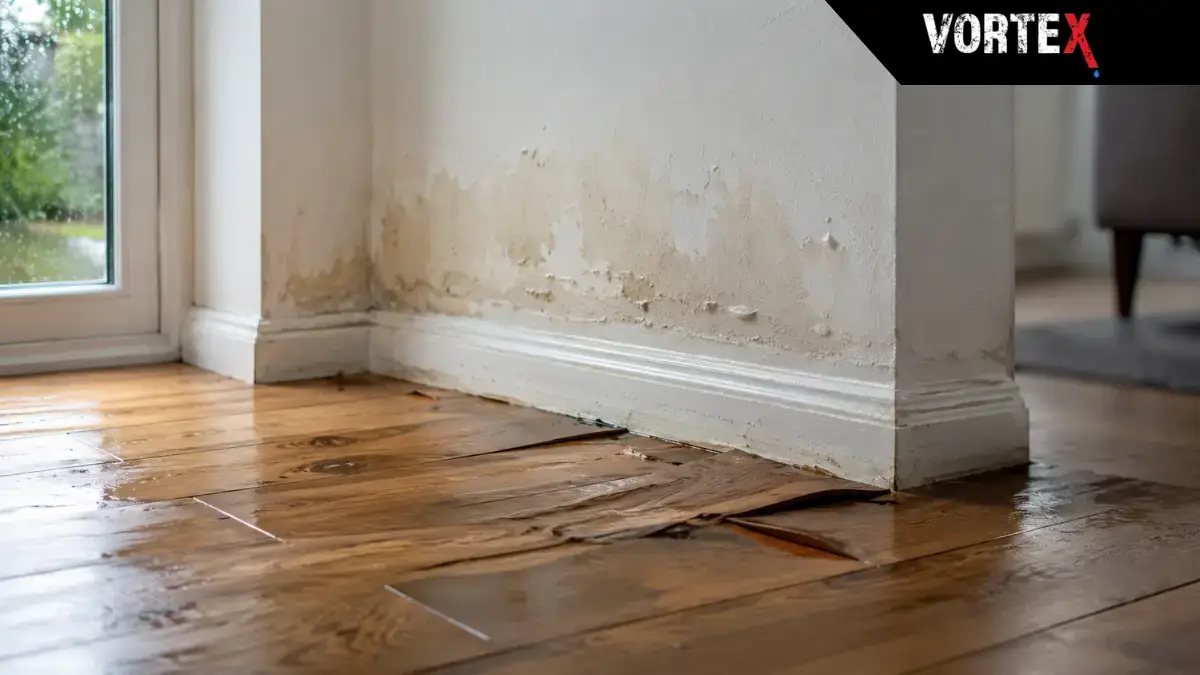
In some cases, a mains supply pipe leak near the point where the pipe enters the property can cause moisture to appear internally, typically at the base of the wall closest to the pipe entry point, or at floor level near the internal stopcock. This is less common than the external signs but does occur, particularly in older properties where the pipe entry was not fully sealed.
A damp patch at low level on an internal wall near the pipe entry, with no other obvious water source, is worth combining with the meter observation. The two signs together point strongly toward the supply pipe as the source.
How Quickly Can a Mains Pipe Leak Affect Your Water Usage?
A mains supply pipe operating at mains pressure releases water at a continuous rate from the moment the pipe fails. Unlike a heating system leak, which loses water slowly into a sealed circuit, a supply pipe leak draws directly and constantly from the main.
The rate of water loss depends on the size of the failure in the pipe, the mains pressure in that area, and the pipe material and age. Even a relatively modest leak in a supply pipe, running continuously through the day and night, accumulates to a significant volume over a week. Over a 90-day billing quarter, the cumulative loss can be substantial enough to cause a bill that is dramatically higher than the previous year’s equivalent period.
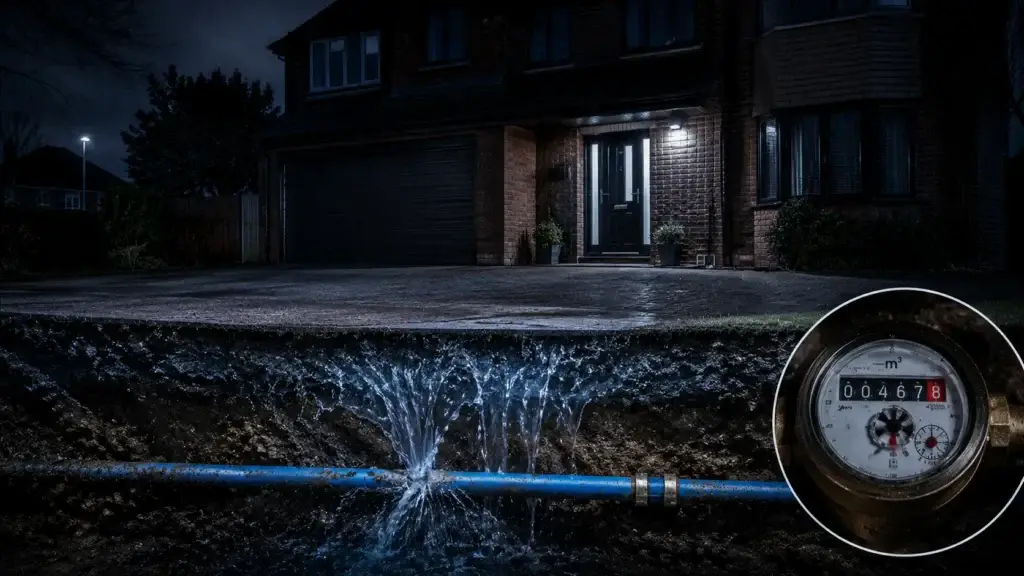
This continuous nature of a supply pipe leak, as opposed to the intermittent or usage-dependent nature of some internal plumbing faults, is why the meter test is so diagnostic. A leak that runs all night while the household is asleep and nothing is in use is exactly the kind of loss that the overnight meter test is designed to detect.
How to Check Whether Your Mains Pipe Is Leaking
Before calling a specialist, two practical checks can help you build a clearer picture of whether the supply pipe is likely to be involved.
The Overnight Meter Test
Locate your water meter, usually in a small chamber in the pavement outside the property or occasionally inside near the stopcock. Before bed, ensure all taps, appliances, dishwashers, and garden irrigation are turned off completely. Note the meter reading precisely, including all digits and decimal places. Take a photograph if that is easier.
In the morning, before any water is used in the property, check the meter again. If the reading has changed, water has left the system overnight while everything inside was off. The overnight meter test cannot tell you where the leak is, but it confirms that one is present.
The Stop Tap Test
If the overnight meter test shows movement, the stop tap test can help narrow down whether the leak is on the supply side of the stopcock, which points toward the mains pipe, or on the internal plumbing side.
Turn off the internal stopcock fully. Check the meter again. If the meter stops moving after the stopcock is closed, the leak is on the internal plumbing side of the stopcock rather than the supply pipe. If the meter continues to move even with the stopcock closed, the leak is between the street main and the stopcock, which is the supply pipe itself.
What the Results Tell You
A meter that moves overnight and continues to move with the stopcock closed is a strong indicator of a mains supply pipe leak. This result alone is sufficient to justify arranging a specialist investigation rather than waiting for further evidence to accumulate.
A meter that moves overnight but stops when the stopcock is closed points toward an internal plumbing leak rather than a supply pipe leak. In that case, the investigation focuses on the internal pipework.
Why Mains Pipe Leaks Are So Easy to Dismiss and So Costly to Ignore
Two patterns explain why mains pipe leaks so often go unaddressed for longer than they should.
The first is the absence of visible evidence. Without a wet patch in the garden or any internal sign, there is nothing to point to when describing the problem. The only evidence is a higher bill or a moving meter, both of which have alternative explanations that feel more comfortable than a buried pipe failure.
The second is the discomfort of what addressing the problem is assumed to involve. Many homeowners assume that finding and fixing a buried pipe means excavating the entire front garden or driveway. This assumption leads to delay. In reality, specialist detection equipment locates the exact leak position before any excavation begins, meaning the access work is typically a targeted opening at a specific confirmed point rather than a wide speculative dig.
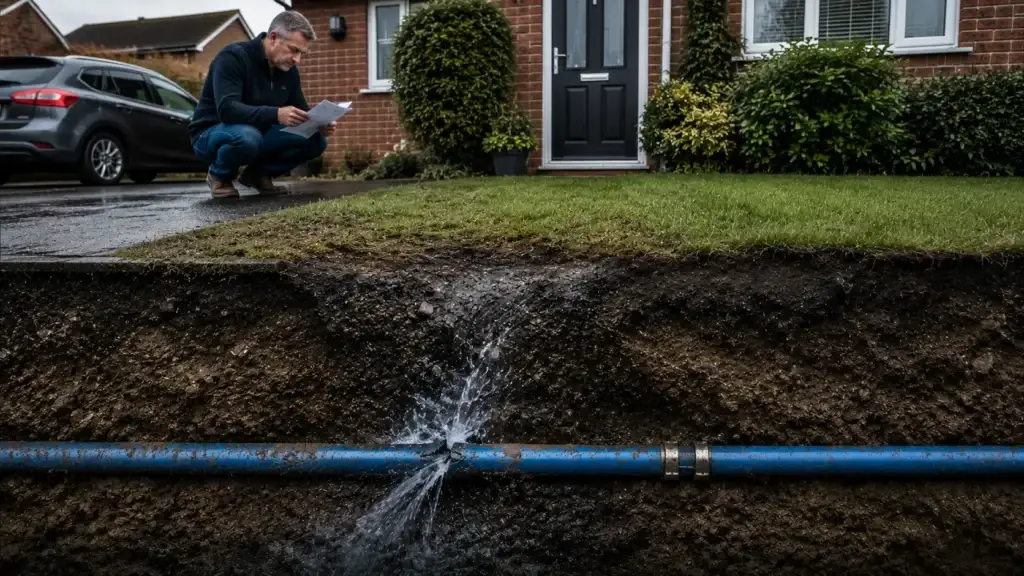
The cost of that delay is significant. A mains pipe leak that continues for an additional three months adds to the water bill, adds to the ground saturation around the pipe, and in some cases begins to affect the surrounding ground conditions in ways that have structural implications. Every week the leak continues is a week of water charges for water that provided no benefit to the household.
What Causes a Mains Supply Pipe to Fail?
Understanding why supply pipes fail can help contextualise the risk, particularly for older properties.
Age and Pipe Material
Properties built before the 1970s often have supply pipes in lead or early copper. Lead pipes degrade over time and can develop pinhole leaks or larger failures as the material ages. Early copper pipework is susceptible to pitting corrosion, which produces small perforations in the pipe wall over many years.
Properties built from the late 1970s onward increasingly used blue MDPE plastic piping, which is more resistant to corrosion but can be affected by ground movement, mechanical damage during subsequent groundwork, and joint failure particularly at fittings.
Ground Movement
Ground movement caused by seasonal shrinkage and swelling of clay soils, nearby tree root activity, or subsidence can stress buried pipework and cause joints to fail or pipes to crack. Properties on clay-rich soils in areas with significant seasonal temperature variation, or those with large trees near the supply pipe route, carry a higher risk of ground-movement-related pipe failure.
Corrosion and External Damage
Older metallic pipes buried in certain soil types are subject to external corrosion from the surrounding ground chemistry. Aggressive soils with high acidity or high chloride content can corrode a pipe externally even when the pipe material is otherwise sound. External damage from subsequent digging activity, such as garden landscaping, new drainage work, or utility installation, is also a common cause of supply pipe failure in otherwise healthy pipework.
Is the Leak the Water Company’s Problem or Yours?
This is one of the most common questions homeowners ask when a mains supply pipe leak is suspected, and the answer depends on exactly where the leak is located.
The water company is responsible for the water main running in the street. If the leak is in the main itself rather than in the supply pipe serving your property, the water company is responsible for finding and fixing it. You can report a suspected main leak to your water company and they will investigate at no cost to you.
The supply pipe that runs from the boundary of your property into the building is typically your responsibility as the property owner. A leak in this section is yours to identify and repair, and the cost falls to you unless your home insurance policy includes relevant cover.
The boundary between water company responsibility and homeowner responsibility varies slightly between different water companies and different property types. If you are uncertain which side of the boundary the suspected leak falls on, contacting your water company to discuss the situation is the sensible first step. They can often advise on the approximate pipe route and the ownership boundary for your property.
Quick Diagnostic Checklist: Could It Be a Mains Supply Pipe Leak?
A mains supply pipe leak is likely if:
- The overnight meter test shows movement with all taps and appliances turned off
- The stop tap test shows the meter continues to move even after the internal stopcock is closed
- The water bill has risen noticeably compared to the same period last year with no change in household routine
- There is a soft, boggy, or unusually lush patch in the ground above the approximate supply pipe route
- The property is more than 40 years old and has not had the supply pipe inspected or replaced
- There is unexplained damp at low level on the internal wall closest to where the supply pipe enters the property
A mains supply pipe leak is less likely if:
- The meter stops moving when the internal stopcock is closed
- The water bill increase correlates with a clear change in household usage
- No ground saturation or surface signs are present in the likely pipe route area
- A leaking cistern, dripping tap, or other internal fault has been identified and confirmed
How Specialists Locate a Buried Mains Pipe Leak
When the overnight and stop tap tests confirm a likely supply pipe leak, specialist detection identifies exactly where in the buried pipe the failure has occurred. This precision is what makes the repair targeted rather than speculative.
Acoustic detection is the primary method for buried supply pipes. Specialist listening equipment is placed at intervals along the surface above the pipe route: on the path, the driveway, or the pavement. The equipment detects and amplifies the sound of pressurised water escaping from the pipe through the surrounding soil. By comparing the signal strength at different points, the specialist narrows the leak to a specific section and then to a precise location.
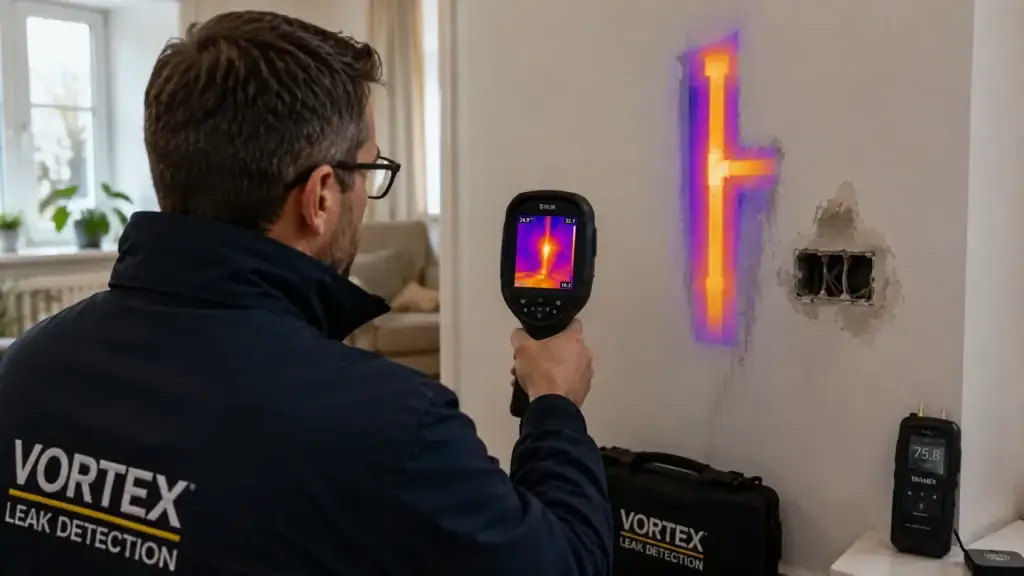
Tracer gas provides final confirmation. A safe, non-toxic gas mixture is introduced into the supply pipe. The gas escapes at the leak point and rises through the soil to the surface, where it is detected using a sensitive probe. The exact surface position of the gas emergence corresponds to the leak location in the pipe below.
The confirmed location from these methods allows the repair plumber to make a targeted excavation at the precise point rather than digging along the full pipe route. In most cases this means a single access point of manageable size rather than a wide-scale excavation of the garden or driveway.
You can read more about the specialist detection methods used by Vortex Leak Detection on the technology page.
What to Do Next
A mains supply pipe leak does not resolve itself. The water loss continues for as long as the pipe is leaking, the meter continues to run, and in many cases the surrounding ground becomes progressively more saturated over time.
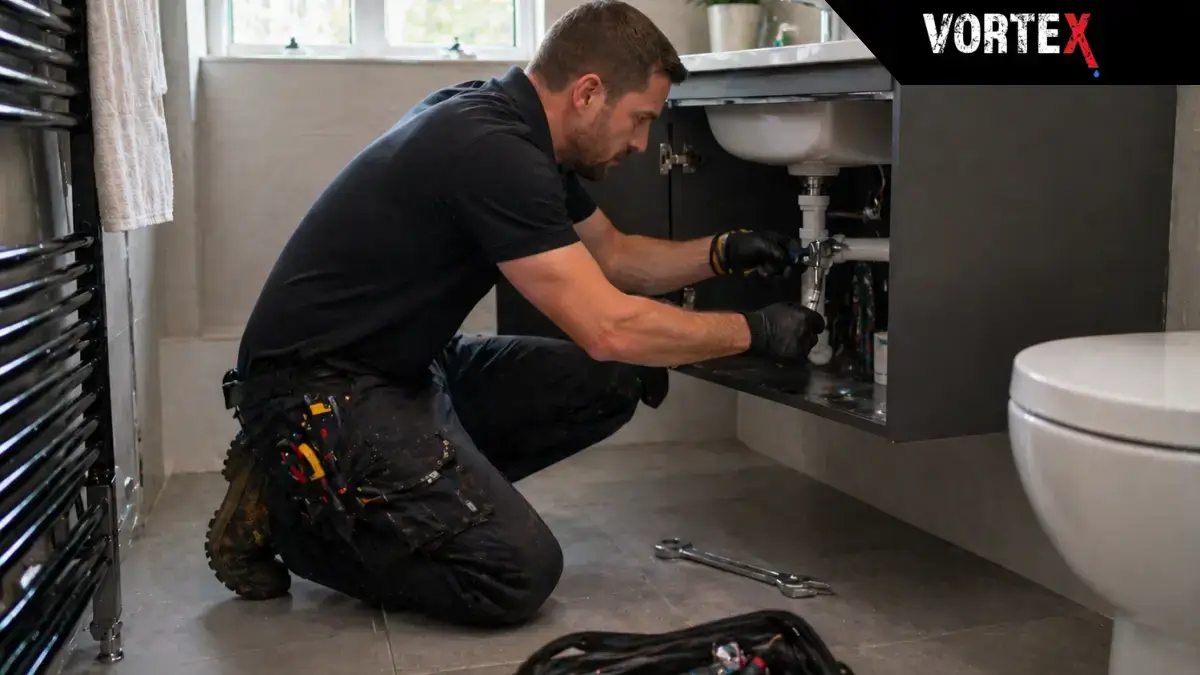
If the overnight meter test has confirmed water movement overnight, or if the stop tap test has pointed toward the supply side of the stopcock, the appropriate next step is a specialist leak detection investigation. The investigation confirms whether a supply pipe leak is present, identifies its precise location, and produces the information a plumber needs to make a targeted repair.
Leaving a confirmed or probable supply pipe leak unaddressed to avoid the cost or disruption of investigation results in a situation that costs more to resolve as time passes. The water charges alone over an additional quarter can exceed the cost of the specialist investigation and repair combined.
If you have carried out the meter and stop tap tests and the results suggest a supply pipe leak, get in touch with the Vortex Leak Detection team to discuss what you have found and arrange a specialist assessment. You can also find out more about the leak detection services Vortex provides for incoming mains and supply pipe investigations.