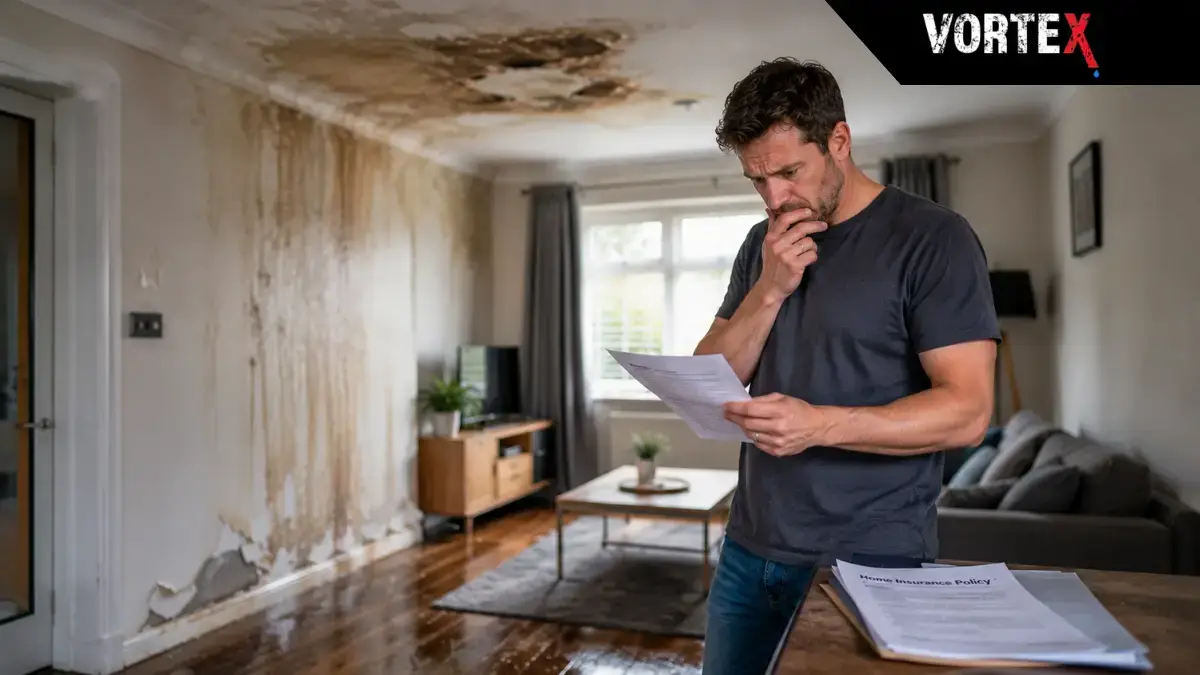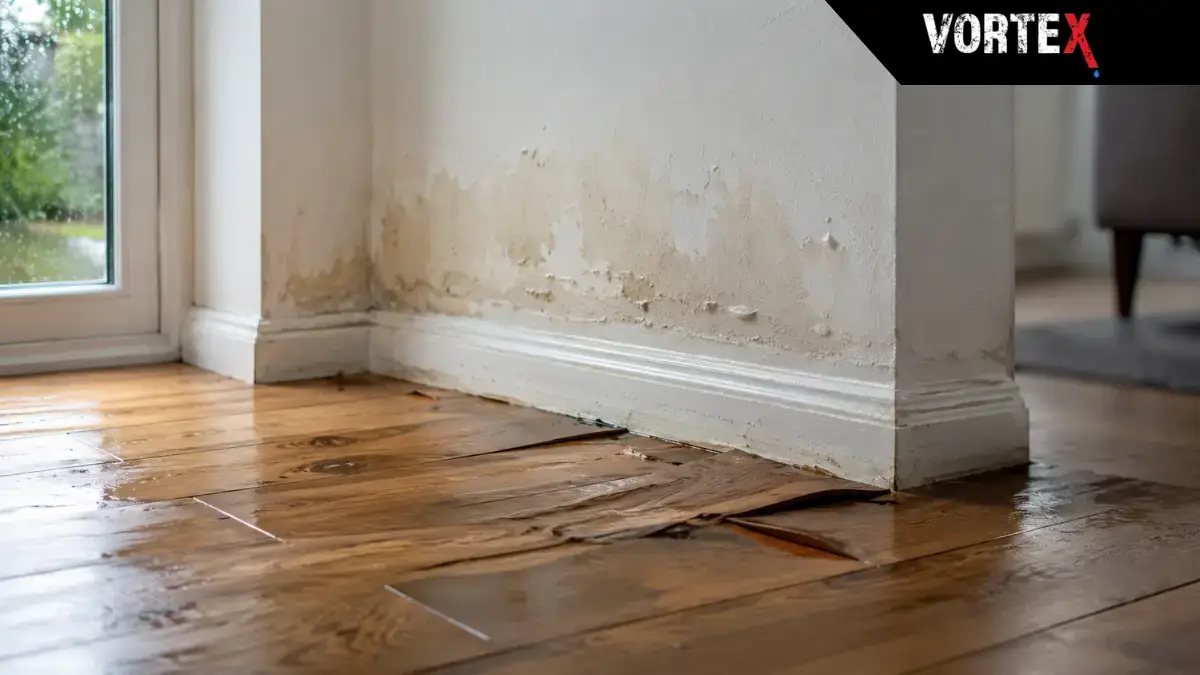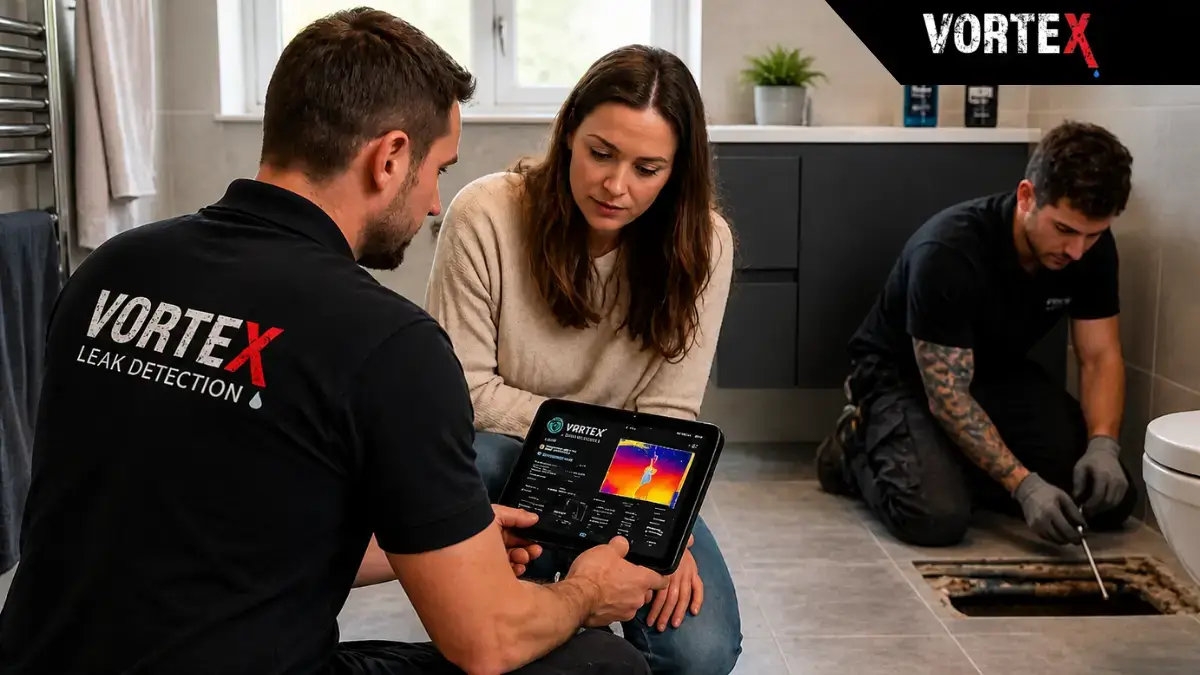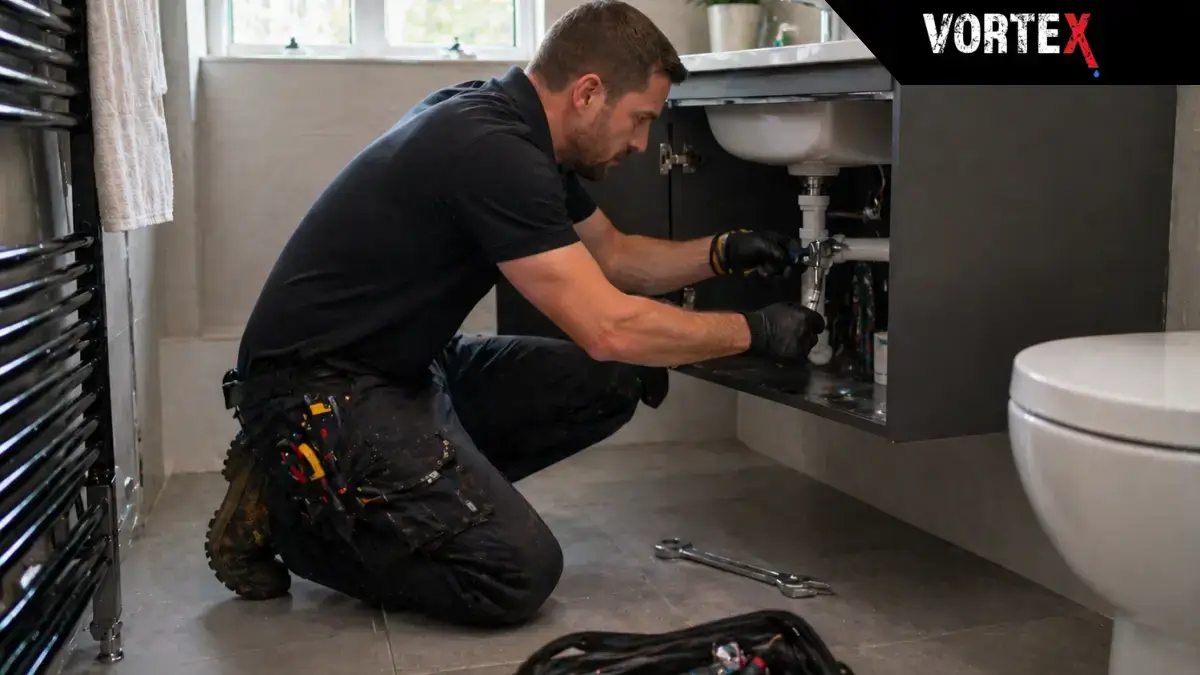

If you have discovered a hidden water leak in your property and contacted your insurer, there is a good chance you have encountered the phrase ‘trace and access’ in the conversation or in your policy documents. For many homeowners, this is the first time they have seen these words and the meaning is not immediately obvious. Understanding what trace and access cover actually includes, and what it does not, is essential before you proceed with either an insurance claim or a specialist investigation.
This article explains the term clearly, sets out what trace and access cover typically pays for and what it does not, explains how the claims process generally works, and helps you understand what a specialist leak detection report contains and why it matters to your insurer. It is written as general educational guidance. Policy terms vary between insurers, and the specifics of your own situation should always be confirmed directly with your insurer or an insurance professional.
Quick Answer Trace and access is a type of insurance cover that pays for the cost of locating a hidden water leak and gaining physical access to it so it can be repaired. It typically covers the specialist detection survey and the cost of opening up a floor or wall to reach the leak. It does not usually cover the repair of the pipe itself. Policy terms vary significantly between insurers.
Important: This article is for general educational information only. Insurance policy wording varies between providers and individual policies. What one insurer covers under trace and access, another may exclude. Always read your own policy documents carefully and speak directly to your insurer or an insurance professional to confirm what your specific policy includes before proceeding with any claim or survey.
What Is Trace and Access Cover?
Trace and access is a defined type of insurance cover that addresses a specific problem: hidden water leaks. The name describes the two stages of what the cover is designed to fund.
Trace refers to the process of finding the leak: identifying its location within the building when it is not visible at the surface. Access refers to the physical work required to reach the leak once it has been located, typically by breaking into the floor, wall, or other surface above the pipe.
Together, trace and access cover pays for the cost of finding out where the leak is and getting to it so a repair can be made. It is not, in most standard policies, the same as cover for the repair itself or for the damage the leak has caused to the surrounding property.
The distinction between finding and accessing a leak on one hand, and repairing the pipe and reinstating the surfaces on the other, is the most important thing to understand when reading a trace and access clause. These are different costs, and they are covered differently.
Trace and Access vs Buildings Cover: What Each One Actually Pays For
The table below sets out how trace and access cover and buildings or repair cover differ in what they typically apply to. These are general principles. Your own policy may differ in its specific inclusions, exclusions, and limits.
| Aspect | Trace and Access Cover | Buildings / Repair Cover |
| What it typically covers | The cost of the specialist investigation to find the leak, and the physical work to access the pipe for repair | The cost of repairing the damaged pipe and reinstating the surface above it after the repair is complete |
| Detection survey cost | Usually included, subject to policy terms | Not usually covered under trace and access alone |
| Breaking floors or walls to access the pipe | Usually included, subject to policy excess and limits | Not covered under trace and access; a separate buildings damage section may apply |
| The pipe repair itself | Not typically included in trace and access; check policy wording carefully | Covered under buildings or plumbing cover if included in the policy |
| Reinstatement of surfaces after repair | Varies significantly by policy. Some include, some do not | May be covered under separate buildings damage section |
| Consequential property damage from the leak | Not covered under trace and access | May be covered under buildings or contents sections depending on policy |
| Is a specialist report required? | Usually yes. The insurer typically requires documentation of the detection method and confirmed location | Usually required as evidence before repair costs are approved |
Read your own policy carefully. The table above reflects common patterns in trace and access policies. Individual policies vary significantly. Some include reinstatement of surfaces. Some include the detection survey cost explicitly. Some have low limits that may not cover the full cost of a complex investigation. Do not assume your policy matches any general description. Check the specific wording in your own documents.
What Does the Trace Part of Trace and Access Mean?
The trace element of the cover refers to the specialist investigation that locates the hidden leak. A hidden leak, by definition, is not visible at the surface. The pipe may be buried beneath a screeded floor, enclosed in a wall cavity, running through a ceiling void, or buried in the ground outside the property. Finding the leak requires specialist detection equipment and trained expertise rather than simple visual inspection.
The Role of Specialist Detection Equipment
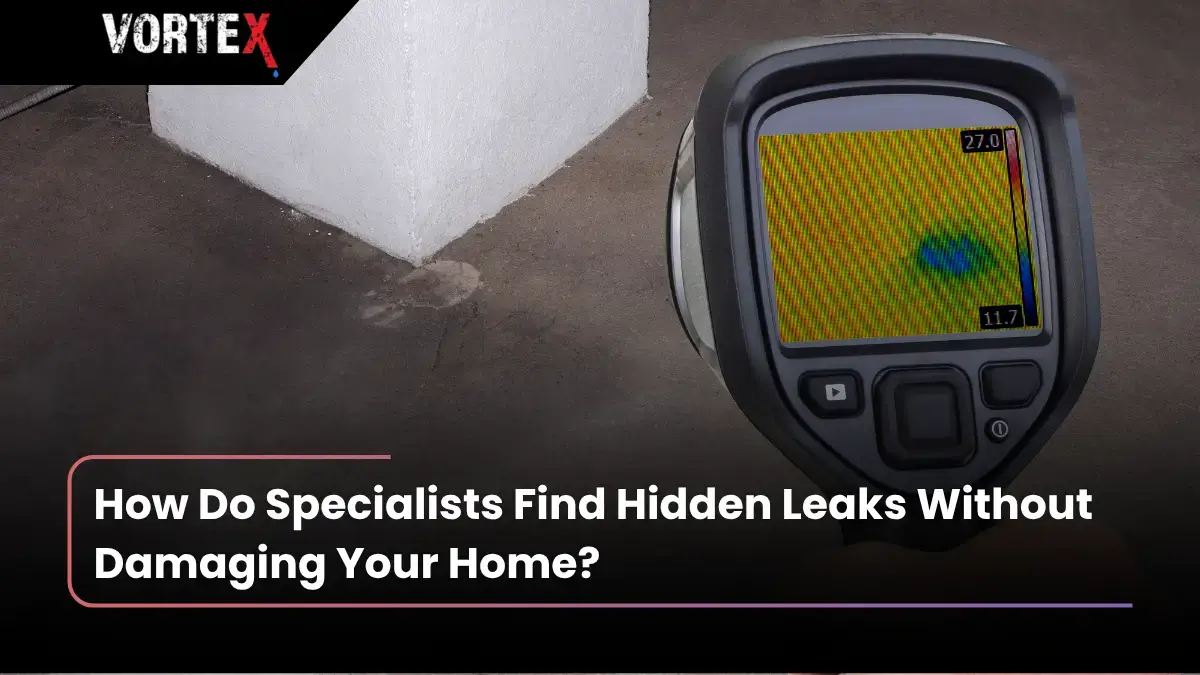
The methods a specialist uses to trace a hidden leak typically include thermal imaging cameras, acoustic listening equipment, and tracer gas technology. These tools allow the specialist to identify the location of the leak without any physical disruption to the building fabric during the detection phase.
Thermal imaging detects heat differences in floors and walls caused by escaping warm water. Acoustic equipment listens through building structure for the sound of pressurised water escaping from a pipe. Tracer gas is introduced into the pipe and detected at the surface where it escapes at the leak point. Together, these methods allow the specialist to confirm the leak location with precision before any access work begins.
The cost of this specialist detection process is what the trace element of trace and access cover is primarily designed to fund. It is a distinct, professional service that requires specialist equipment and trained personnel, and its cost reflects that.
What the Specialist Is Looking For
The specialist is not simply confirming that a leak exists. They are identifying the precise location of the leak within the building so that targeted access can be made at the correct point. This precision matters because it is what makes access work targeted rather than speculative: the floor or wall is opened at the confirmed leak location rather than across a wide area in the hope of finding the pipe.
The trace process produces a confirmed leak location along with documentation of the evidence used to identify it. This documentation is typically what the insurer requires in order to assess and approve the trace and access claim.
What Does the Access Part of Trace and Access Mean?
The access element of the cover refers to the physical work required to reach the leak once it has been confirmed by the specialist. This typically involves breaking into the floor surface, cutting into a wall, removing tiles, or excavating ground to expose the pipe at the confirmed leak location.
Access work is carried out by a plumber or building contractor rather than the leak detection specialist. The detection specialist identifies precisely where the pipe needs to be accessed. The plumber then makes the opening at that location and carries out the repair.
The cost of making this access opening, which can involve cutting through concrete screed, ceramic tiles, timber flooring, plasterboard, or other building materials depending on where the pipe runs, is what the access element of the cover is designed to fund.
The size and cost of the access work is directly related to the precision of the trace: a highly accurate detection result means a smaller and more targeted access opening, which reduces both the disruption to the property and the cost of reinstating the surface afterwards.
What Trace and Access Typically Does Not Cover
Understanding the limits of trace and access cover is as important as understanding what it includes. Several costs that a homeowner might reasonably expect to be covered are commonly excluded from the trace and access clause specifically, even if they may be covered elsewhere in the policy.
Costs typically NOT covered under trace and access: The repair of the damaged pipe itself (this is usually under buildings or plumbing cover)Reinstating the floor or wall surface after access has been made (varies widely by policy)Damage to other parts of the property caused by the leak, such as damp walls or ruined flooring (may be under buildings or contents cover)Damage to belongings or fixtures affected by the leak (contents cover applies)The cost of drying out the affected area after the leak is repaired (separate drying services)Any leak that was already known about or reported and not acted upon (pre-existing conditions)Leaks in pipes that are the responsibility of the water company rather than the homeownerGradual damage that occurred over a long period without being reported promptly.
This does not mean these costs are unrecoverable. Many of them may be covered under other sections of the same policy, such as the buildings damage section, the escape of water section, or the accidental damage section. The key point is that trace and access is a specific, defined clause with specific, defined scope. It is not a catch-all cover for all costs arising from a hidden leak.
Why Policy Wording Varies and Why That Matters
One of the most important practical points about trace and access cover is that the wording and scope vary significantly between insurance policies. What one insurer includes in their trace and access clause, another may exclude entirely or cover only partially.
Common Variations in Trace and Access Policies
Some policies include a reinstatement element that covers the cost of making good the floor or wall surface after access has been made. Others do not include reinstatement at all, leaving the homeowner to fund it privately or claim under a different policy section.
Some policies have relatively low financial limits for the trace and access element, which may not cover the full cost of a complex detection survey in a larger property or in a situation where the pipe is buried deeply or in a difficult location.
Some policies specify that the specialist must be approved by or notified to the insurer before the work begins. Arranging a specialist investigation before notifying the insurer could in those cases affect the validity of the claim.
Some policies require that the leak is sudden and unforeseen rather than gradual and ongoing. A leak that has clearly been present for a long time without being reported may be treated differently from one that is newly discovered.
What to Check in Your Own Policy
Before contacting a specialist or proceeding with any investigation, reading the trace and access section of your own policy carefully is always the right first step. Look for the following:
- Whether the detection survey cost is explicitly covered or whether only the physical access work is funded
- Whether reinstatement of the surface is included
- What the financial limit for trace and access is
- Whether you need to notify or obtain approval from your insurer before commissioning a specialist
- Whether there are any exclusions relating to the type of pipe, the age of the property, or the duration of the leak
- What evidence the insurer requires in order to assess and approve the claim
If any of these points are unclear from reading the policy wording, contacting the insurer directly for written clarification before proceeding is always the sensible course.
What a Specialist Leak Detection Report Includes
In most trace and access claims, the insurer will require a written report from the specialist who carried out the detection survey. This report is the primary evidence supporting the claim and forms the basis on which the insurer assesses and approves the trace and access costs.
What Insurers Typically Require in the Report
While requirements vary between insurers, a specialist leak detection report for insurance purposes typically includes:
- The date and address of the survey
- A description of the symptoms reported and the initial assessment carried out by the specialist
- The detection methods used during the investigation
- The evidence found by each method and how it contributed to identifying the leak location
- The confirmed location of the leak, including its position relative to identifiable reference points in the property
- Recommendations for access and repair
- Photographs or supporting data from the detection equipment where available
The quality and completeness of this report directly affects how smoothly the insurance claim is processed. A well-documented report that clearly explains the detection process and the confirmed findings gives the insurer what it needs to approve the claim promptly. A vague or incomplete report may slow the process or result in requests for additional evidence.
Vortex Leak Detection provides comprehensive written reports following every detection survey. If you are making an insurance claim, let the team know when you book the investigation so that the report can be prepared to the standard your insurer is likely to require.
What Happens After the Trace and Access Claim Is Approved?
Once the insurer has reviewed the specialist’s report and approved the trace and access claim, the next steps typically involve the physical access work and the pipe repair.
A qualified plumber will make the access opening at the location confirmed by the specialist’s detection survey. Because the location has been identified precisely, the opening can be made with confidence that the pipe will be found at that point. The plumber carries out the repair, and the access opening is then ready for reinstatement.
Reinstatement of the surface, whether concrete, screed, tiles, timber flooring, plasterboard, or another material, is either covered by the trace and access clause, covered by another section of the policy, or funded privately by the homeowner depending on the specific policy terms.
The affected area will typically require a drying period before final reinstatement can take place. The length of this period depends on how long the leak was present and how much moisture the surrounding material absorbed. In more significant cases, a specialist drying survey may be recommended to confirm when the material is sufficiently dry.
If the leak has caused damage to other parts of the property, walls, ceilings, floor coverings, or contents, those losses will be assessed and claimed under the relevant sections of the policy separately from the trace and access element.
Do You Need a Specialist Report Before Making a Claim?
The answer to this question depends on your insurer’s specific requirements, but in most cases the specialist report is either required upfront or is required as part of the claim assessment process.
Some insurers ask the homeowner to arrange a specialist detection survey first and then submit the report as evidence when making the claim. Others prefer to be notified before any survey is commissioned. Some have preferred supplier arrangements and will want to direct the work to their own approved specialists.
The safest approach in most situations is to notify the insurer as soon as a hidden leak is suspected, before commissioning any survey work. Ask them directly whether you can choose your own specialist, what report format they require, and whether they need to authorise the survey in advance. Getting these answers upfront prevents complications with the claim later.
If you are unsure whether to notify your insurer first: Contact your insurer or broker before commissioning a detection survey if you intend to make a trace and access claim. Ask specifically: 1. Can I choose my own leak detection specialist? 2. Do I need prior authorisation before the survey is carried out? 3. What format does the detection report need to be in? 4. What financial limits apply to my trace and access cover? Having these answers in writing protects your claim.
What to Do If Your Policy Includes Trace and Access Cover
If your home insurance policy includes trace and access cover and you have discovered or suspect a hidden leak, the process is broadly as follows.
- Read your policy wording carefully to understand what your trace and access clause includes, what limits apply, and whether you need prior insurer authorisation.
- Contact your insurer to notify them of the suspected leak and confirm the claims process they require you to follow.
- Arrange a specialist leak detection survey with a reputable specialist who can provide a comprehensive written report following the investigation.
- Submit the specialist’s report to your insurer as evidence supporting the trace and access claim.
- Once the claim is approved, instruct a qualified plumber to make the access and carry out the repair at the confirmed location.
- Arrange reinstatement of the surface under whichever coverage applies, or privately if reinstatement is not covered.
- Allow the affected area to dry fully before final reinstatement, particularly if the leak was present for a significant period.
What to Do If Your Policy Does Not Include Trace and Access Cover
If your home insurance policy does not include trace and access cover, the cost of the specialist detection survey and the access work will need to be met privately. This is more common than many homeowners expect, particularly in older or more basic policy types.
The absence of trace and access cover does not change the fundamental situation: a hidden leak needs to be found and fixed, and the longer it continues, the more damage it causes and the more costly the eventual remediation becomes. Funding a specialist detection survey privately and commissioning a targeted repair at the confirmed location is still significantly less costly than allowing a hidden leak to continue for months while the structural damage accumulates.
Some homeowners in this situation find it worth reviewing their insurance policy at renewal and considering whether adding trace and access cover or moving to a policy that includes it would be worthwhile given the potential costs involved.
Quick Reference: Trace and Access Cover at a Glance
Trace and access cover typically INCLUDES: The cost of the specialist leak detection survey to locate the hidden leakThe cost of physical access to the pipe at the confirmed leak location (breaking into a floor, wall, or ground)A specialist written report documenting the detection process and findingsSubject to policy limits and excesses.
Trace and access cover typically DOES NOT include: The cost of repairing the damaged pipe itselfReinstating the floor or wall surface after access (check your specific policy)Damage to other parts of the property caused by the leakDamage to contents or belongingsPre-existing or gradual damage that was not reported promptlyCosts above the policy financial limit for trace and access.
Before proceeding, always confirm: Whether your policy requires prior insurer notification before a survey is commissionedWhether you can choose your own leak detection specialistWhat the financial limit for trace and access is in your policyWhether reinstatement is included in the trace and access clause or under a different sectionWhat report format and content the insurer requires as evidence.
What to Do Next
If you have a suspected hidden leak and your policy includes trace and access cover, the most important first step is to notify your insurer and understand your policy terms before commissioning any work. Once you have that clarity, a specialist detection survey is the appropriate next step, both to find the leak and to generate the report your insurer will require.
If your policy does not include trace and access cover, or if you want to understand the full picture before involving your insurer, a specialist investigation is still the right response. Confirming whether a hidden leak is present, locating it precisely, and arranging a targeted repair is significantly less disruptive and less costly than either leaving the situation unaddressed or attempting speculative access without detection.
Vortex Leak Detection carries out specialist detection surveys and provides comprehensive written reports for both insurance claims and private investigations. If you need a survey to support a trace and access claim, or simply need to find out whether a hidden leak is present, get in touch to discuss your situation and arrange an assessment.
Need a specialist report for a trace and access claim? Vortex Leak Detection provides comprehensive written detection reports following every survey. Whether your insurer requires detailed documentation or you simply need a precise and professional investigation, our team can help.