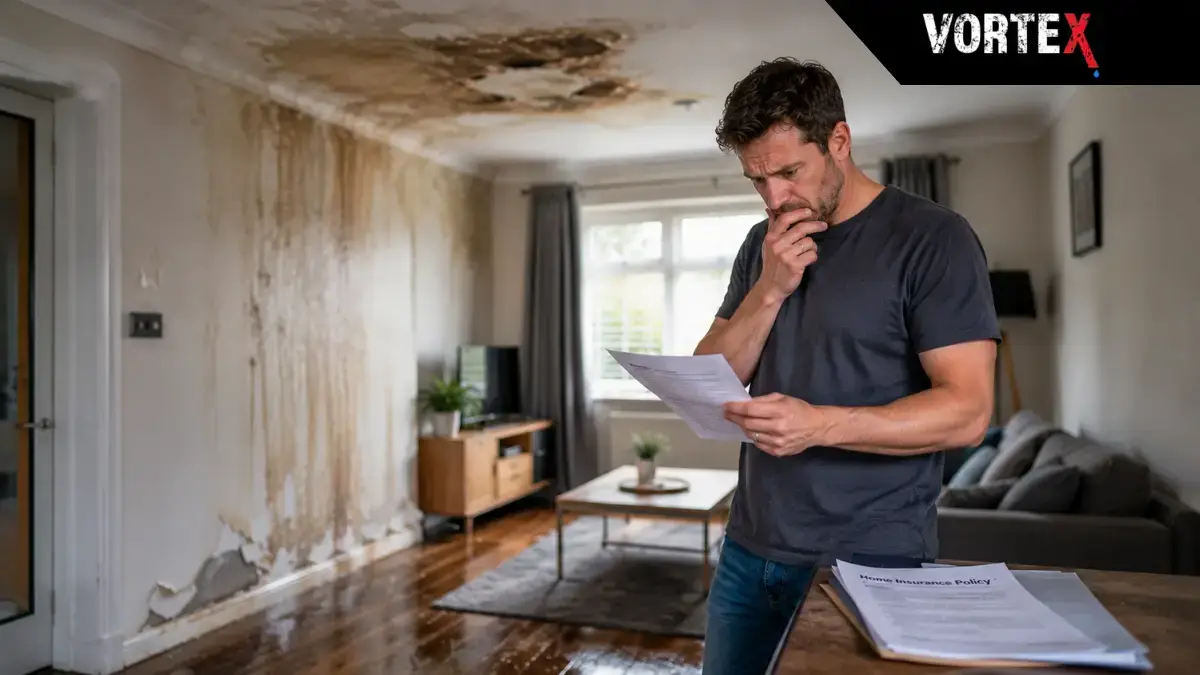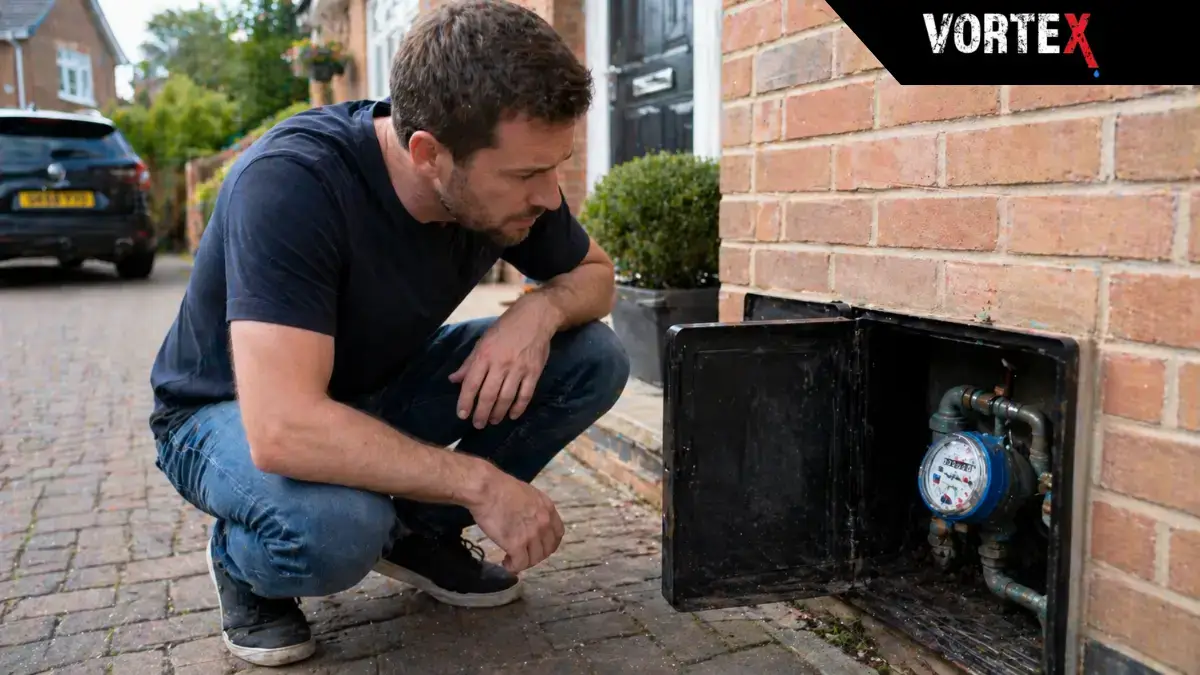

A specialist leak detection survey answers the question of where a hidden leak is. But for many homeowners, that answer raises a new set of questions: who actually fixes the leak, what does the repair involve, what happens to the floor or wall that needs to be opened, and how long will everything take?
These are practical and legitimate concerns, and the uncertainty around them is one of the reasons some homeowners delay booking a detection survey. Understanding the full process from the end of the specialist survey through to completed repair and reinstatement removes that uncertainty and makes it easier to act when a hidden leak is suspected.
This article explains every stage of the process after the specialist has completed their survey: who does what, in what order, what to expect at each step, and how the timeline varies depending on the nature and duration of the leak.
Quick Answer After leak detection, the specialist provides a written report confirming the leak location and methods used. A qualified plumber then makes a targeted access at that confirmed point and carries out the repair. The affected surface is reinstated after a drying period. The full process from survey report to completed reinstatement typically takes several weeks to several months depending on the severity of the situation.
Leak Detection and Leak Repair: Two Separate Services
The most important thing to understand about the post-detection process is that specialist leak detection and the physical repair of the pipe are two distinct services carried out by two different types of professional.
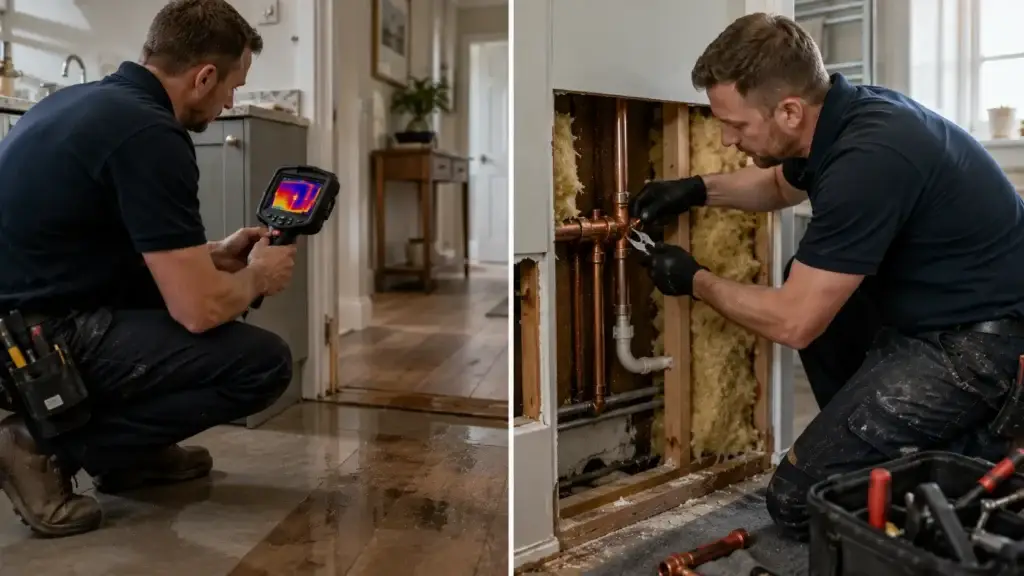
The leak detection specialist is trained and equipped to find the leak. Their work ends when they have identified the leak location and documented their findings in a written report. They do not carry out pipe repairs, and that is by design. The specialist’s value is in their detection equipment and training, not in plumbing trades capability.
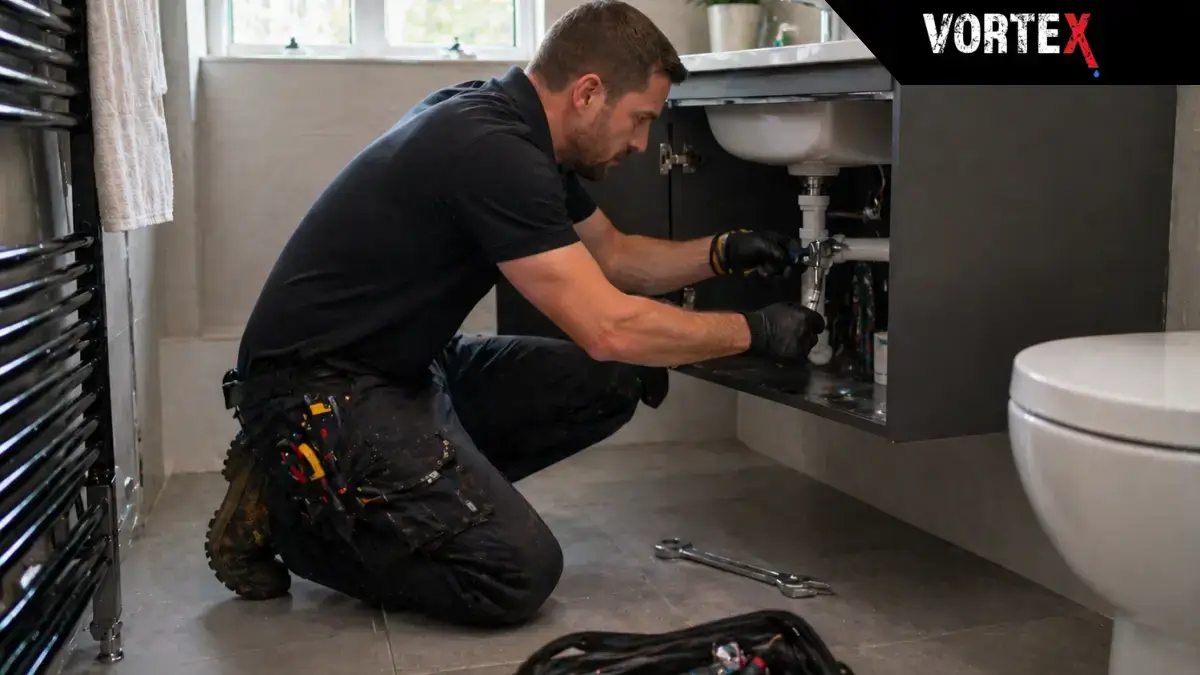
The repair of the leaking pipe is the role of a qualified plumber. The plumber uses the location information from the specialist’s report to make a targeted access at the confirmed point, expose the pipe, carry out the repair, and ensure the pipework is sound before the surface is reinstated. This separation of roles is not a weakness. It is why the process works well.
What the Specialist Provides After the Survey
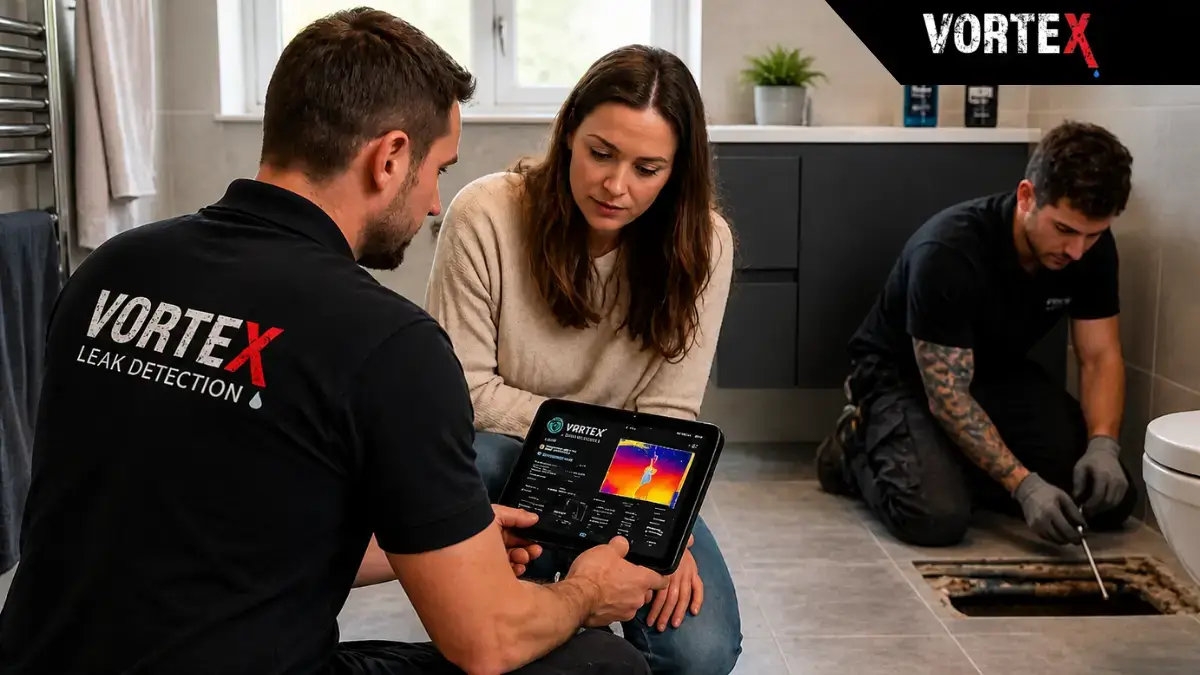
At the end of the detection survey, the specialist explains the findings to the homeowner directly: the confirmed location of the leak, the evidence that led to that conclusion, and what the repair is likely to involve in broad terms. Following the visit, the specialist provides a written detection report.
A well-written detection report typically includes: the date and address of the survey, a description of the symptoms and initial assessment, the detection methods used, the evidence gathered by each method, the confirmed leak location with reference measurements from identifiable fixed points in the property, photographs or thermal images supporting the findings, and recommendations for repair access.
This report serves multiple purposes: it gives the plumber precise information for a targeted access, provides documentation for an insurance trace and access claim, and gives the homeowner a clear record of the investigation and its findings.
Who Actually Repairs the Leak?
The repair is carried out by a qualified plumber. For a heating system leak, a heating engineer with plumbing qualifications is typically the right contractor. For a mains supply pipe or internal plumbing leak, a general plumber or specialist pipe repair contractor is usually appropriate. The nature of the pipe involved guides the choice.
If an insurer is processing a trace and access claim, they may direct the repair work to one of their approved contractors. If your insurer is involved, confirm whether they want to appoint the repair contractor or whether you may choose your own.
What Does the Repair Process Involve?
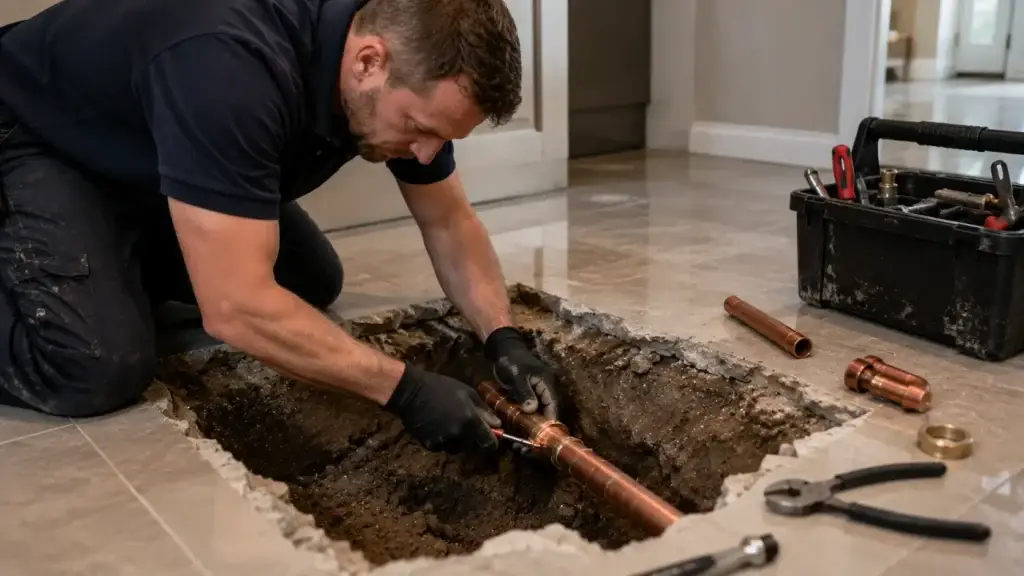
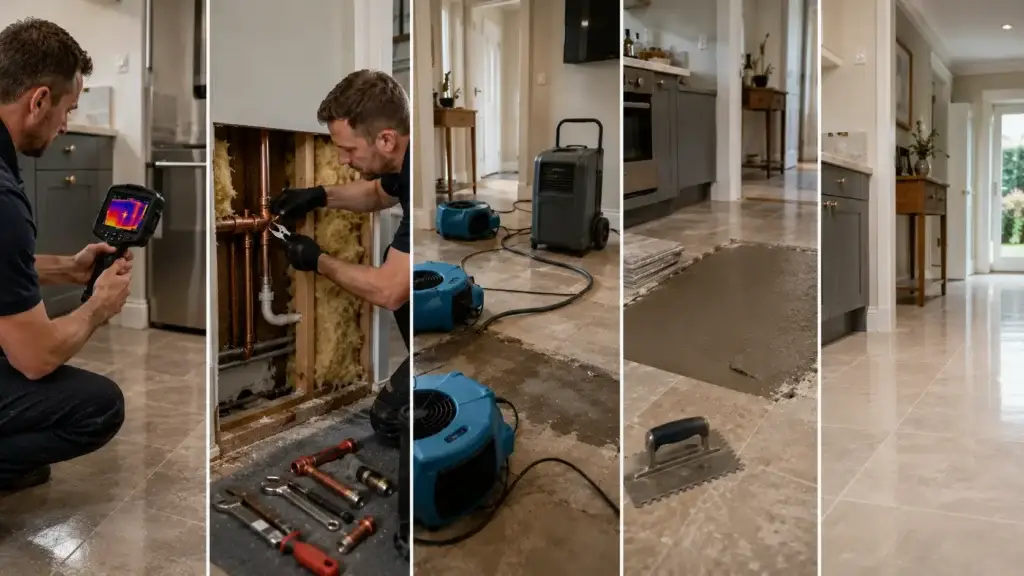
The repair begins with the plumber making the access opening at the confirmed location. Because the position has been identified with precision, the access is targeted rather than speculative. For a screeded concrete floor, this typically involves cutting a section at the confirmed position to expose the pipe. For a wall, a section of plasterboard or render is removed at the confirmed location. For a buried mains pipe, the ground above the confirmed position is excavated.
Once the pipe is exposed, the plumber carries out the repair: cutting out the failed section and replacing it, replacing a failed fitting, or applying a suitable repair method depending on the pipe material and failure type. The repair is tested to confirm the leak has been resolved before any reinstatement begins.
How Long Does the Repair Take?
The repair itself, once access has been made, is typically completed within a few hours for a straightforward pipe replacement or joint repair. The total duration of the repair visit, including access, repair, testing, and making the area safe, is usually between half a day and a full day for most domestic hidden leak repairs.
What Happens to the Floor or Wall After Access Is Made?
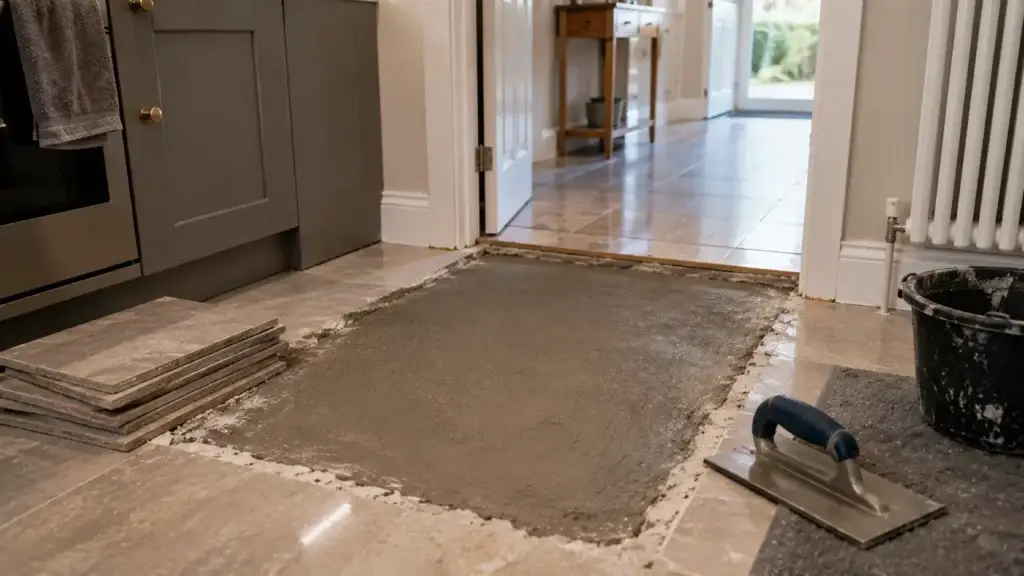
For a concrete screed floor, the access hole is filled with new screed that needs to cure before a floor covering can be laid. For a tiled floor, tiles above the access point are typically not recoverable and new tiles are required. Finding an exact match for existing tiles is not always possible, particularly for older tiles no longer in production. For a wall opening, the section is replaced and replastered to match, then decorated.
How Long Does the Affected Area Take to Dry Out?
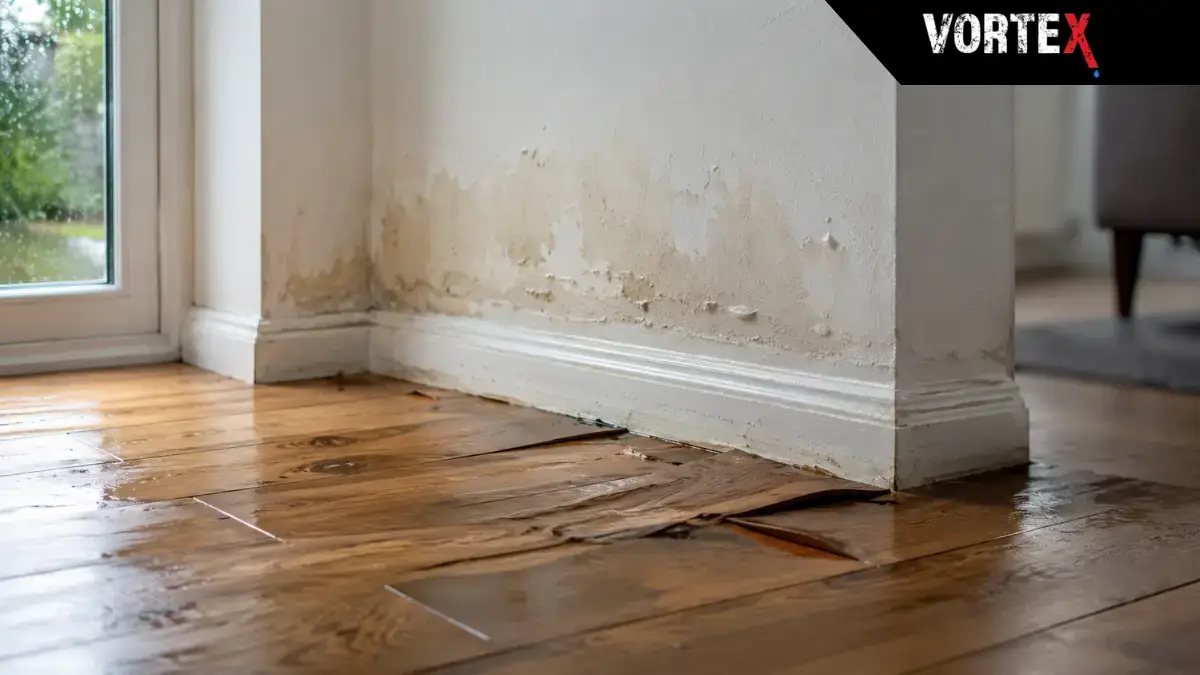
The drying period is the aspect that most surprises homeowners. Surrounding material that absorbed water during the leak period needs to reach an acceptable moisture level before permanent reinstatement. The time required depends on how long the leak was present, the depth and type of material, and property conditions.
A leak detected within a few weeks may allow reinstatement within several weeks of the repair. A leak present for months before detection may require an extended drying period of several months before the affected screed or structure has dried sufficiently. In significant cases, a specialist drying survey may be recommended, using calibrated measurement to confirm moisture levels and monitor progress. The drying process can be accelerated with specialist equipment where the natural timeline would be impractically long.
What If the Leak Has Caused Damage to Other Parts of the Property?
A hidden leak present for a prolonged period often causes moisture-related damage beyond the immediate pipe location. Adjacent materials absorb water, mould can establish, timber elements may show early degradation, and in some cases structural elements are affected.
Assessing the full extent of moisture damage may require input from a specialist damp surveyor or structural assessor. Any damage to other parts of the property, floor coverings, plasterwork, decorative finishes, contents, or structural elements, may be claimable under the relevant sections of your home insurance, assessed separately from the trace and access element.
Does the Detection Report Support an Insurance Claim?
Yes. If your policy includes a trace and access clause, the specialist report is typically the primary evidence required by the insurer. It documents that a specialist investigation was carried out, identifies the methods used, describes the evidence found, and confirms the leak location. This is what the insurer needs to assess the trace and access element of the claim.
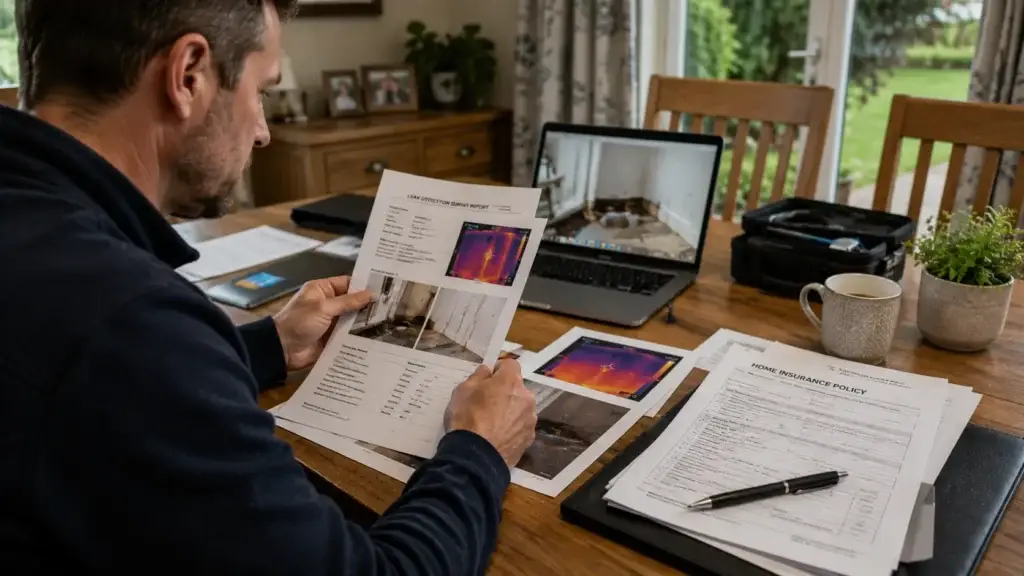
If you intend to make an insurance claim, notify your insurer before the detection survey if you have not already done so. Some insurers require prior notification, and some have specific requirements about the report format. Confirming these before the survey ensures the report will meet what is needed for the claim.
What to Do If the Repair Reveals a Second Problem
In some situations, opening the floor or wall at the confirmed location reveals more than the expected repair. The exposed pipe may show additional deterioration beyond the primary leak point, or a further issue in an adjacent section may become visible. Addressing a second issue while the access is already open is typically more efficient than reinstating and opening up again later.
It is also worth noting that addressing the primary leak does not automatically resolve all symptoms it caused. A boiler losing pressure because of a hidden heating leak still needs to be properly refilled and inhibitor-treated after the repair. A property with an elevated water bill from a mains pipe leak should show the meter returning to normal usage after the repair. Monitoring these indicators after the repair confirms the problem has been fully resolved.
The Full Post-Detection Timeline at a Glance
| Stage | Who Is Responsible | Typical Timeframe |
| Specialist survey completed and findings explained | Leak detection specialist | End of survey visit |
| Written detection report issued | Leak detection specialist | Usually 1 to 3 working days after survey |
| Insurance claim notification if applicable | Homeowner | Before or immediately after survey |
| Plumber appointed for repair | Homeowner or insurer | Once report is received |
| Access made and pipe repaired | Qualified plumber | Days to weeks after report receipt |
| Temporary cover applied to access opening | Plumber | Same visit as repair |
| Drying period for surrounding material | Building fabric; monitored if needed | Several weeks to several months depending on severity |
| Permanent reinstatement of floor or wall | Building or flooring contractor | After drying is confirmed as adequate |
| Decoration and finishing | Decorator | After reinstatement is complete and cured |
What to Do Next
If you have a suspected hidden leak and want to understand the full process, the first step is the specialist detection survey. Everything that follows depends on knowing precisely where the leak is, and that is what the specialist provides.
Vortex Leak Detection carries out specialist surveys using thermal imaging, acoustic detection, and tracer gas, and provides comprehensive written reports suitable for insurance claims and repair briefing. Get in touch at to discuss your situation or to arrange an investigation.