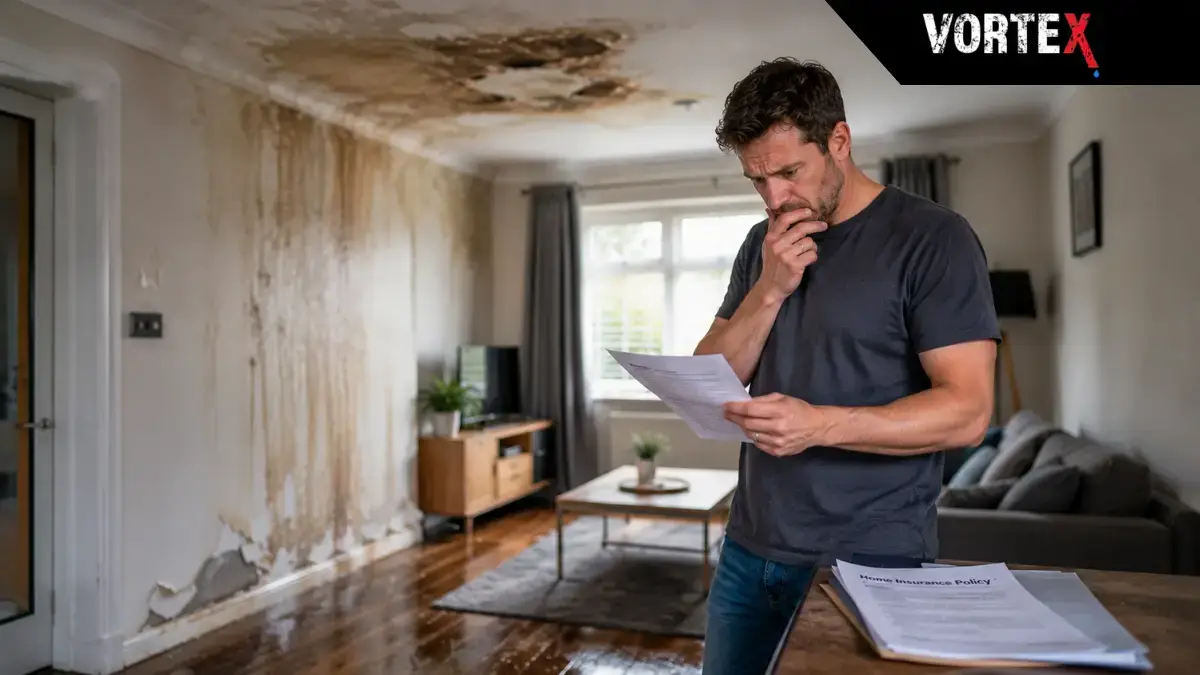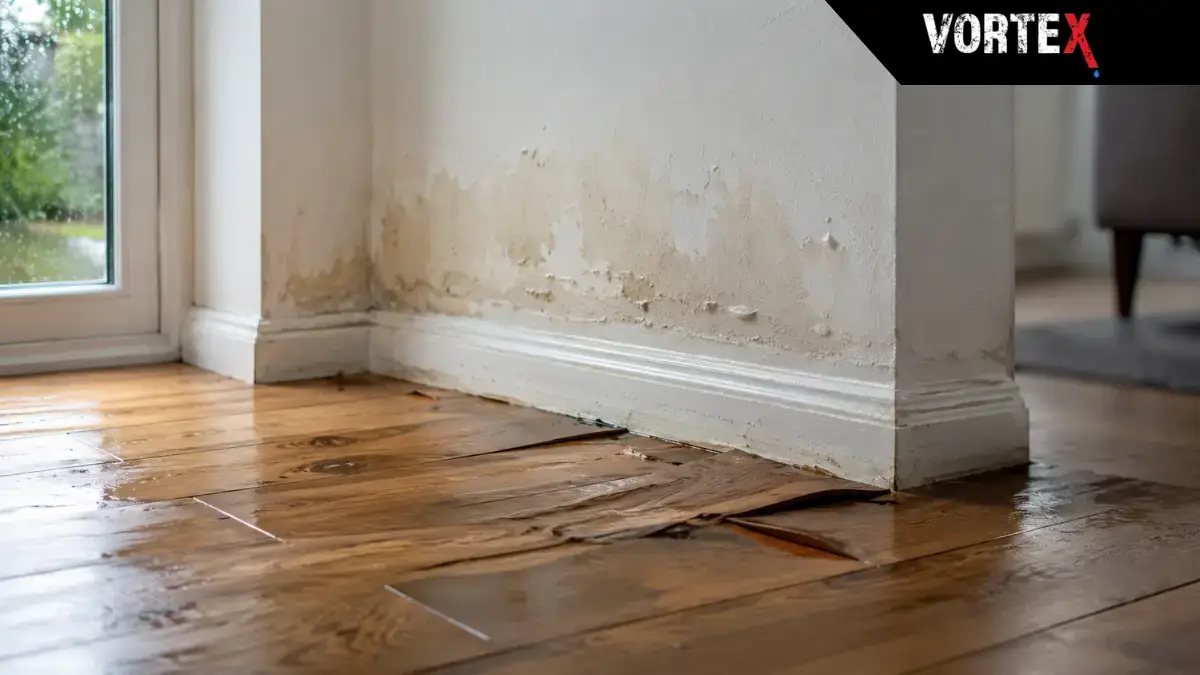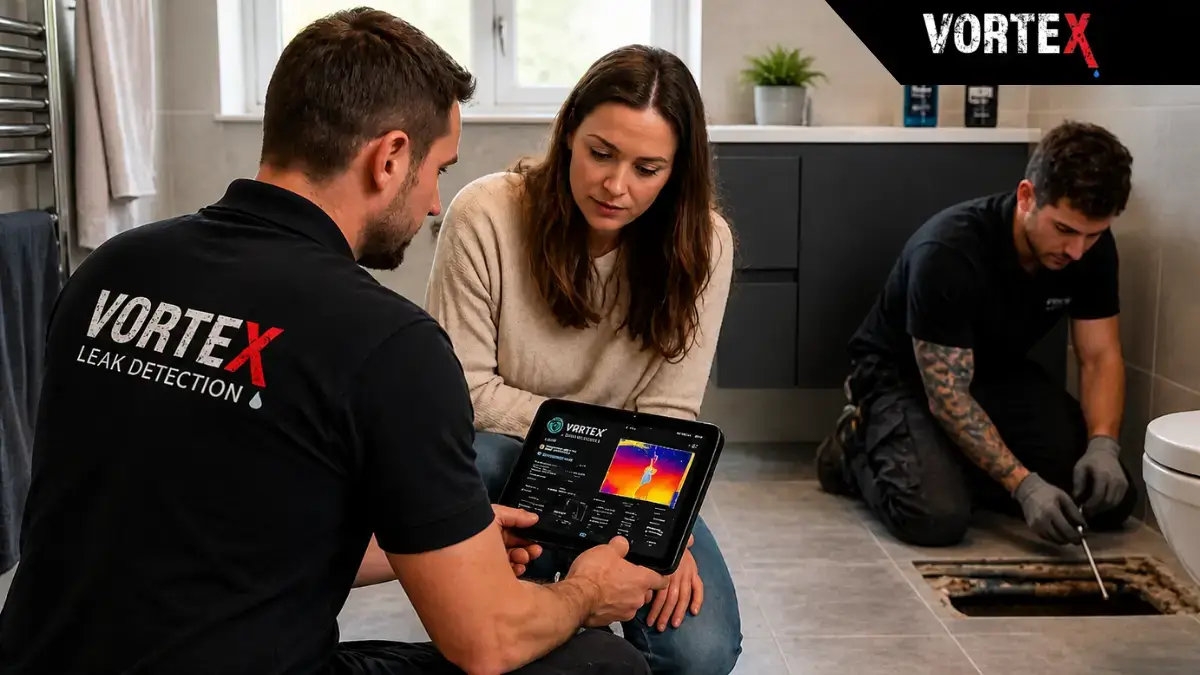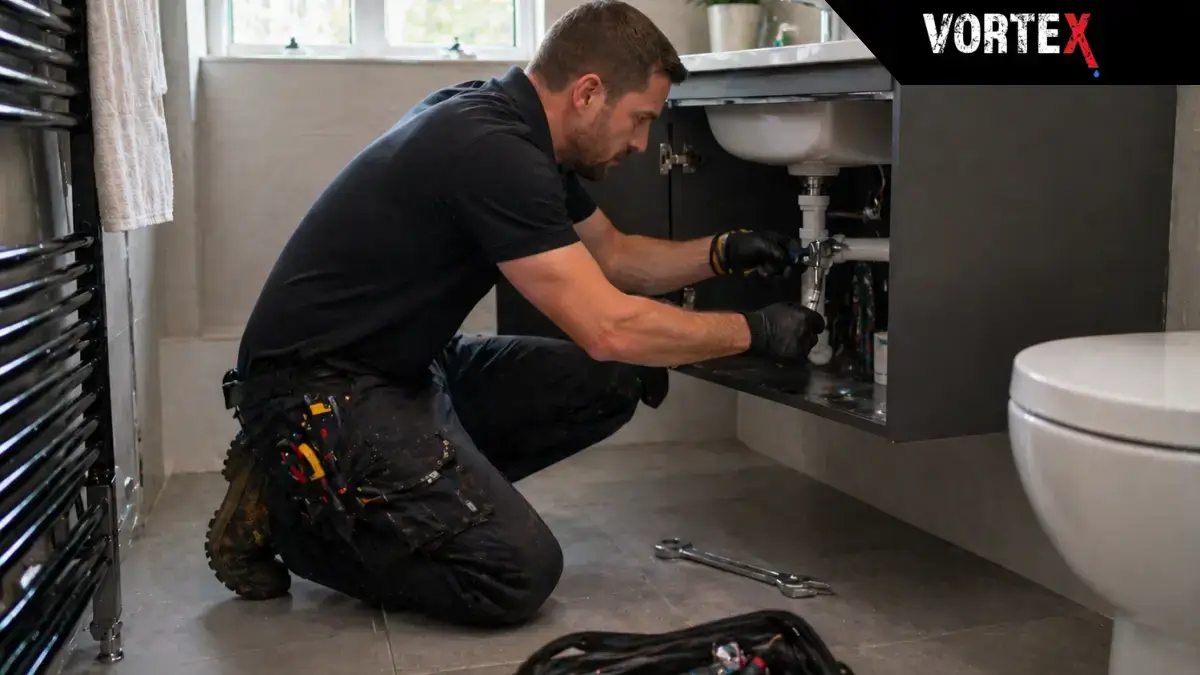

The most common concern homeowners raise before booking a specialist leak detection survey is not about the cost or the disruption of the survey itself. It is about what comes after: will the detection be accurate enough to avoid unnecessary damage to floors and walls?
The concern is reasonable. If a specialist surveys a property and identifies a suspect zone, and then a plumber opens the floor at that location only to find the pipe is sound and the leak is somewhere else, the result is floor damage for no benefit, additional cost, and no resolution to the original problem. Understanding how non-invasive detection achieves its accuracy, what conditions affect it, and what happens when the result is less than perfectly definitive is what allows an informed decision to be made.
This article provides that understanding, honestly and without overclaiming.
Quick Answer Non-invasive leak detection using thermal imaging, acoustic equipment, and tracer gas in combination is accurate enough for targeted repair access in the majority of domestic hidden leak situations. Exact accuracy depends on pipe depth, material, surface covering, and leak rate. A trained specialist assesses these conditions and advises on confidence level before any access is recommended.
What Does Accurate Enough Actually Mean in Leak Detection?
Accuracy in leak detection has a specific practical meaning. It does not mean identifying the exact millimetre position of a pinhole failure. It means identifying the location with sufficient precision that a plumber can make a targeted access opening, expose the pipe, and find the failure at or very close to that position without needing to open a large additional area to search for it.
For many surveys using the three-method combination, that precision means narrowing the leak location to within a fraction of a metre of the actual failure point. For the purposes of making a repair, that level of precision means the difference between a small targeted opening and a wide speculative excavation.
The standard against which non-invasive detection should be judged is not perfection. It is whether it is more accurate, less disruptive, and less costly than the alternative: opening up floors and walls speculatively without prior detection, which carries a high probability of missing the leak location on the first attempt.
How Each Detection Method Contributes to Accuracy
Thermal Imaging and Its Role in Accuracy
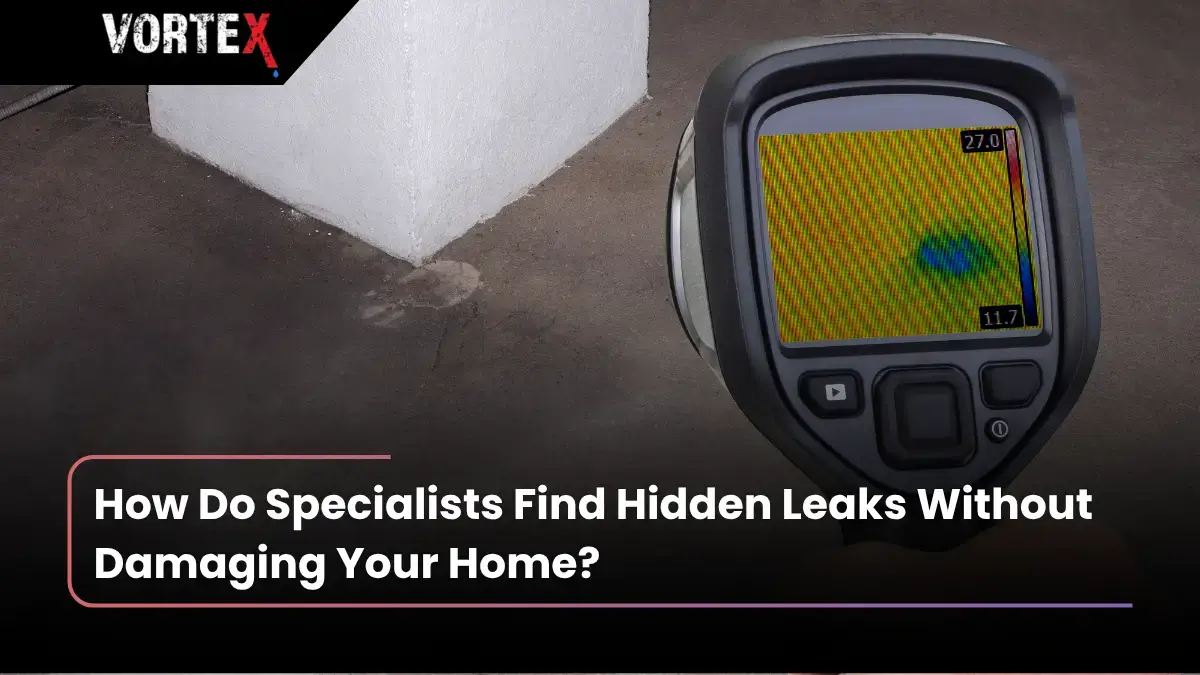
Thermal imaging identifies zones of thermal irregularity in floors, walls, and ceilings caused by the heat or cold signature of escaping water in the surrounding material. A trained specialist reading a thermal camera image can identify the area where the pipe is losing water based on the pattern of the thermal anomaly. Thermal imaging is most accurate for warm-water pipes and is most effective as the first stage of investigation, identifying a zone rather than a precise point.
Acoustic Detection and Its Role in Accuracy
Acoustic detection listens through building structure for the sound of pressurised water escaping from the pipe. By taking readings at multiple points and comparing signal strength, the specialist narrows the zone identified by thermal imaging to a specific section of pipework. Acoustic accuracy is influenced by pipe material, depth, background noise, and leak rate. The specialist assesses these conditions and adjusts the approach accordingly.
Tracer Gas and Its Role in Accuracy
Tracer gas is the most precise of the three methods for confirming exact position. Once thermal imaging has identified the zone and acoustic detection has narrowed the section, tracer gas is introduced into the pipe. It escapes at the leak point and rises through the surrounding material to the surface, where a probe detects it. The position of the strongest reading corresponds to the leak location in the pipe below. This provides point-specific confirmation suitable for targeted repair access.
What Can Affect the Accuracy of a Non-Invasive Survey?
| Factor | Effect on Accuracy | How It Is Managed |
| Pipe depth | Greater depth reduces signal strength for thermal and acoustic methods | Tracer gas used for confirmation; specialist adjusts sensitivity settings |
| Pipe material | Metal pipes transmit acoustic signals more clearly than plastic | Method weighting adjusted; acoustic thresholds adapted |
| Surface covering | Thick insulation or heavy flooring can attenuate thermal signal | Survey timing adjusted; specialist allows thermal equalisation period |
| Leak rate | Very slow leaks produce weaker signals across all three methods | Extended survey time; multiple method passes; tracer gas prioritised |
| Ground conditions | Wet or clay-heavy ground can affect acoustic and tracer readings | Specialist assesses site conditions before starting |
| Building temperature | Cold conditions improve thermal contrast for warm pipes | Survey timing chosen to maximise temperature differential |
| Background noise | High traffic or machinery noise reduces acoustic clarity | Survey scheduled for quieter periods where practical |
Accuracy in Practice: What Happens at the Repair Stage
In the majority of domestic leak detection cases carried out with trained specialists using the three-method combination, the pipe is found at or very close to the confirmed position and the repair is carried out from a single access point.
The access opening made at a precisely confirmed location is substantially smaller than what would be required for speculative access without prior detection. A targeted opening might involve a single core drill or a small floor section cut of manageable size, compared to speculative access along the approximate pipe route which may require opening sections at multiple points until the leak is found. The size of the access opening directly affects reinstatement cost and household disruption.
The Alternative to Non-Invasive Detection and Why It Is More Disruptive
Without specialist detection, locating a buried leak requires physical access along the suspected pipe route in the hope of finding the failure point. This is speculative work with a meaningful probability of missing the leak location on the first attempt and requiring additional access points to continue the search. Each additional opening adds cost, adds reinstatement work, and increases disruption.
Speculative access also produces no documentation of the detection process, which means it cannot support an insurance trace and access claim in the same way a specialist report does. Non-invasive specialist detection removes the speculative element entirely.
What Happens If the Detection Is Not Definitive?
Professional specialists are honest about limitations. If a survey does not produce a result precise enough for confident targeted access, a professional will say so rather than overstating confidence in an uncertain finding. The options typically discussed include a small targeted exploratory access at the most probable point identified by the investigation, or a further investigation session under different conditions.
Even an investigation that does not reach full precision still narrows the search area significantly, reducing the scope of any physical access that follows. A small exploratory access at the most probable point is very different from speculative excavation along the full pipe route.
How Non-Invasive Detection Compares to Exploratory Access
| Aspect | Non-Invasive Detection First | Speculative Exploratory Access |
| Disruption to property | Minimal during detection; targeted access only at confirmed point | Potentially extensive; multiple access points may be needed |
| Accuracy of access point | High; based on multiple independent detection methods | Low; based on estimated pipe route and symptom location |
| Cost of access work | Lower; single targeted opening | Higher; multiple openings possible before leak is found |
| Reinstatement cost | Lower; smaller access area to make good | Higher; larger area of floor or wall to reinstate |
| Documentation for insurance | Yes; specialist report produced as part of the process | No; no specialist documentation of detection process |
| Probability of first-attempt success | High | Lower; depends on estimated location accuracy |
What Factors Should You Ask About Before Booking?
- What methods will be used and in what sequence? A survey using all three core methods in combination is more likely to achieve a precise result.
- What will you assess when you arrive about site conditions? A professional evaluates pipe depth, surface covering, background noise, and temperature before starting.
- What will you provide after the survey? A written report with confirmed location and reference measurements is the standard professional deliverable.
- What if the result is not definitive? A professional specialist will be clear about what the next step would be rather than overstating confidence in an uncertain result.
- Have you carried out surveys in similar situations? Experience with the specific scenario improves the quality of the survey and the reliability of the result.
Non-invasive detection achieves highest accuracy when: Thermal imaging, acoustic detection, and tracer gas are all used in combinationThe pipe carries warm water such as heating circuits or hot water supplyThe pipe depth is within the effective range for acoustic and tracer methodsThe leak rate is sufficient to produce a detectable signalSurvey conditions allow for adequate temperature differentialThe specialist has experience with the specific building type and pipe configuration
Quick Reference: When Non-Invasive Detection Works Best
Additional care is taken when: The pipe carries cold water in cold conditions, reducing thermal differentialThe pipe is buried at significant depth in dense or waterlogged groundThe leak rate is very slow and signal strength is weak across all methodsThe surface covering above the pipe has high thermal mass or heavy insulationBackground noise from traffic or machinery is high during the survey period
Is It Accurate Enough? The Honest Answer
In the majority of domestic hidden leak situations, yes. When all three core methods are used in combination by a trained and experienced specialist, and when site conditions are reasonable, the confirmed location is typically accurate enough for a targeted repair access without speculative floor or wall opening.
The honest qualification is that accuracy is not uniform across all situations. A very slow leak in a deep pipe beneath thick insulated screed presents more of a challenge than a faster leak in a shallower pipe with a clear thermal and acoustic signature. A professional specialist will assess the specific conditions and be clear about the confidence level of the result before any repair access is recommended.
What is consistently true is that non-invasive detection with three methods in combination is more accurate, less disruptive, and produces better outcomes than the alternative. Non-invasive detection is not perfect in all circumstances, but it is the most reliable and least disruptive approach available for locating hidden leaks in the majority of domestic situations. That is what makes it the right starting point for any investigation where a buried or concealed leak is suspected.
What to Do Next
If you have a suspected hidden leak and are weighing whether to proceed with a specialist non-invasive survey, the answer for most situations is straightforward: the survey is the right starting point. It reduces the disruption of what comes after, provides documentation for insurance purposes, and gives a precise answer rather than a guess.
Vortex Leak Detection uses thermal imaging, acoustic detection, and tracer gas technology to locate hidden leaks in domestic and commercial properties. If you have a suspected hidden leak and want to discuss whether a non-invasive survey is the right approach for your specific situation, get in touch at vortexleakdetection.co.uk/contact-us-vortex/
The Tier 1 authority sprint is complete. All 10 blogs in the Vortex Leak Detection cluster are now delivered. Each article is structured for AI-SEO performance, topical authority, and commercial conversion. The cluster is ready to publish.