
If you have received a letter from Thames Water informing you that a leak has been detected near your property, or if you have noticed signs of a leak on your supply pipe and contacted the water company, one of the first and most important questions you face is: whose problem is this to fix?
The answer depends entirely on where the leak is located relative to the ownership boundary of the water supply infrastructure. Thames Water owns and is responsible for part of the supply network. You, as the property owner, are responsible for another part. Understanding exactly where that boundary sits is essential before spending money on investigation or repair work that may not be your obligation.
| Quick AnswerThames Water is responsible for the water main in the street and typically for the communication pipe up to the boundary of your property. You are typically responsible for the supply pipe that runs from the boundary of your property into the building. Any leak in that section of pipe is yours to find and fix at your cost. Thames Water may advise you of a suspected leak on your supply side, but they do not repair it for you. |
How London’s Water Supply Infrastructure Is Divided
The water supply to your property passes through several sections of infrastructure, each owned and maintained by a different party. The water main is the large pipe that runs beneath the street and is owned and maintained by Thames Water. From the water main, a service connection pipe runs to the boundary of individual properties. In older London infrastructure, Thames Water typically owns and maintains the section of this pipe up to the property boundary, which is often the pavement edge or garden boundary.
From that boundary, the supply pipe that runs into your property is called the communication pipe or service pipe in formal terminology, and is almost always your responsibility as the property owner. In London properties this pipe runs underground from the pavement boundary, beneath the front garden, path, or driveway, and enters the building typically below ground level near the front of the property.
The boundary between Thames Water responsibility and homeowner responsibility is not always visibly marked, and it can vary slightly between properties depending on the age of the infrastructure, historical connection arrangements, and the type of property. Thames Water can advise on where the boundary sits for your specific property if you contact them directly.
Thames Water’s Responsibility: Where It Starts and Ends
Thames Water is responsible for the water main beneath the street. If a leak is occurring in the water main itself, Thames Water is obliged to investigate and repair it at no cost to you. Thames Water is also typically responsible for the communication pipe, the section of pipe from the water main connection to your property boundary.
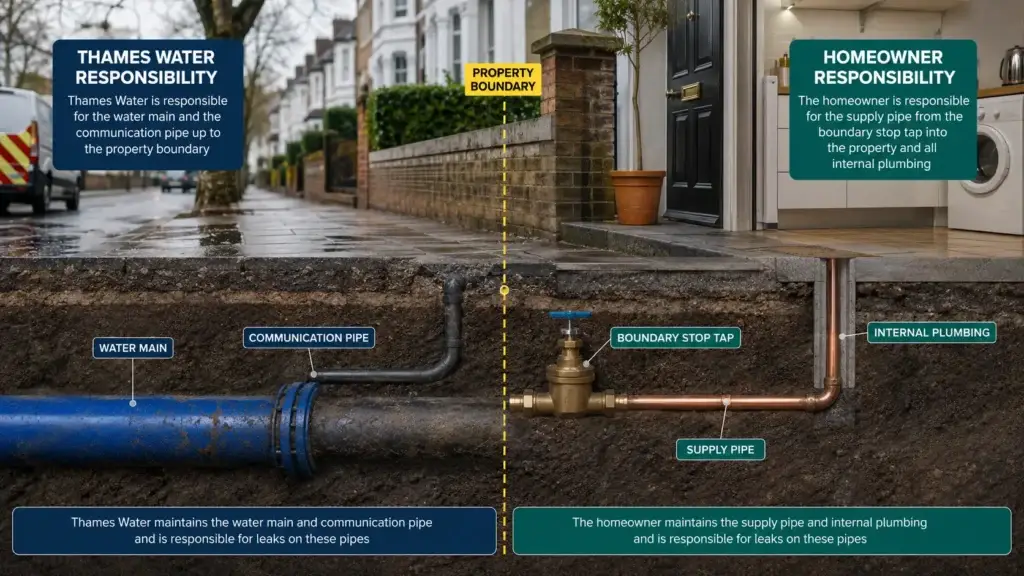
Thames Water is not responsible for investigating, locating, or repairing leaks in the supply pipe on your side of the property boundary. If they detect elevated water loss in your area, they may contact you to advise that your property’s supply shows signs of a leak, but this notification is a communication that a problem may exist on your side of the boundary, not an offer to fix it.
Thames Water does have obligations around network efficiency and leakage reduction, and they do investigate and repair leaks within the infrastructure they own. But the distinction between their network and your supply pipe is clear and legally established.
Your Responsibility: The Supply Pipe on Your Side of the Boundary
The supply pipe running from the property boundary into your building is your responsibility as the property owner. This includes any section of the pipe that runs beneath your garden, path, or driveway, and any section that runs beneath the floor of the building before connecting to the internal stop tap.
If there is a leak in this section of pipe, you are responsible for: arranging and funding the investigation to find the exact leak location, arranging and funding the repair of the pipe once the location has been confirmed, and any reinstatement of ground or floor surfaces disturbed during the repair.
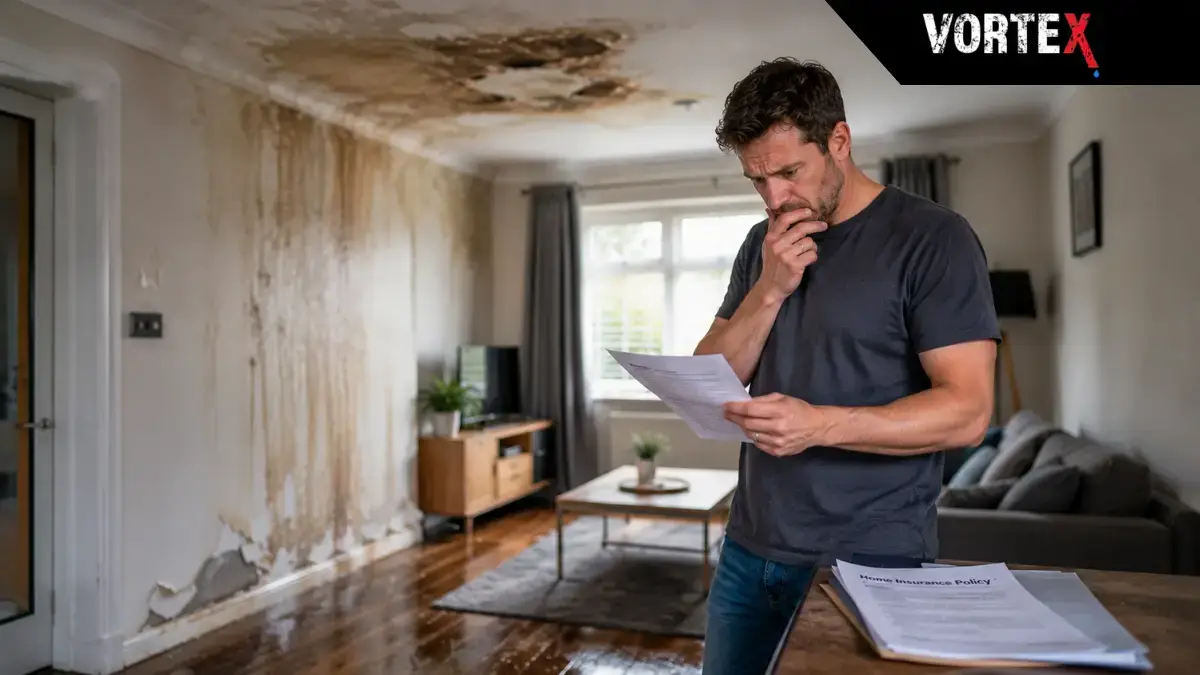
The cost of this investigation and repair falls on you as the property owner unless your home insurance policy includes relevant cover. Some home insurance policies include a water leak or escape of water section that covers supply pipe repairs. Some include a trace and access clause that covers the investigation cost specifically.
What Happens When Thames Water Tells You There Is a Leak
Thames Water uses various methods to detect water loss in their network, including flow monitoring, acoustic sensors, and satellite-based analysis. When their monitoring identifies a pattern consistent with a leak that may be originating from the supply side of a specific property, they may contact the homeowner by letter or by visiting the property.
This contact typically advises that a suspected leak has been identified, that it appears to be on the homeowner’s supply pipe, and that the homeowner should arrange investigation and repair. Thames Water may also offer a free water efficiency check as part of this process. This check is helpful but has limitations described later in this article.
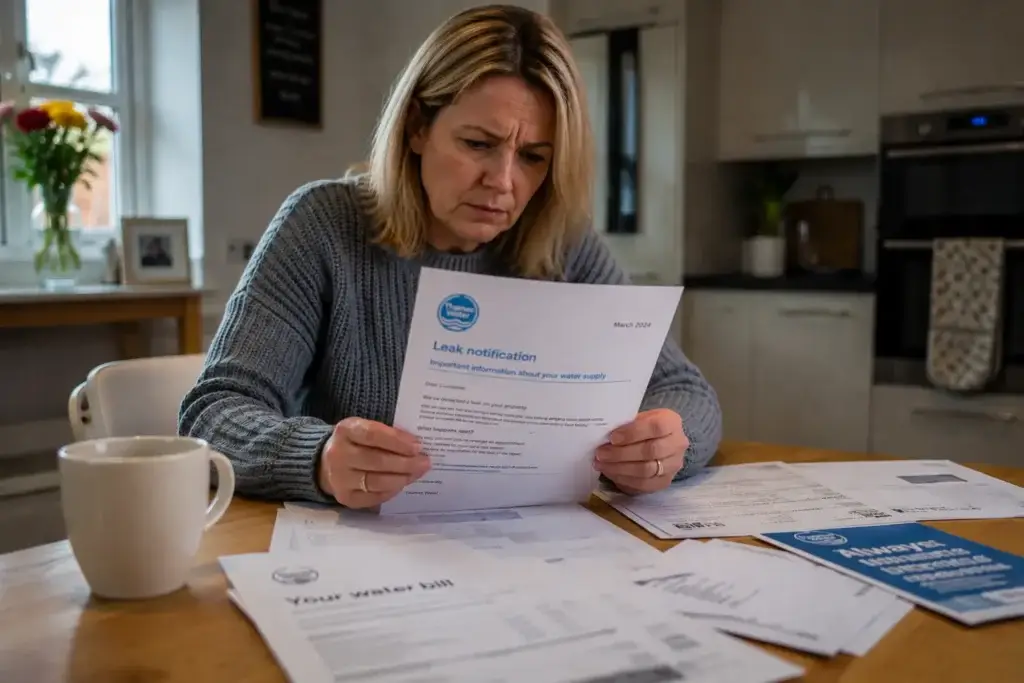
Receiving this notification is not a penalty or an enforcement action. It is information. But it is information that should be acted upon, because a confirmed supply pipe leak that continues after you have been notified may in some circumstances affect how your water company treats any subsequent water efficiency obligations.
Can Thames Water Force You to Fix a Leak on Your Supply Pipe?
Thames Water does have powers under water industry legislation to require property owners to repair leaking supply pipes in certain circumstances. If Thames Water serves a notice requiring you to repair a leaking supply pipe and you fail to comply within the specified period, the water company has powers to carry out the repair themselves and recover the cost from you.
In practice, the escalation to formal enforcement is less common than the initial notification. Most homeowners who receive a notification from Thames Water act on it, either because they are concerned about the ongoing water waste, the water bill implications, or the potential for structural damage if the leak continues.
If you receive a formal notice from Thames Water rather than a general advisory letter, reading it carefully and responding within any specified timeframe is important.
What If You Cannot Afford to Fix the Supply Pipe?
Thames Water operates financial assistance schemes for eligible customers who face difficulty meeting the cost of supply pipe repairs. These schemes change periodically and eligibility criteria vary. If you are on a low income, receiving certain benefits, or facing financial hardship, contacting Thames Water directly to ask about assistance with supply pipe repair costs is worthwhile. Thames Water’s website and customer service lines can provide current information on what schemes are available.
Some local authorities in London also have home improvement grant schemes that may cover essential plumbing repairs for eligible homeowners. Citizens Advice can advise on what local assistance may be available in your borough.
Does Home Insurance Cover Supply Pipe Leaks?
Home insurance cover for supply pipe leaks varies significantly between policies. Some buildings insurance policies include a section specifically covering escape of water or water leak that extends to the supply pipe. Others do not. Some policies include a trace and access clause that covers the cost of the specialist investigation to find the leak, which is often the most expensive single element.
Before commissioning any investigation or repair work, check your home insurance policy to understand what cover applies. Contact your insurer and ask specifically whether supply pipe leaks are covered under your policy, what any applicable excess is, and whether a specialist detection report is required before a claim can be processed.
How to Find and Fix a Leak on Your Supply Pipe
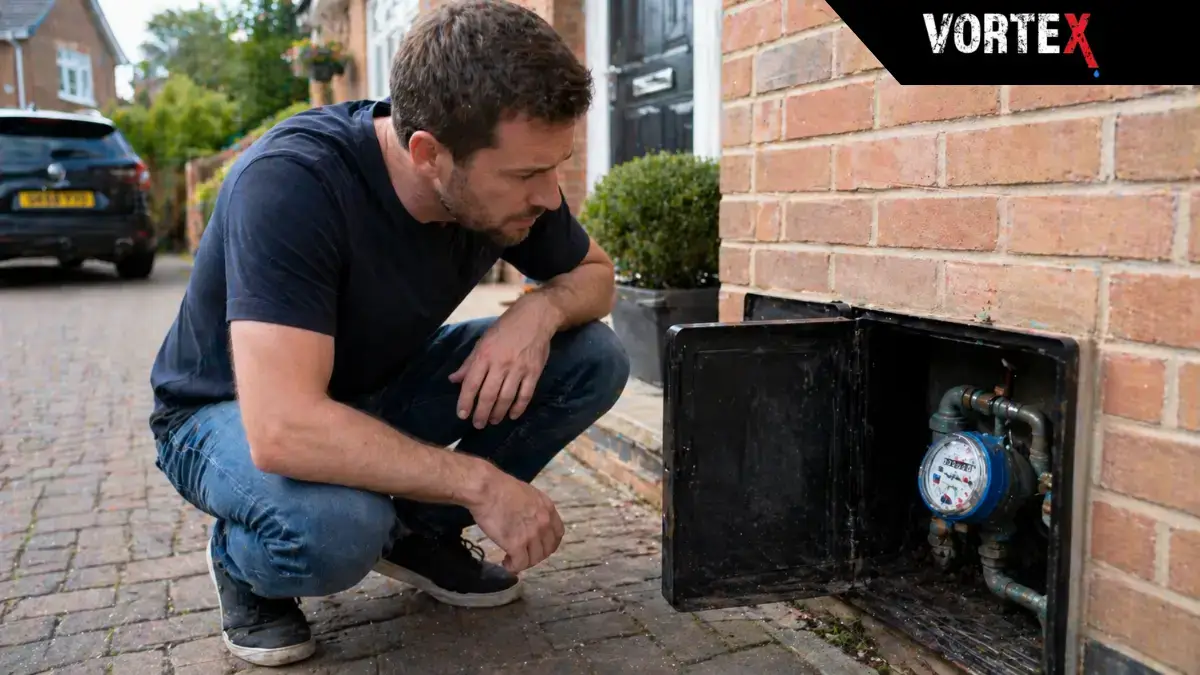
A supply pipe buried underground beneath a garden or driveway cannot be located by visual inspection. If the overnight meter test confirms water is leaving the system with everything turned off, and the stop tap test confirms the meter continues to move with the internal stop tap closed, a supply pipe leak is the likely explanation.
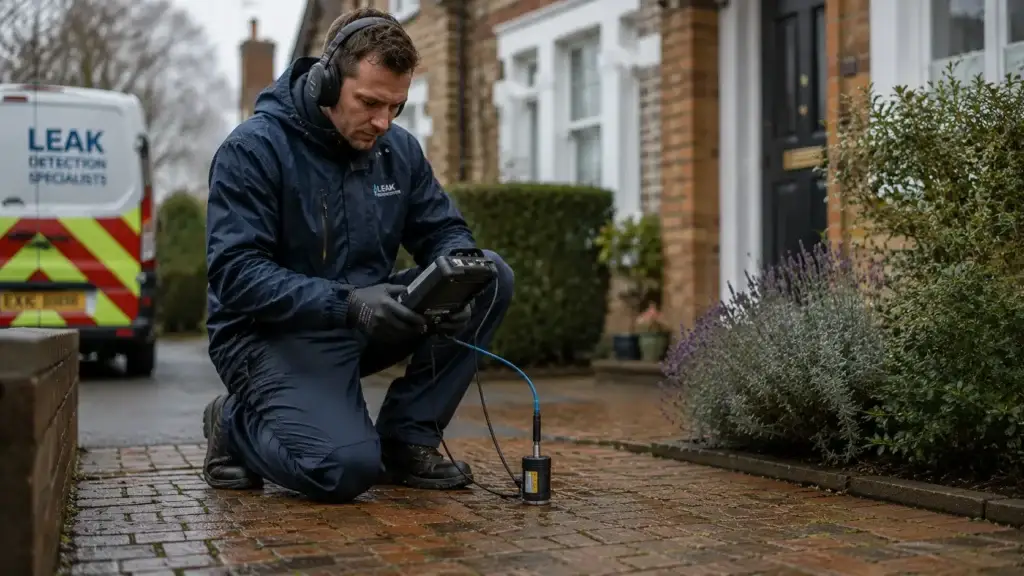
The investigation uses specialist acoustic detection equipment placed at intervals along the surface above the pipe route. The specialist listens for the sound of pressurised water escaping from the pipe through the surrounding soil. By comparing signal strength at different points, the specialist narrows the leak location to a specific section and then a specific position. Tracer gas introduced into the pipe confirms the exact surface position.
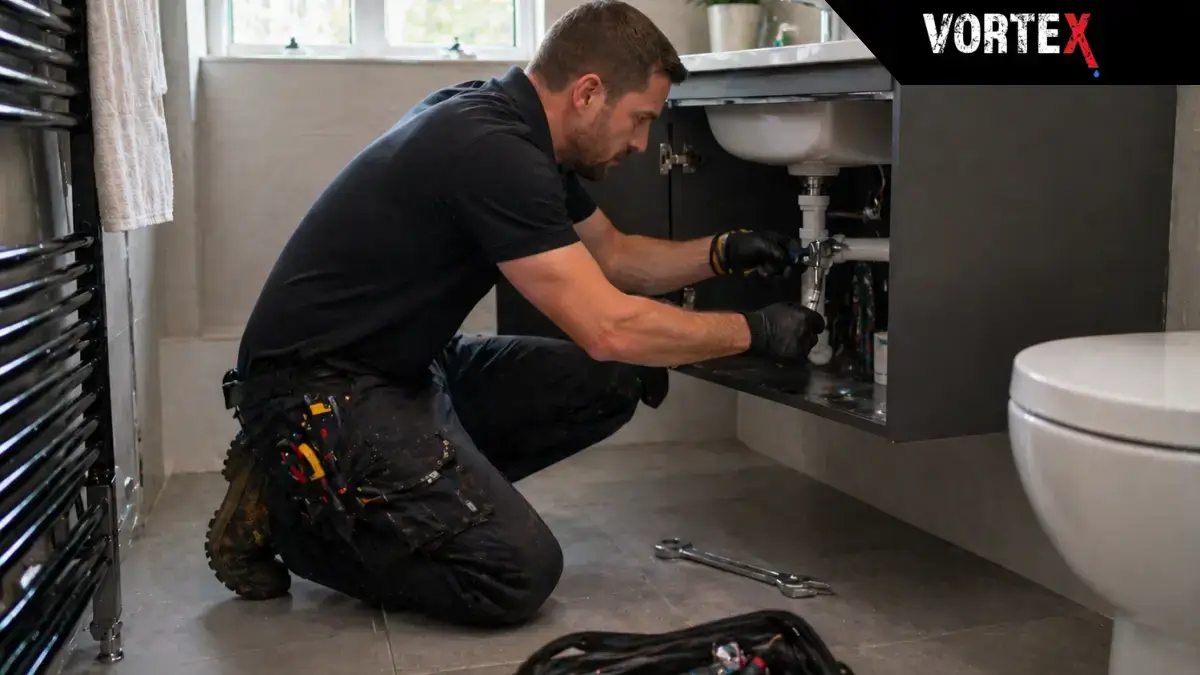
Once the location is confirmed, a plumber excavates the ground at the confirmed position, repairs or replaces the failed pipe section, and reinstates the surface above. The size of the excavation is significantly smaller when the location has been confirmed by specialist detection than when the pipe route is excavated speculatively.
The Free Water Efficiency Check and What It Does and Does Not Include
Thames Water offers free water efficiency checks to properties where a leak is suspected. These checks involve a Thames Water representative visiting the property to inspect the water usage and check for some types of waste. They can confirm whether a leak is present using a meter test and may check for obvious internal faults such as leaking cisterns.
However, a free water efficiency check is not a specialist leak detection survey. The Thames Water representative does not carry thermal imaging cameras, acoustic detection equipment, or tracer gas systems. They cannot locate a buried supply pipe leak or a concealed plumbing leak with the precision that a specialist detection survey provides.
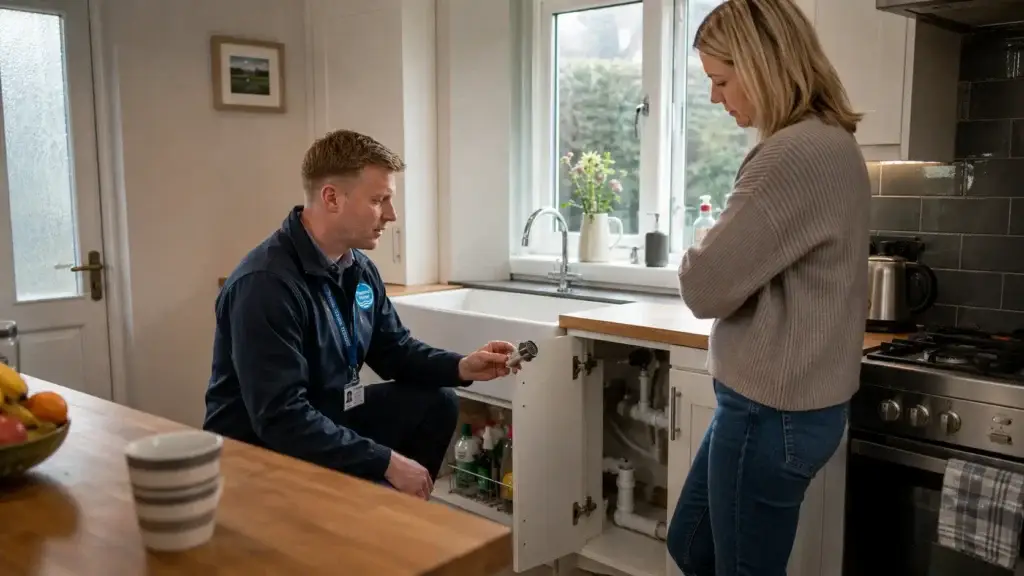
If a free check confirms that water is being lost but cannot identify the source, the next step is a specialist detection survey. That survey provides the documented evidence of the leak location that is needed for insurance purposes and for briefing the plumber who will carry out the repair.
Quick Reference: Thames Water Responsibility vs Yours
| Section of Infrastructure | Owner | Who Investigates and Repairs | Cost |
| Water main in the street | Thames Water | Thames Water | No cost to homeowner |
| Communication pipe from main to property boundary | Thames Water (typically) | Thames Water | No cost to homeowner |
| Supply pipe from property boundary to internal stop tap | Homeowner | Homeowner arranges specialist detection and plumber | Homeowner cost; check insurance cover |
| Internal plumbing from stop tap throughout property | Homeowner | Homeowner arranges plumber or specialist | Homeowner cost; check insurance cover |
| Shared service pipe to a block of flats | Typically the freeholder or management company | Freeholder arranges investigation and repair | Building insurance or management fund |
What to Do Next
If Thames Water has advised you that a leak may be present on your supply pipe, or if the overnight and stop tap tests have confirmed water is being lost on the supply side of your stop tap, the appropriate next step is a specialist acoustic investigation of the supply pipe. Vortex Leak Detection investigates buried supply pipe leaks using acoustic detection and tracer gas technology, locating the failure precisely before any excavation begins.
Get in touch to discuss your situation. Confirm first whether your home insurance policy includes relevant cover before commissioning the survey.