
Underfloor heating that is not performing as it should is one of the harder domestic heating problems to diagnose. Unlike a radiator that fails to heat because it needs bleeding, or a boiler that displays a fault code with a clear meaning, underfloor heating problems are often diffuse and their causes non-obvious. One zone does not heat. The system takes longer than usual to warm the floor. The boiler is working but the floor is cool. These symptoms have several possible causes, and a hidden leak in the underfloor pipework is one of the most significant.
What makes underfloor heating leaks particularly problematic is where they occur. The pipe loop is buried in the floor screed. The water escaping from a failure in that pipe goes directly into the surrounding building material with no route to a visible surface. The floor above may show nothing for weeks while the screed beneath gradually becomes saturated.
| Quick AnswerUnderfloor heating that is losing boiler pressure repeatedly, heating unevenly across zones, or failing to warm a specific floor area may have a leak in the buried pipe loop. The most reliable early indicator is recurring boiler pressure loss. Specialist thermal imaging can detect the heat signature of a leak beneath the floor surface without lifting the floor. If a leak is confirmed, tracer gas locates the exact position for targeted access and repair. |
How Underfloor Heating Systems Work and Why Leaks Are Hard to Spot
Wet underfloor heating systems circulate warm water through a continuous loop of pipe embedded in or beneath the floor screed. The pipe is typically made from cross-linked polyethylene and is laid in a continuous coil, either within the screed itself or in a pre-formed panel beneath it. The water temperature is lower than in a conventional radiator system, typically between 35 and 55 degrees Celsius, which makes the floor warm rather than hot.
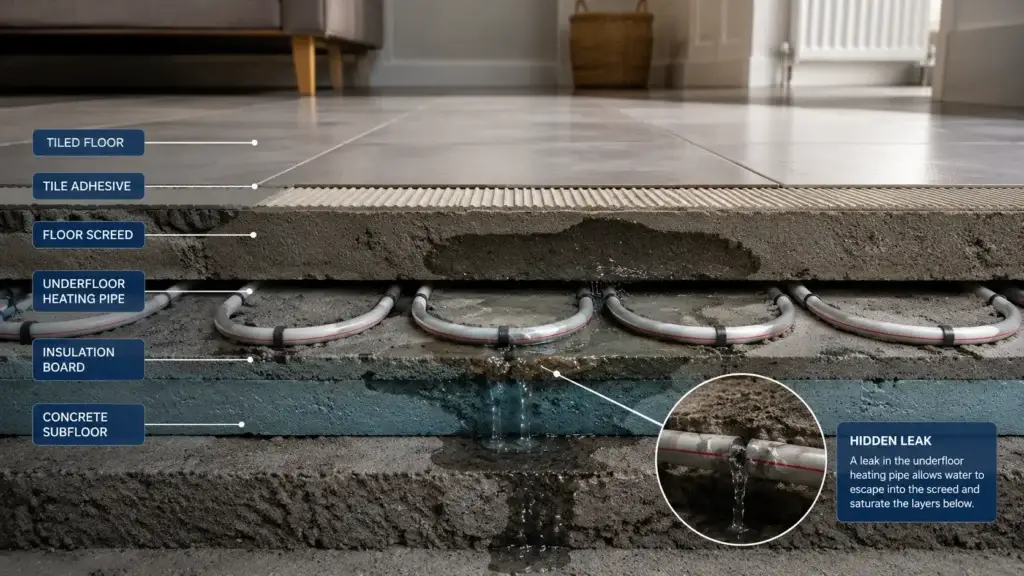
Because the entire pipe loop is concealed within the floor structure, any failure in the pipe, whether from physical damage, a failed joint, or material degradation, releases water into the surrounding screed. That screed is specifically designed to bond tightly around the pipe, which means it provides no drainage route. Water absorbed by the screed stays there, distributing slowly outward from the leak point. The floor surface above remains dry until the saturation has reached a level where moisture begins to migrate upward through the floor covering.
Signs That a Leak May Be Causing Your Underfloor Heating Problems
- Recurring boiler pressure loss: the most consistent early indicator of a heating circuit leak. If the sealed heating system is losing pressure repeatedly without a component fault identified, the pipe loop is losing water somewhere. In an underfloor system the pipe route is the most likely location.
- Uneven floor temperature: if one zone or one section of the floor is significantly cooler than the rest when the heating is running, this may indicate that the water circulation through that zone is impaired. A significant leak can disrupt the flow balance through the circuit.
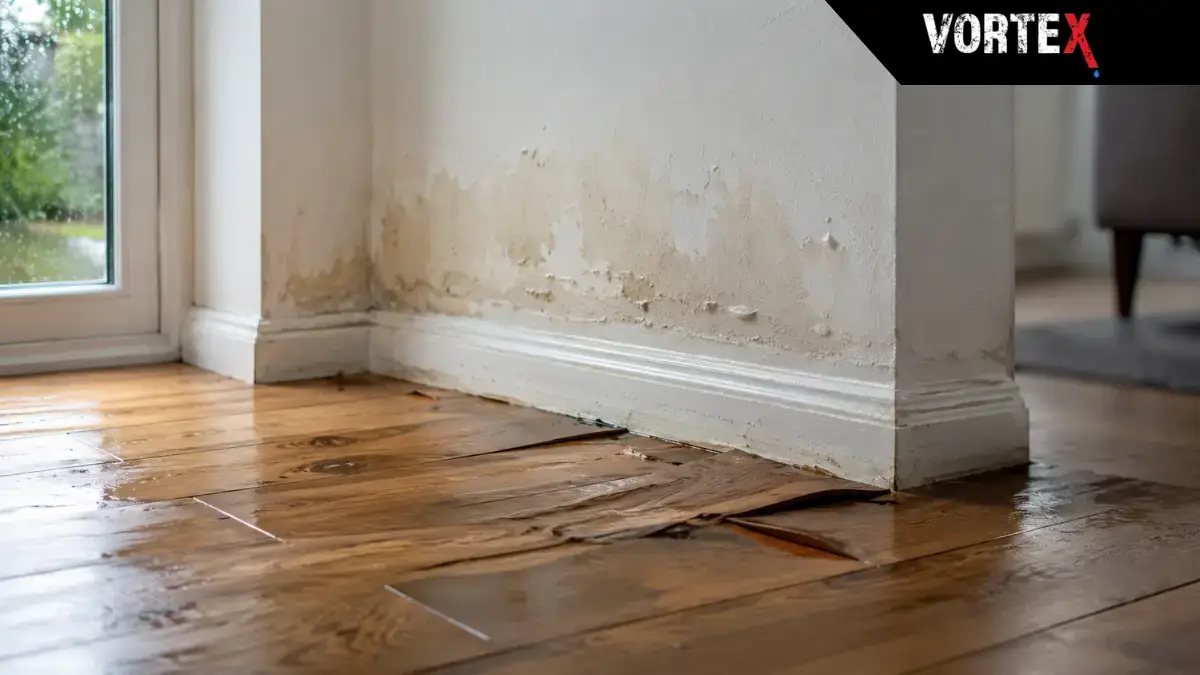
- Floor covering lifting or feeling soft in a localised area: as screed beneath the floor covering absorbs water and begins to degrade, the covering above may lift, bubble, or develop a softer feel underfoot. This is a sign that the saturation has been present for some time.
- Musty smell at floor level in a room with underfloor heating: moisture within the screed produces a characteristic smell as the building fabric becomes saturated.
- Higher than expected energy bills for the heating system: a system that is losing water and being repressuised repeatedly introduces fresh cold water that must be reheated, reducing the efficiency of the system.
Other Reasons Underfloor Heating Underperforms That Are Not Leaks
Before concluding that a leak is the cause, several non-leak explanations for underfloor heating problems are worth considering. Air trapped in the circuit restricts water flow through the affected zone. An actuator on one zone manifold failing open or closed will prevent that zone from responding to the thermostat. A pump that is underperforming will reduce circulation across the whole system. A thermostat that is incorrectly positioned or set will produce the wrong response regardless of the pipe condition.
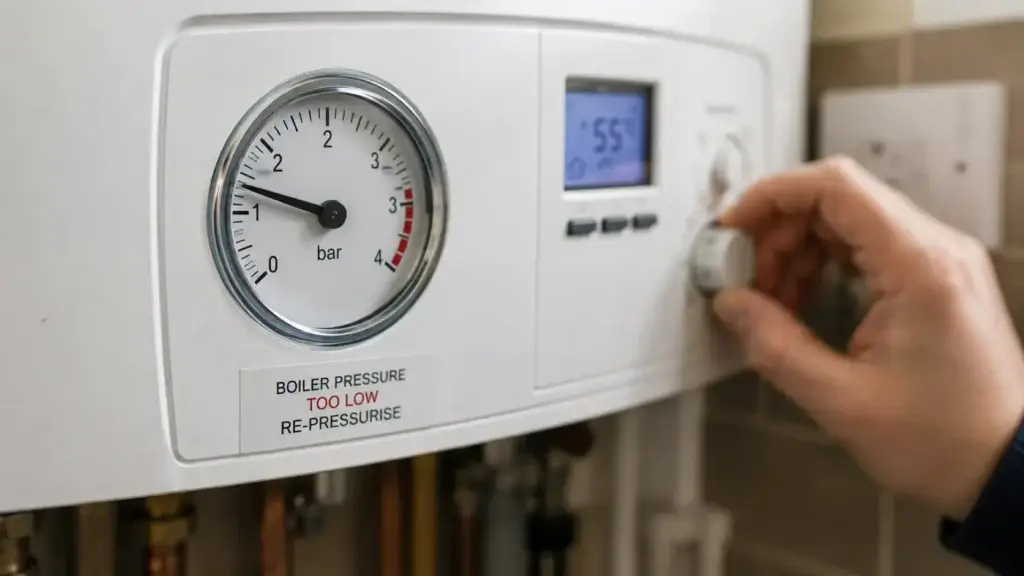
The key diagnostic difference between these causes and a leak is the boiler pressure. Air, actuator, pump, and thermostat faults do not cause the sealed system to lose pressure. A leak does. If the boiler pressure is stable and the underfloor heating is simply performing poorly, a leak is less likely than one of the other causes. If the boiler pressure is dropping and the underfloor heating is underperforming, a leak is the most probable explanation.
The Pressure Test: The Quickest Way to Check for a Leak
Checking the boiler pressure and monitoring it over 24 to 48 hours is the fastest practical check for a suspected underfloor heating leak.
- Note the current boiler pressure reading when the system is cold and at rest.
- Repressure the system to the correct level if it is below one bar.
- Leave the heating on its normal cycle for 24 to 48 hours.
- Check the pressure again. For a cold system at rest, note the reading before the heating fires.
- If the pressure has dropped more than 0.3 bar in this period with no obvious cause such as recent bleeding, the system is losing water.
- In a system with underfloor heating as the primary heat emitter, the pipe loop is the most likely source of the loss, particularly if the expansion vessel and pressure relief valve have been confirmed as sound.
Why Underfloor Heating Leaks Cause More Structural Damage Than Radiator Leaks
A leak in a radiator or a radiator valve pipe in the visible part of the heating system typically announces itself relatively quickly through dripping or visible moisture. The leak is found and fixed within a short time.
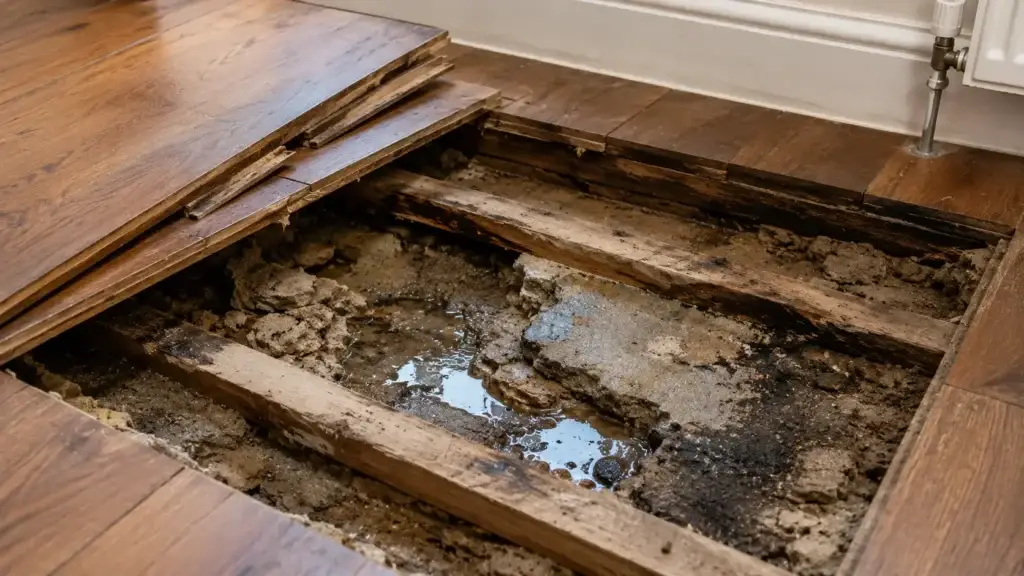
A leak in an underfloor heating pipe loop operates entirely differently. The pipe is surrounded by screed that absorbs the water. The screed holds it, distributing it outward slowly. The floor covering above provides no indication. The system continues to operate, repressuised periodically. Months may pass before any surface sign appears.
In that period, the screed is progressively degrading. If the pipe loop runs beneath timber elements, those elements begin to absorb moisture. Insulation beneath the screed, designed to direct the heat upward, becomes permanently waterlogged and loses its thermal effectiveness. By the time the problem becomes obvious from the surface, the structural impact may be significant.
Early detection, which the boiler pressure gauge enables if the reading is monitored consistently, prevents the extended damage period that turns a pipe repair into a major floor replacement.
How Specialist Detection Finds a Leak in an Underfloor Heating System
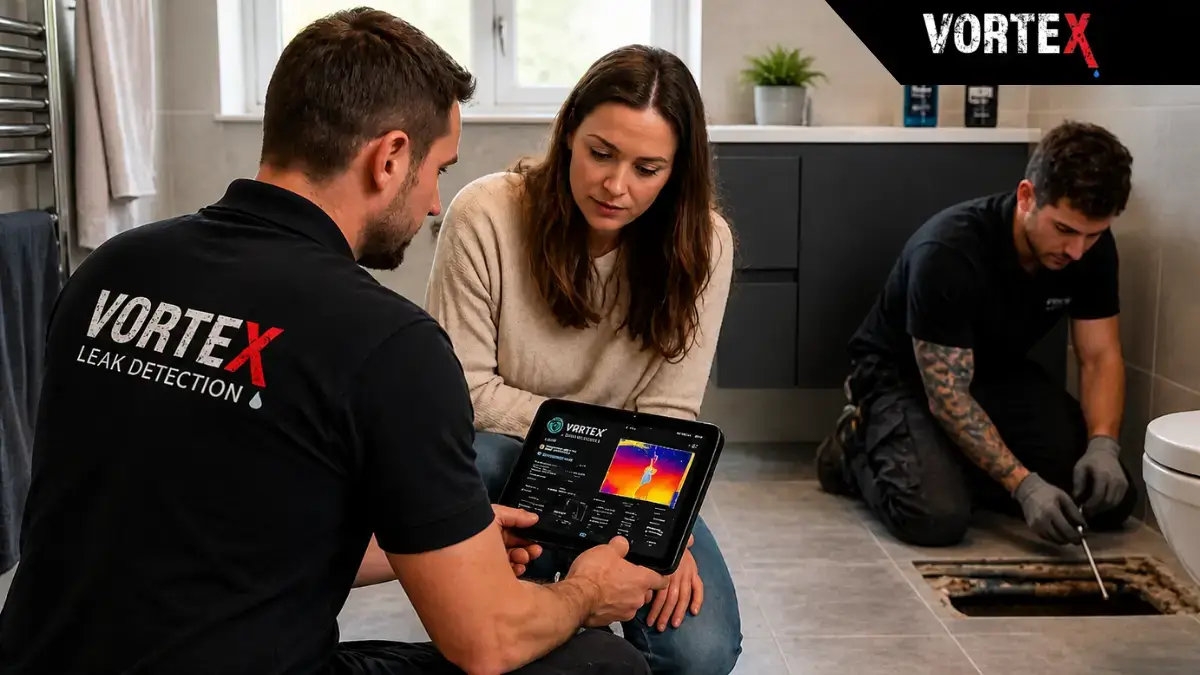
Underfloor heating leaks are one of the scenarios for which thermal imaging is most effective. Because the water in the underfloor circuit is warm, a leak releases warm water into the surrounding screed. That warm water creates a detectable heat signature on the floor surface above that is visible to an infrared camera.
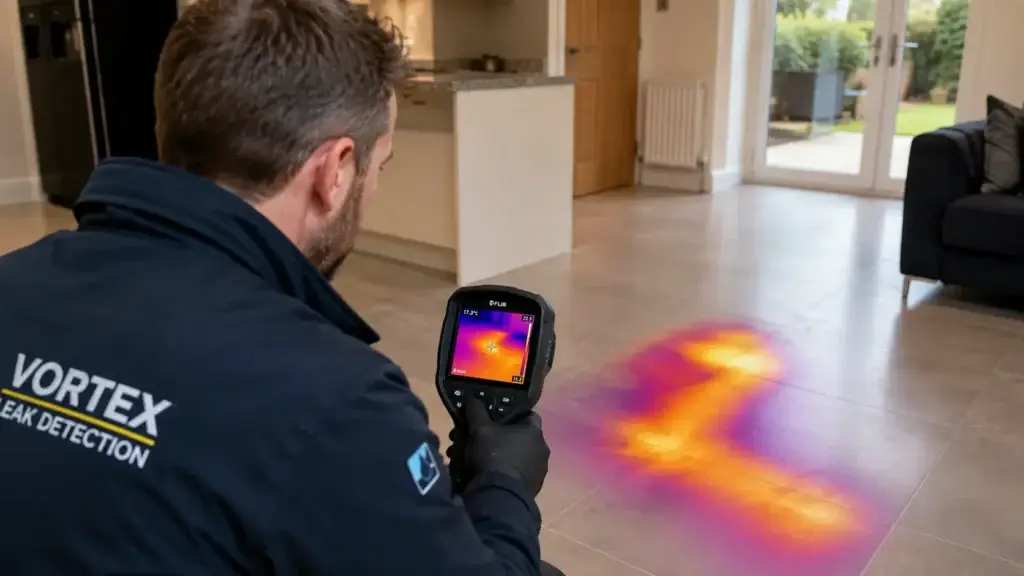
The specialist scans the floor surface systematically with a thermal imaging camera, typically with the heating running to maximise the thermal differential between the leaking water and the surrounding dry screed. The thermal image reveals the pattern of heat distribution beneath the floor covering. A normal underfloor heating system shows a regular pattern corresponding to the pipe coil layout. A system with a leak shows an anomaly: a zone of elevated temperature that does not correspond to the expected pipe pattern, or a section of floor where the thermal pattern is disrupted by the presence of warm water escaping from the pipe.
Once the affected zone has been identified by thermal imaging, acoustic detection narrows the leak to a specific section of the pipe loop. Tracer gas, introduced into the loop, then confirms the exact location of the pipe failure at the surface. The result is a position accurate enough for a targeted access cut in the floor at the confirmed point, rather than a speculative opening across a wide area of the floor.
Wet System vs Dry System: Does the Leak Risk Differ?
Wet underfloor heating systems, which circulate water through buried pipes, carry the leak risk described throughout this article. Dry or electric underfloor heating systems use electrical heating elements embedded in or beneath the floor and do not use water at all. Electric systems cannot leak water. If your underfloor heating is an electric mat or cable system rather than a water-based system, a water leak from the heating system itself is not possible.
In a property with both wet underfloor heating and a conventional radiator circuit, a leak in either circuit will cause boiler pressure loss. The distinction between which circuit is involved is part of the specialist investigation, as the pipe routes and detection approach differ between underfloor and radiator circuits.
Quick Diagnostic Checklist: Is a Leak Causing My UFH Problems?
| A leak in the underfloor heating circuit is likely if:The boiler pressure is dropping repeatedly and has been confirmed as not caused by the expansion vessel or pressure relief valveThe underfloor heating zone that is underperforming corresponds to a section of floor where the pipe loop runsA section of floor covering has become soft, springy, or has begun to liftA musty smell is present at floor level in a room with underfloor heatingThe heating system has been repressuised more than twice in a month – Thermal imaging or moisture testing has identified elevated moisture within the floor screedThe property is more than ten years old and the underfloor heating system has never been pressure tested |
What to Do Next
If your underfloor heating is underperforming and the boiler pressure is also dropping, a specialist underfloor leak detection survey is the most effective next step. Vortex Leak Detection uses thermal imaging and tracer gas technology specifically suited to underfloor heating leak detection, identifying the position of pipe failures within the floor without lifting the floor covering. Get in touch to arrange a survey.