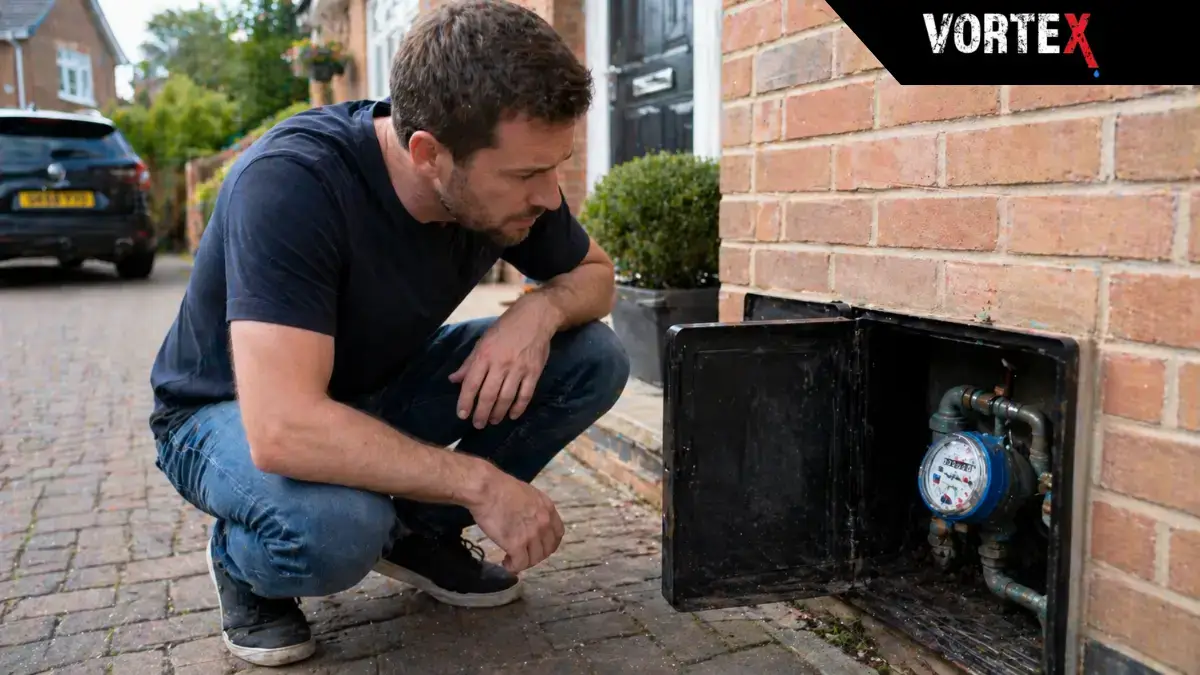

Low water pressure is one of those household problems that is easy to tolerate for longer than you should. A shower that does not perform as well as it used to, taps that fill a basin more slowly than they once did, a dishwasher that takes longer to complete its cycle. These changes come on gradually, and without a clear cause pointing to them, they tend to be absorbed into the background of small domestic inconveniences rather than treated as something worth investigating.
But low water pressure is not always a minor inconvenience. In a meaningful proportion of cases it is an early indicator of a hidden problem in the supply pipework, and specifically of a leak in the buried mains supply pipe that brings water from the street main into the property. A leak of sufficient volume in that pipe will reduce the pressure available throughout the whole house, and that pressure drop is often the only early sign that water is escaping into the ground before it ever reaches a tap.
This article explains the common causes of low water pressure, how to identify which cause is responsible, and how to use practical self-checks to determine whether a hidden pipe leak is involved before deciding whether to call a plumber, contact your water company, or arrange a specialist leak investigation.
| Quick AnswerLow water pressure is caused most commonly by a water company network issue, a partially closed stop tap or valve, a failing pressure reducing valve, or limescale in pipes or fittings. When these common causes are ruled out and pressure is still low, particularly if only your property is affected and the overnight meter test shows water movement, a hidden supply pipe leak is a probable cause requiring specialist investigation. |
Understanding Water Pressure: What Is Normal and What Is Not
Water pressure in UK domestic properties is measured in bars. The typical incoming mains pressure for a domestic property in the UK is between one and three bars, with many modern fittings and appliances designed to work optimally at around two to two and a half bars. Below one bar, pressure is noticeably low. Some properties in areas with older or under-invested water infrastructure experience chronic low pressure. Others experience a sudden or gradual drop that represents a change from what was previously normal.
The distinction between chronic low pressure and a recent reduction is important. Chronic low pressure that has been present since the property was first occupied, and which affects neighbouring properties equally, is almost always a water company network issue rather than a problem on your supply pipe. A recent or gradual reduction in pressure that is specific to your property, and that has developed over weeks or months, is a different situation and warrants investigation.
The Six Most Common Causes of Low Water Pressure
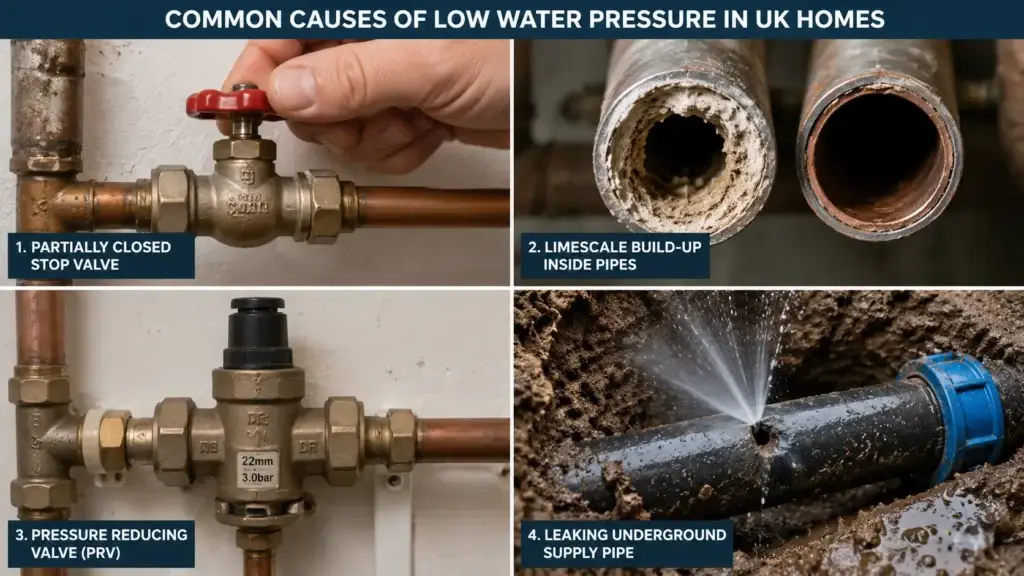
| Cause | Likely Explanation | Leak Involved? | How to Check |
| Water company network issue | Low pressure affecting the area. Often temporary or chronic in older infrastructure zones. | No | Check whether neighbours are also affected |
| Partially closed stop tap or valve | A valve has been partially closed during maintenance and not fully reopened. | No | Locate and check all stop taps and service valves are fully open |
| Failing or incorrectly set pressure reducing valve | The PRV on the supply regulates incoming pressure. If it fails or is incorrectly adjusted, pressure drops. | No | A plumber can test and adjust or replace the PRV |
| Limescale in pipes or fittings | In hard water areas, limescale accumulates inside pipes and reduces effective bore, especially at fittings. | No | More commonly causes slow flow at specific outlets rather than whole-house pressure drop |
| Internal plumbing leak | A significant leak in the hot or cold supply pipework within the property is reducing effective pressure. | Yes | Overnight meter test confirms water loss; internal leak investigation needed |
| Mains supply pipe leak | A leak in the buried supply pipe between the street main and internal stopcock is reducing the pressure entering the building. | Yes | Overnight meter test plus stop tap test to confirm supply-side loss |
Which of These Are Leak-Related and Which Are Not?
The first four causes in the table above are plumbing and infrastructure issues that do not involve water escaping from the system. They can reduce the pressure or flow available at your taps but they do not represent a structural or environmental risk. They are resolved by maintenance, valve adjustment, or infrastructure improvement by the water company.
The last two causes, an internal plumbing leak and a mains supply pipe leak, are different in character. They involve water actively leaving the distribution system before it reaches its intended outlet. This water has to go somewhere: into the building fabric, into the ground, or into the surrounding structure. The pressure drop is an early symptom; the damage to the building or the ground surrounding the pipe is the progressive consequence.
Ruling out the first four causes is the starting point for any pressure investigation. If those have been eliminated and pressure is still reduced, the remaining explanation is almost always a leak on the supply side.
How a Hidden Pipe Leak Affects Water Pressure
The relationship between a pipe leak and water pressure is straightforward in principle. Water is supplied at the incoming pressure from the water company’s main. If a significant proportion of that water is escaping through a leak before it reaches the internal distribution system, the volume available to the taps and appliances in the property is reduced. The severity of the pressure reduction depends on the size of the leak: a minor pinhole may produce little or no measurable pressure effect at the tap, while a larger failure in the supply pipe will produce a noticeable whole-house pressure reduction.
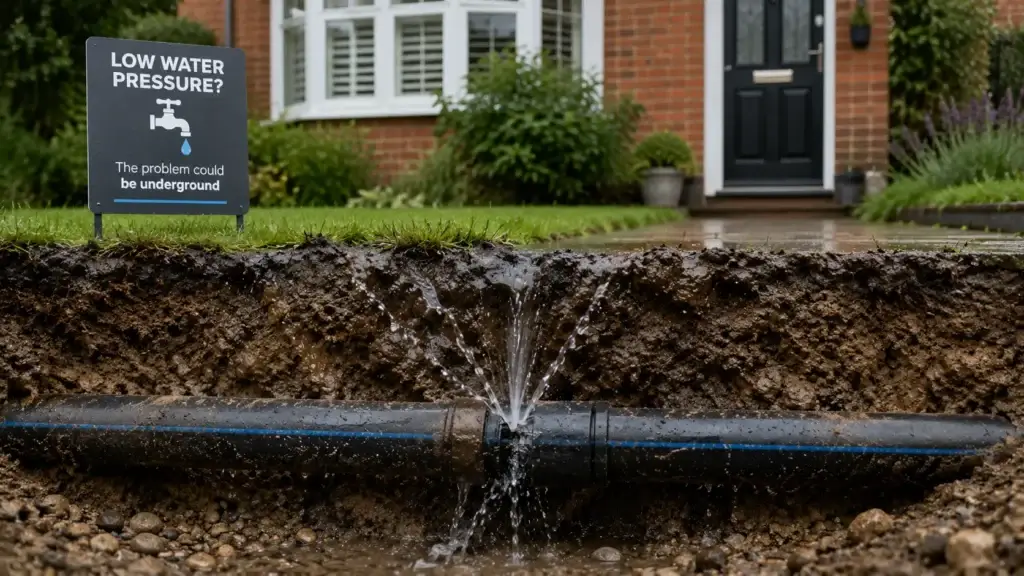
A mains supply pipe leak is the scenario most likely to produce a meaningful whole-house pressure reduction, because the supply pipe is the single route through which all water enters the property. A leak at any point in that pipe reduces the effective supply to the entire building. This is why a sudden whole-house pressure drop that does not correspond to any network issue, valve problem, or other obvious cause is one of the specific patterns that should prompt investigation of the supply pipe.
An internal plumbing leak within the property can also reduce pressure at outlets served by the affected branch, though it is less likely to produce a whole-house effect unless the leak is on the main cold supply before it branches.
Signs That a Leak Is the Cause of Low Pressure
Several accompanying observations make a leak more probable alongside low water pressure.
- The pressure reduction is specific to your property. Neighbours are not affected. A water company network issue would affect multiple properties on the same supply.
- The reduction has developed gradually over weeks or months rather than appearing suddenly. A gradual leak progressively reduces the effective supply.
- The water bill has also risen compared to the previous year. If water is escaping, it is registering on the meter.
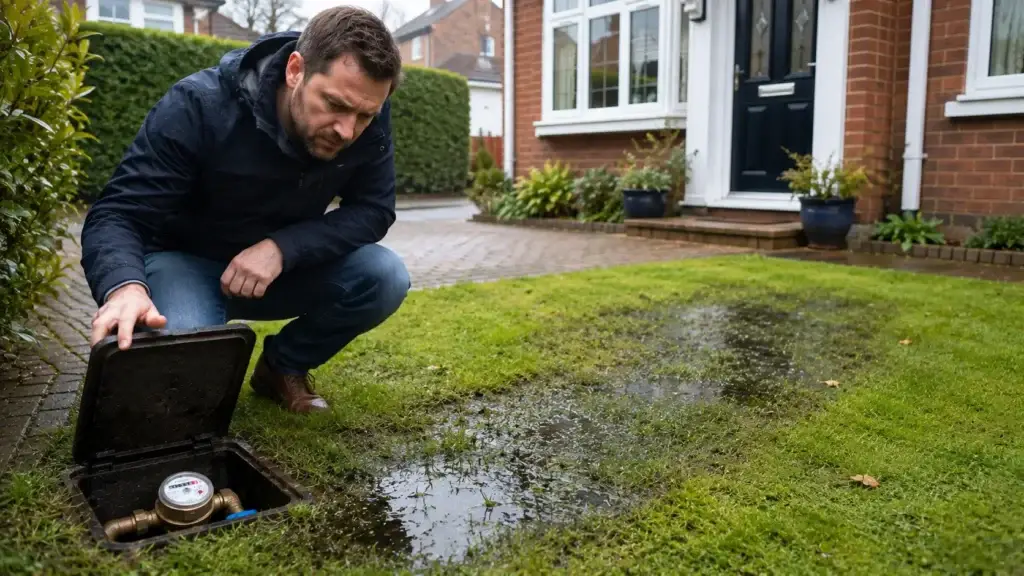
- A soft, wet, or unusually lush patch of ground is visible in the area where the supply pipe runs, typically the front garden, path, or driveway between the boundary and the building.
- The meter is moving overnight when all taps and appliances are turned off.
- No obvious network issue has been flagged by the water company when contacted.
- All stop taps and service valves have been confirmed as fully open.
- A plumber has checked the PRV and confirmed it is set correctly and functioning.
How to Rule Out the Non-Leak Causes First
Before concluding that a leak is responsible for low water pressure, working through the non-leak causes systematically is the sensible first step. This prevents unnecessary specialist investigation when the cause is straightforward.
Check the Water Company Network
Contact your water company or check their website for any reported pressure issues, works, or incidents in your area. Water companies are required to maintain supply above a minimum pressure threshold and are obliged to investigate reports of chronic low pressure. If the issue is network-wide, the water company is responsible for addressing it.
Check All Stop Taps and Service Valves
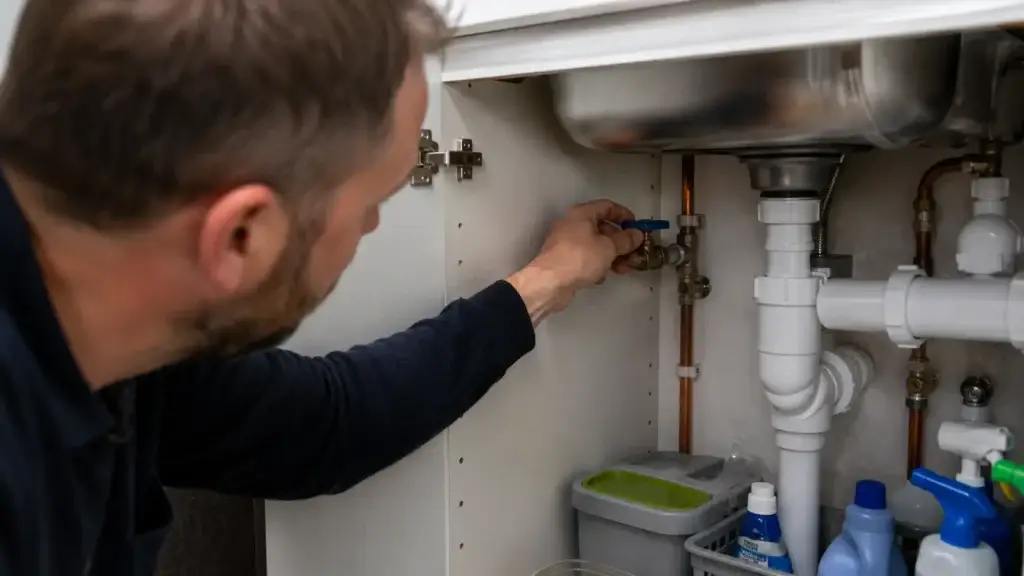
The internal stopcock, typically located under the kitchen sink or near the point where the supply enters the building, should be fully open. In a standard gate valve or ball valve, a quarter turn from fully open will noticeably reduce flow. If any maintenance has been done on the plumbing recently, a partially closed valve is a common and easily corrected cause of reduced pressure.
Check the Pressure Reducing Valve
Properties fitted with a pressure reducing valve on the supply have a device that regulates the incoming pressure to protect the internal system. A PRV that has failed or been incorrectly adjusted can reduce the pressure throughout the property. A plumber can test and adjust or replace the PRV relatively straightforwardly if this is the cause.
Check for Localised vs Whole-House Reduction
If the pressure reduction is confined to specific outlets, such as a single shower or a single basin, the cause is likely local to that fitting, such as a blocked aerator, a partially closed service valve for that outlet, or limescale in the supply flexi-hose. A whole-house reduction affecting all cold taps and appliances equally is more consistent with a supply pipe issue.
Read More: Mould on Walls: Is It Condensation or a Hidden Leak?
The Stop Tap Test: Checking Whether the Leak Is on Your Side
If the non-leak causes have been ruled out and a leak is suspected, the stop tap test helps identify whether the loss is on the supply side of the internal stopcock, which points toward the buried supply pipe outside.
- Turn off the internal stopcock fully.
- Check the water meter reading and note it precisely.
- Wait 30 minutes with the stopcock closed and no water use.
- Check the meter reading again.
- If the meter has moved with the stopcock closed, water is being lost between the street main and the stopcock. This is the section of supply pipe that is buried outside your property and is the most likely location of a supply pipe leak.
- If the meter has not moved with the stopcock closed, the loss is on the internal plumbing side of the stopcock, and the investigation should focus on the internal pipework.
This test narrows the investigation to either the external supply pipe or the internal plumbing system, which determines the appropriate next step and the type of specialist investigation needed.
The Overnight Meter Test: Confirming Water Is Being Lost
If the stop tap test is inconclusive, or if you want to confirm that water loss is genuinely occurring before engaging a specialist, the overnight meter test is the most reliable homeowner check available.
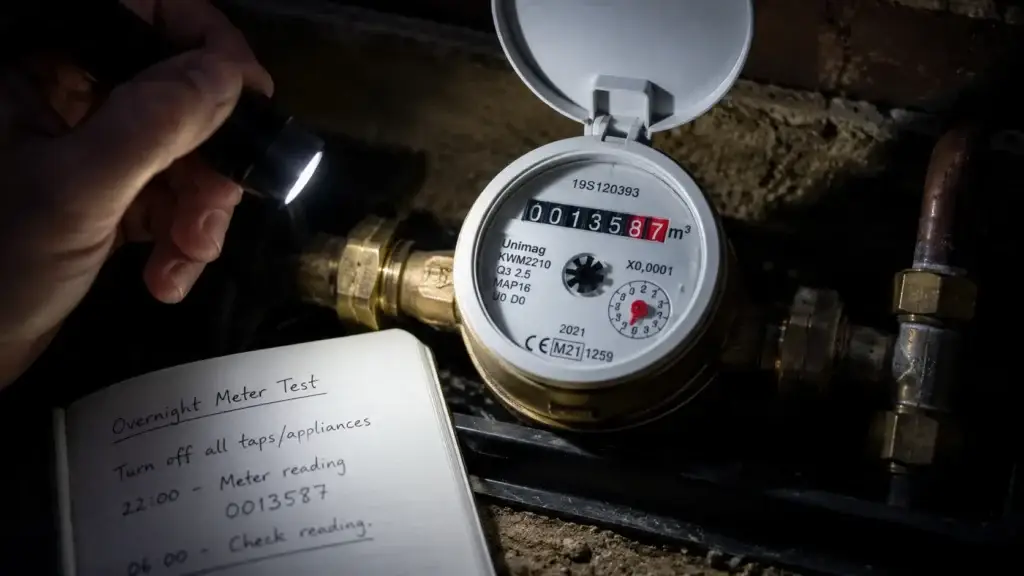
- Ensure all taps, appliances, garden irrigation, and any water-using devices are fully off before bed.
- Note the water meter reading precisely, including all digits and decimal places. A photograph of the display is useful.
- In the morning, before any water is used in the property, check the meter again.
- If the reading has changed overnight, water has left the system while everything was off. This is a strong indicator of a hidden leak.
The overnight meter test cannot tell you where the leak is, only that one is present. Combined with the stop tap test, it can indicate whether the loss is on the supply side or the internal side. For the precise location, specialist detection is needed.
When Low Pressure Combines With Other Warning Signs
Low water pressure alone is not a definitive indicator of a leak. But when it combines with other warning signs, the probability increases substantially and the case for specialist investigation becomes compelling.
| Combination of Signs | What It Suggests | Recommended Action |
| Low pressure + high water bill | Water is being lost from the supply before it reaches the outlets. Bill confirms the meter is registering the loss. | Overnight and stop tap tests. Specialist investigation if confirmed. |
| Low pressure + wet patch in garden above supply pipe route | Visible surface evidence of water escaping from the buried supply pipe. | Specialist acoustic and tracer gas investigation of supply pipe. |
| Low pressure + soft or spongy flooring near entry point | Water may be entering the subfloor near where the supply pipe enters the building. | Specialist investigation including moisture mapping. |
| Low pressure + boiler also losing pressure | Two separate systems are both showing water loss. Multiple leaks are possible. | Specialist investigation of both supply side and heating circuit. |
| Low pressure + high bill + no surface signs | Active supply pipe leak but water is being absorbed by the ground without reaching the surface. | Overnight and stop tap tests followed by specialist acoustic investigation. |
Why Low Pressure From a Leak Is Often Dismissed Longer Than It Should Be
There are two specific patterns that explain why supply pipe leaks causing low pressure are frequently not investigated for months after the first symptom appears.
The first is the availability of alternative explanations. Low water pressure has multiple plausible causes. Each time a homeowner considers investigating, one of those alternatives, the water company, the PRV, the stop tap, provides a more comfortable explanation that does not require a specialist investigation. The investigation is deferred until the next time the pressure seems noticeably poor.
The second is the gradual nature of the change. A supply pipe that develops a slow leak reduces pressure gradually rather than suddenly. Each week the pressure is marginally lower than the week before, but no single moment triggers the perception that something has changed dramatically. By the time the pressure reduction is pronounced enough to be clearly unacceptable, the leak has often been running for months and the surrounding ground has absorbed a significant volume of water.
The overnight meter test is specifically useful for breaking through this pattern. It provides a concrete answer, independent of the subjective experience of whether the shower feels a bit less powerful than it used to, and removes the ambiguity that allows indefinite deferral.
Quick Diagnostic Checklist: Is a Leak Causing Your Low Pressure?
| A hidden supply pipe leak is a likely cause of low water pressure if:Pressure is reduced throughout the whole house, not just at one outletNeighbouring properties are not also experiencing low pressureAll stop taps and service valves have been confirmed as fully openThe PRV has been checked and is functioning and set correctlyThe water company has confirmed no network issue in your areaThe overnight meter test shows the reading has moved with all usage turned offThe stop tap test shows the meter continues to move with the stopcock closedThe water bill has risen compared to the same period last yearA soft, wet, or unusually lush patch of ground is visible above the supply pipe routeThe pressure reduction has developed gradually over weeks or months |
When to Call a Specialist Rather Than a Plumber
A general plumber is the right first call when the cause of low pressure is a valve, a PRV, a limescale problem, or a visible internal plumbing fault. These are accessible issues that a plumber can identify and resolve through standard inspection and adjustment.
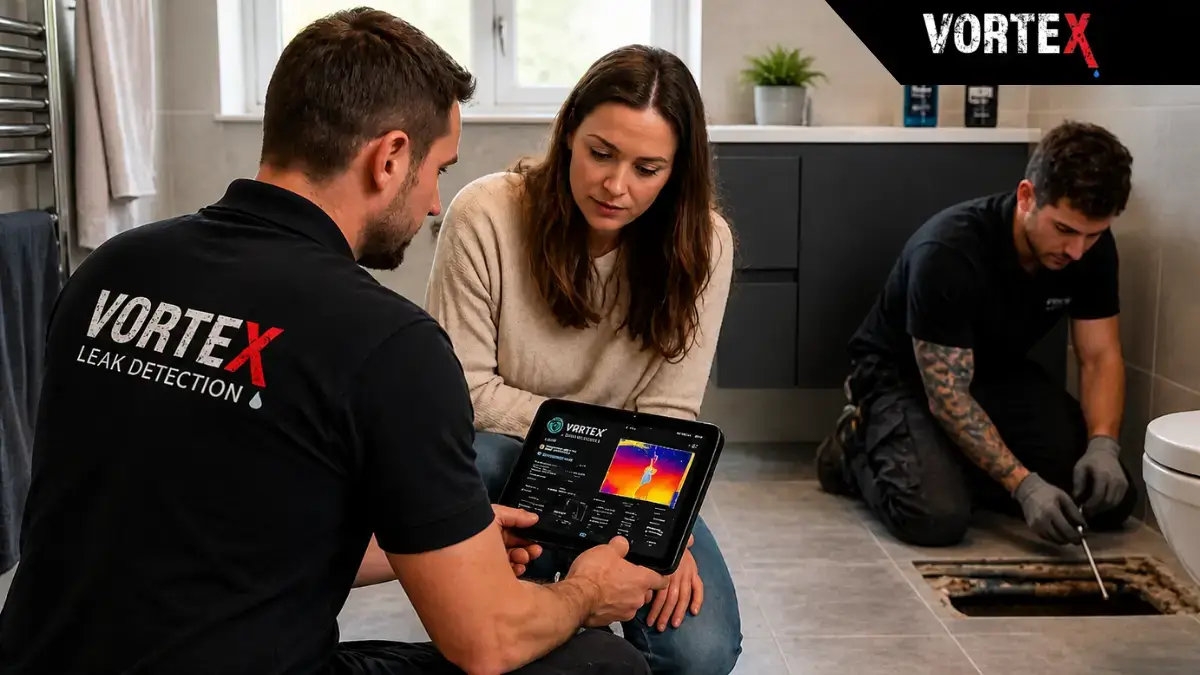
A specialist leak detection service is the right call when the overnight and stop tap tests have confirmed water is being lost from the supply side of the stopcock and no visible cause has been found. A supply pipe buried in the ground cannot be located by visual inspection. The specialist uses acoustic detection to hear the escaping water through the ground surface and tracer gas to confirm the exact position, identifying the leak location before any excavation begins.
The distinction matters because the response is different. Speculative excavation of the supply pipe route without prior detection may require a wide area of garden or driveway to be opened before the leak is found. Specialist detection with acoustic and tracer gas methods confirms the precise location first, limiting the excavation to a targeted access at the confirmed point.
What to Do Next
If your water pressure has dropped and you have ruled out network issues, valve problems, and PRV faults, the overnight meter test is the most productive next step you can take before calling anyone. If the test confirms water movement overnight, a hidden supply pipe leak is the most probable remaining explanation.
The Vortex Leak Detection team uses acoustic detection and tracer gas technology to locate buried supply pipe leaks without speculative excavation. If your overnight meter test has confirmed water loss and no visible cause has been found, get in touch to discuss your situation and arrange an investigation.
| Ruled out the simple causes and pressure is still low?If the overnight meter test shows water movement with everything turned off,a hidden supply pipe leak is the most probable remaining cause.Contact Vortex Leak Detection to locate it before it causes further damage.vortexleakdetection.co.uk/contact-us-vortex/ |