
A leak under the floor is one of the most difficult types of hidden leak to identify, because the very thing that defines it, the fact that it is below the floor surface, means the most obvious evidence of a leak is hidden from view. Unlike a dripping pipe under a sink or a weeping radiator valve, an underfloor pipe leak releases water into the surrounding structure rather than onto a visible surface. The floor above may look and feel completely normal for weeks or months while the surrounding material gradually saturates.
The signs that do appear are indirect, and each one has alternative explanations that make it easy to dismiss. Understanding what the signs actually look like, why they occur, and what combination of them points specifically toward a leak under the floor is what allows a homeowner to make the right diagnostic decision rather than waiting for the problem to become obvious.
This article covers the types of pipe that run beneath floors, the signs associated with an underfloor leak, practical checks you can carry out before calling a specialist, and how specialist detection works in this specific scenario.
Quick Answer
A leak under the floor typically shows as a soft or spongy patch underfoot, floor covering lifting or bubbling in a localised area, recurring boiler pressure loss if the pipe is part of the heating circuit, cold spots on the floor surface, or a persistent musty smell at floor level. None of these signs is definitive alone, but two or more together warrant specialist investigation.
Why Underfloor Leaks Are So Hard to Detect
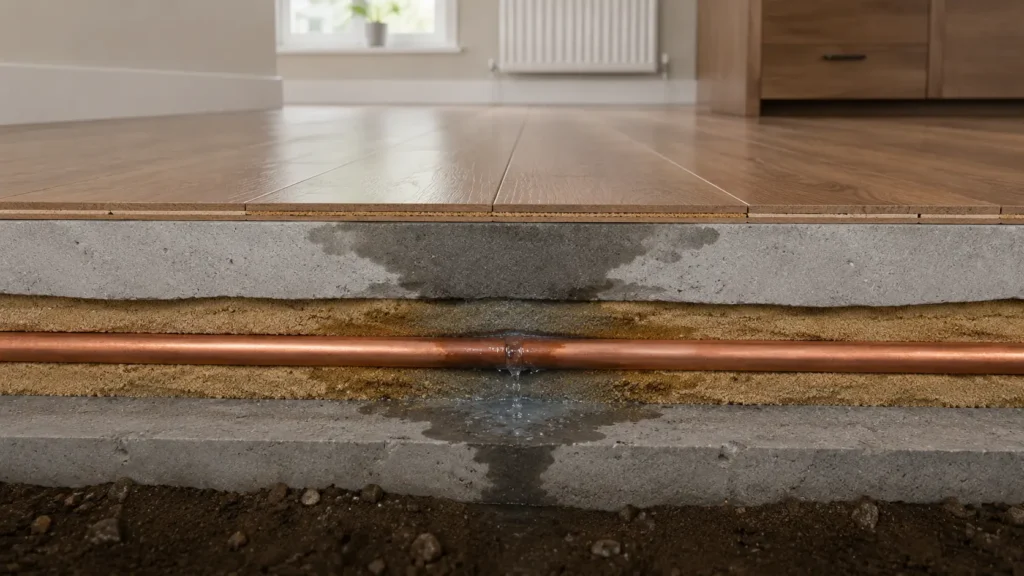
Floors are not designed to be opened. Unlike walls, where a damp patch or a stain can prompt immediate investigation, a floor is a continuous surface that conceals everything beneath it. The material above the pipe, whether concrete screed, timber boards, or a floor covering, absorbs moisture from below before it has any route to reach a visible surface. Water escaping from a pipe buried in screed travels outward through the screed layer and may never reach the floor surface directly.
The building also works against detection in a specific way. A floor that appears flat, solid, and dry to the eye can be sitting on a screed layer that has been absorbing water for months. The thermal and mechanical changes associated with moisture saturation develop slowly. A floor covering will feel normal underfoot until the saturation reaches a level where the screed beneath begins to deform or the covering begins to separate from its substrate.
What Types of Pipe Run Under Floors?
Understanding which types of pipe can be found beneath different floor constructions helps narrow the diagnostic picture when a floor leak is suspected.
Heating Circuit Pipework
In many UK properties, the central heating circuit runs beneath the floor, connecting boiler to radiators through pipework buried in screed or running through the floor void. In properties with underfloor heating, the pipe loop itself is the heat-emitting element and runs throughout the entire floor area. A leak in any section of this pipework causes water to escape into the surrounding screed or insulation. The boiler pressure gauge is often the earliest evidence of this type of leak.
Cold and Hot Water Supply Pipes
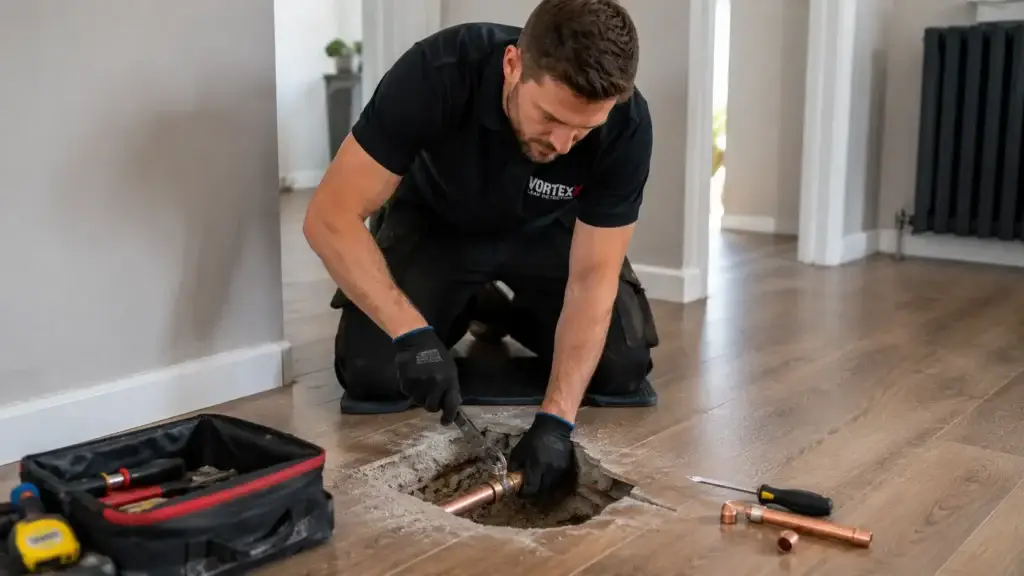
Domestic cold water supply pipes and hot water distribution pipes often run beneath the ground floor, particularly in properties where the supply enters below floor level and distribution pipes are routed under the floor to reach different parts of the property. A failure in these pipes releases water at mains pressure, which can saturate the surrounding material rapidly.
Waste Pipes
Waste pipes from ground floor fittings, particularly toilets, showers, and sinks, run beneath the floor to connect with the soil stack or drainage system. A cracked or failed waste pipe joint beneath the floor releases waste water into the subfloor structure. This type of leak produces a distinctive unpleasant smell and may show different surface signs from a clean water pipe leak.
Mains Supply Pipe
The incoming mains supply pipe typically enters the property below ground level and runs under the floor before connecting to the internal stopcock. A failure at or near this entry point can saturate the subfloor material close to the point of entry and may produce dampness at the base of walls near the stopcock.
Key Signs That Point to a Leak Under the Floor
Soft or Spongy Patches Underfoot
A patch of floor that feels softer, spongier, or more yielding than the surrounding area is one of the most reliable physical signs of a subfloor leak. The sensation occurs because the screed or subfloor material beneath has absorbed water and lost the rigidity it should have. The patch is typically localised to the area above or adjacent to the pipe rather than being distributed across a wide area.
Floor Covering Lifting, Bubbling, or Separating
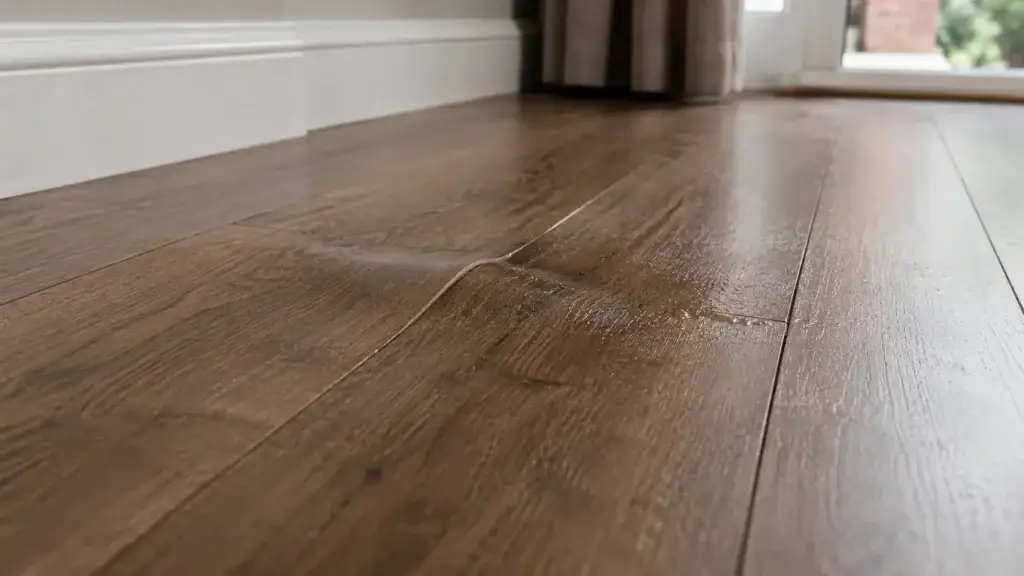
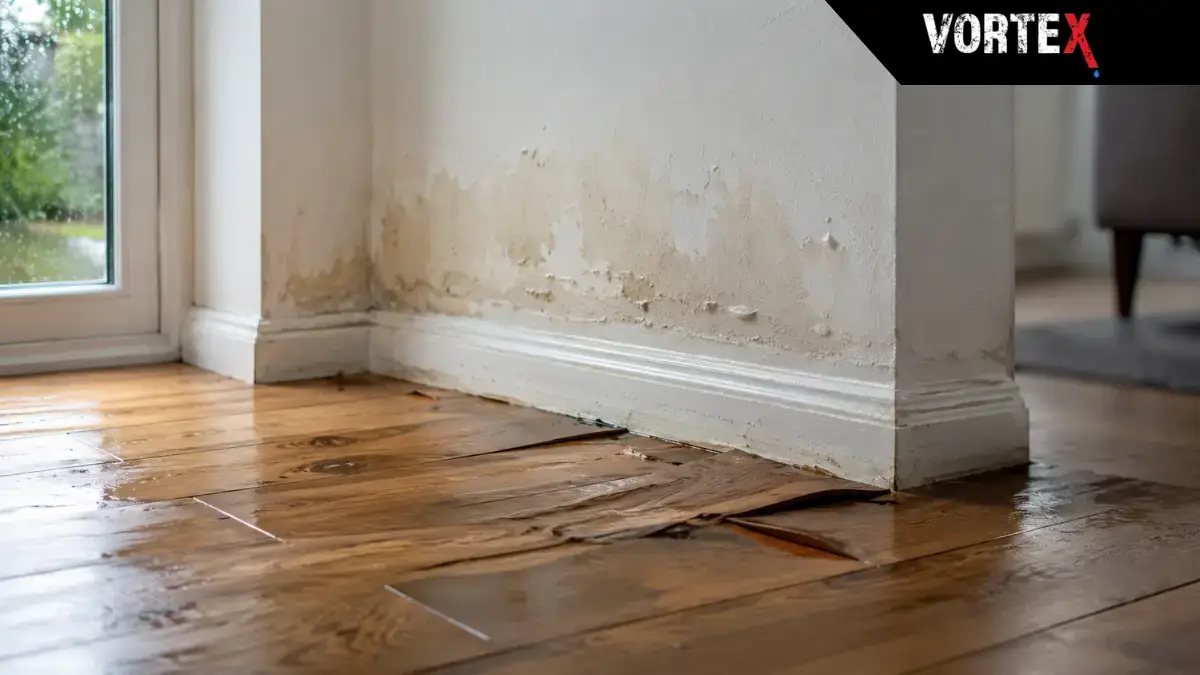
Laminate flooring, engineered timber, vinyl, and other sheet floor coverings are bonded to the subfloor or rely on the flatness of the screed to remain stable. When moisture enters the screed from below, it disrupts the bond, causes the screed to deform, and creates conditions where the floor covering lifts, bubbles, or develops visible gaps at joints. This is typically localised and progressive: it starts at one point and spreads outward as the saturation zone expands.
Cold Spots on the Floor Surface
A section of floor that feels noticeably cooler than the surrounding area, particularly in a property with a heated floor or one where the floor is normally warmed by the heating system, can indicate that the thermal properties of the subfloor have been altered by moisture. Waterlogged insulation or saturated screed conducts heat differently from dry material, often producing a perceptible cold spot on the surface above.
Recurring Boiler Pressure Loss
For leaks involving the heating circuit, the boiler pressure gauge is often the only early indicator. A sealed heating system should hold its pressure indefinitely. If pressure is dropping repeatedly without any identified component fault, and particularly if the expansion vessel and pressure relief valve have been confirmed as sound, a concealed leak in the pipework is the most likely remaining explanation. If that pipework runs under the floor, the leak is underfloor.
Persistent Musty Smell at Floor Level
Moisture saturating building materials below the floor produces a characteristic musty, earthy smell that can be detected at floor level in the affected room. The smell is often stronger first thing in the morning, in cold weather, or when the heating has been running. It may be more noticeable close to the floor than at head height. A musty smell at floor level with no obvious surface moisture source is worth taking seriously as a potential underfloor leak indicator.
Unexplained High Water Bill
If the leak is in the cold or hot water supply rather than the sealed heating circuit, the water meter will register the loss. A bill that is significantly higher than the same period last year, with no change in household usage, combined with any of the floor-level signs above, strengthens the case for an underfloor supply pipe leak.
You may also like: How Much Does Leak Detection Cost in the UK?
Signs vs Other Causes: How to Read the Pattern
| Sign | Underfloor Pipe Leak | Other Possible Cause | Key Distinguishing Factor |
| Soft spongy floor patch | Likely | Poor installation, subfloor failure unrelated to water | Localised to one area, not present at fitting installation |
| Floor covering lifting | Likely | Poor adhesive, incorrect fitting, thermal expansion | Localised, progressive, above pipe route |
| Cold floor patch | Possible | Cold bridging, poor insulation, draught | Present when heating is running, localised |
| Boiler pressure dropping | Likely (heating pipes) | Expansion vessel, PRV fault | Component faults ruled out, pressure still dropping |
| Musty smell at floor level | Likely | Damp from ground, condensation under floor | Smell present without surface condensation, localised |
| High water bill | Likely (supply pipes) | Usage increase, estimated reading | Meter moves overnight with everything turned off |
The Practical Checks You Can Do Yourself
Before calling a specialist, two practical checks can help confirm whether a floor leak is likely.
The Boiler Pressure Check
If the suspected leak is in the heating circuit, check the boiler pressure gauge. A reading below 1 bar at rest suggests the system has lost water. Note the reading, repressurise the system, and check the reading again after 24 to 48 hours. If the pressure has dropped again by more than a small amount with no obvious cause, the heating circuit is losing water somewhere. If the pipe route runs under the floor, the leak may be underfloor.
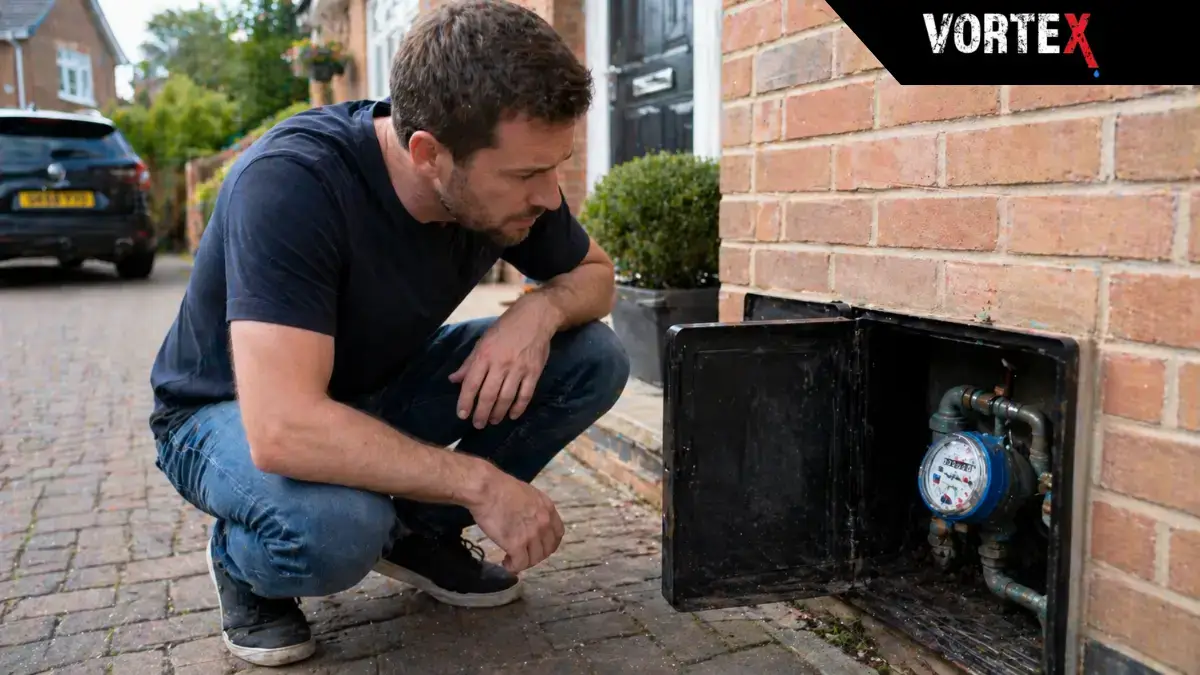
The Overnight Meter Test
If the suspected leak is in the supply pipework, locate the water meter outside and note the reading before bed with all water use turned off. Check it again in the morning before any water is used. Any movement indicates water is leaving the system overnight. To distinguish a supply pipe leak from an internal plumbing leak, turn off the internal stopcock and check whether the meter continues to move. If it does, the leak is between the street main and the stopcock, which in most properties means it is in the underground or underfloor section of the supply pipe.
Why Underfloor Leaks Cause More Damage Than Wall Leaks
Underfloor leaks are particularly damaging for several reasons that relate to the nature of the floor construction. A floor is a horizontal surface, which means water released into a screed layer distributes outward in all directions rather than running downward by gravity. The saturated zone expands slowly in every direction from the leak point, affecting a progressively larger area of screed and insulation.
The enclosed nature of the subfloor also means there is no natural evaporation route for the moisture. In a wall cavity, some evaporation occurs into the cavity air. In a solid screed floor, the moisture is trapped between an impermeable concrete base below and the floor covering above. Under these conditions, saturation persists and intensifies for as long as the leak continues.
The building materials most commonly affected by underfloor leaks, concrete screed, floor insulation, and timber joist voids, are all susceptible to serious degradation under sustained moisture exposure. This makes underfloor leaks one of the most structurally damaging scenarios in the hidden leak category.
How Specialists Detect Leaks Under Floors
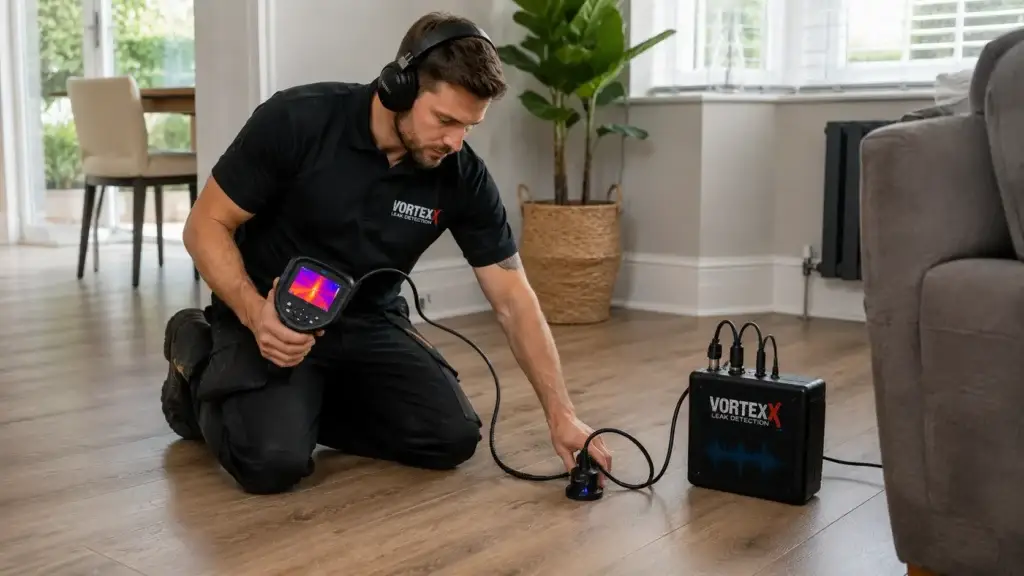
Specialist underfloor leak detection does not require the floor to be opened before the leak is found. The detection process uses the signals produced by the leak itself to identify the location from the surface above.
Thermal imaging is the primary tool for underfloor heating leaks and for heating circuit pipes running beneath screeded floors. The warm water escaping from the pipe produces a heat signature in the screed that is visible as a thermal anomaly on the floor surface above. An infrared camera in trained hands can map the thermal pattern of the floor and identify the zone where the pipe is losing water.
Acoustic detection identifies the sound of pressurised water escaping from the pipe through the floor structure. Sensors placed on the floor surface above the pipe route detect and amplify the acoustic signal, allowing the specialist to narrow down the leak to a specific section of pipework.
Tracer gas confirms the exact position. A safe inert gas is introduced into the pipe, escapes at the leak point, and rises through the screed to the surface where a probe detects it. The position of the strongest reading corresponds to the leak location in the pipe below.
These methods allow the specialist to identify the leak position with the precision needed for targeted repair access without opening a wide area of floor speculatively.
Further Reading: Can a Hidden Water Leak Cause Structural Damage to Your Home?
What Happens After an Underfloor Leak Is Confirmed?
Once the leak location has been confirmed by the specialist, a plumber makes a targeted access at that point to expose and repair the pipe. For a screeded floor this involves cutting the screed at the confirmed location, making the repair, and testing before any reinstatement.

The repaired area then needs to dry before the floor covering is reinstated. The drying period depends on how long the leak has been present and how saturated the surrounding screed has become. For leaks detected early, drying may take a few weeks. For leaks that have been running for months, an extended drying programme with monitoring is typically needed before the floor is safe to reinstate.
Quick Diagnostic Checklist: Is It a Leak Under the Floor?
A leak under the floor is likely if:
- A defined patch of floor feels soft, spongy, or slightly yielding compared to the surrounding area
- Floor covering is lifting, bubbling, or separating from the subfloor in a specific location
- The boiler is losing pressure repeatedly with no component fault identified
- The overnight meter test shows water movement with everything turned off
- A musty smell is present at floor level with no obvious surface moisture source
- Cold spots are present on the floor surface when the heating is running
- The property has underfloor heating or a heating circuit that runs beneath a screeded floor
- Any combination of two or more of the above signs is present together
What to Do Next
If any of the signs above apply to your property, and particularly if two or more are present together, specialist underfloor leak detection is the appropriate next step. The Vortex Leak Detection team investigates underfloor leaks using thermal imaging, acoustic detection, and tracer gas technology, identifying the leak location before any floor is opened.
Get in touch to discuss your situation or to arrange an assessment.