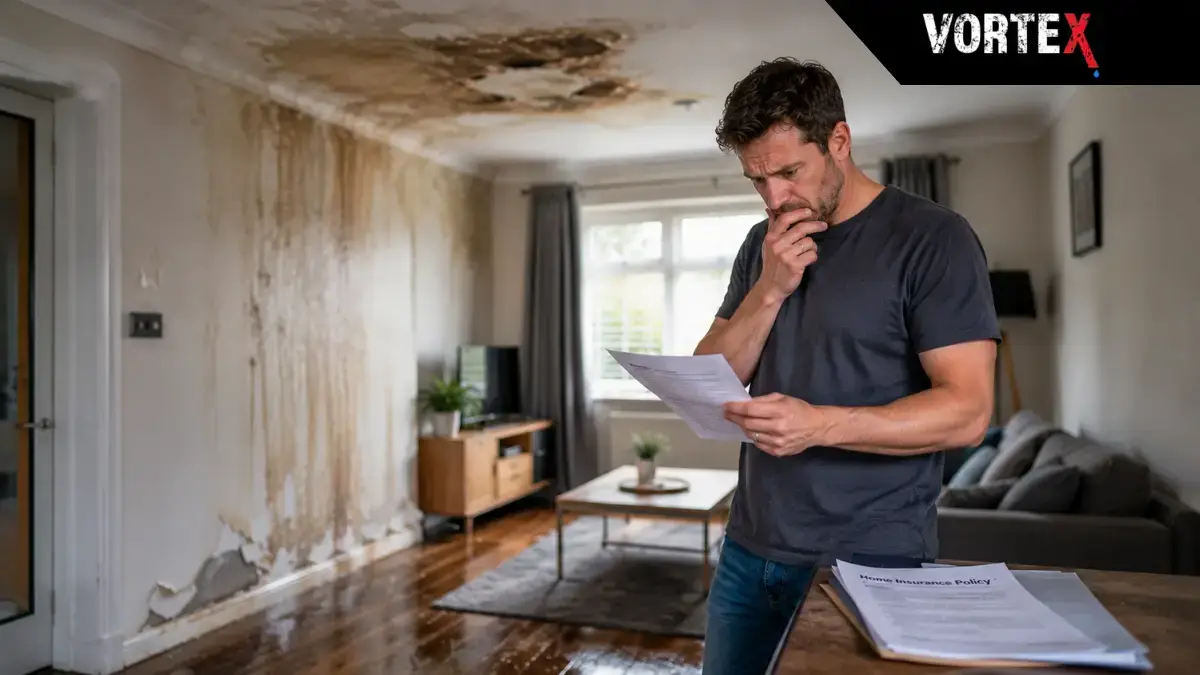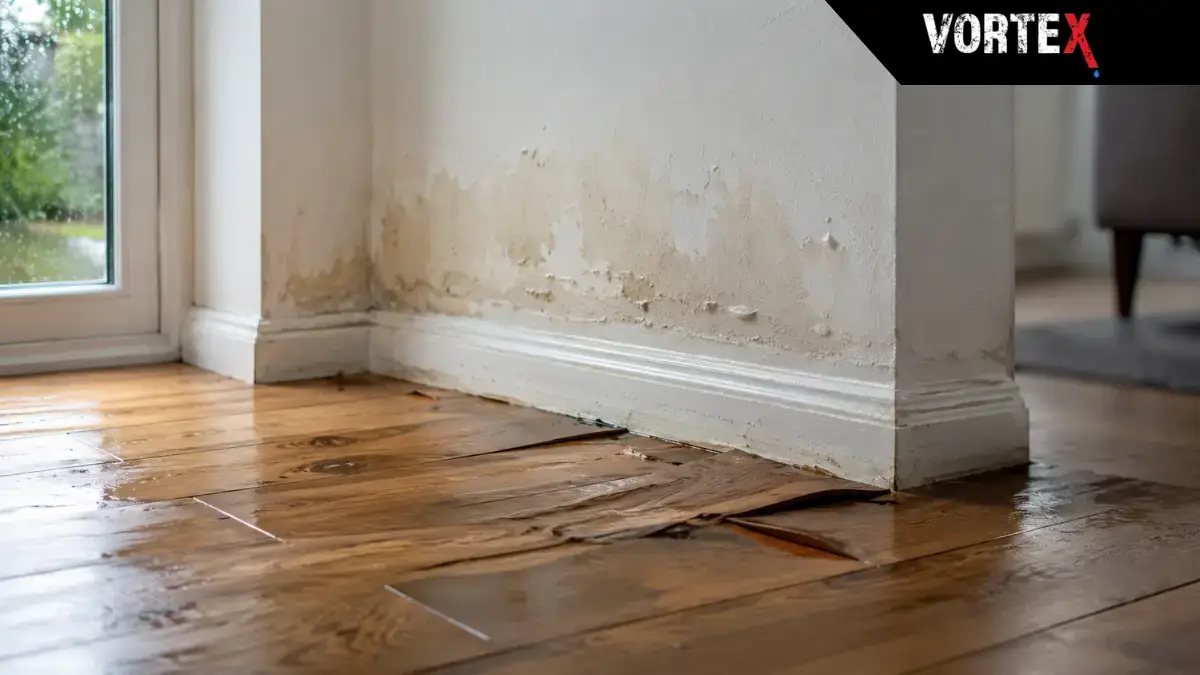

Water coming through a ceiling is one of the most alarming property emergencies a homeowner or tenant faces. The combination of visible damage, uncertainty about the source, and concern about electrics and structural safety creates a situation where knowing exactly what to do in the right order matters more than in almost any other domestic crisis.
This article provides clear, ordered guidance: what to do right now to protect safety and limit damage, how to identify where the water is coming from, who is responsible depending on the source, who to call and when, and what role a specialist detection report plays in resolving the situation and supporting any insurance claim.
| Quick AnswerIf water is coming through your ceiling, first ensure electrical safety by turning off power to the affected area if water is near fittings. Contain the water with buckets and protect possessions. Identify whether the source is from the flat above, a burst pipe, a roof leak, or a plumbing failure. Notify the appropriate party, document the damage photographically, and contact your insurer. A specialist detection report is usually required before an insurance claim can be fully processed. |
Do These Things First: Immediate Safety and Damage Limitation
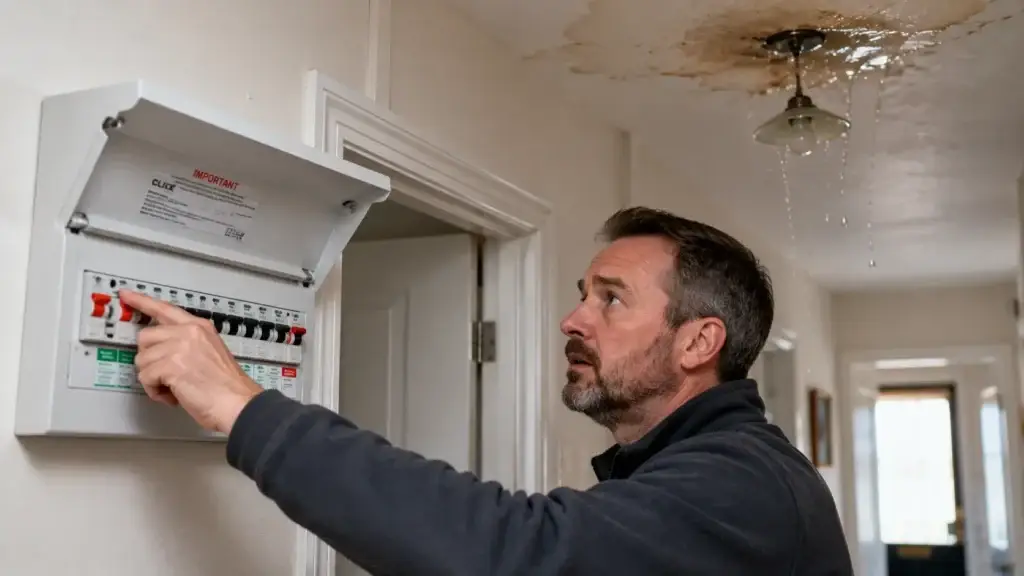
Immediate priority steps in order:Electrical safety first. If water is dripping near or through a ceiling light fitting, switch off the power at the consumer unit (fuse board) to the affected area or to the whole property. Do not use the light switch in the affected room. Do not touch wet electrical fittings. If in doubt, turn off the mains supply.Place buckets, bowls, or large containers under active drips to collect water and protect the floor.Move furniture, electronics, rugs, and valuable possessions away from the affected area before the water spreads further.If a ceiling is visibly bulging or sagging, it may be holding a pool of water. Carefully pierce the lowest point of the bulge with a screwdriver to allow controlled drainage before the ceiling collapses under the weight. Stand clear and protect yourself from the water release.Photograph and video the damage thoroughly before cleaning anything up. Record the date and time. This evidence is essential for any insurance claim.Identify where the water is most likely coming from and take action to stop the source if possible.Notify your insurer as soon as practical and obtain a claim reference.If the leak is from the flat above, contact the upstairs neighbour and the building’s freeholder or managing agent immediately.
Where Is the Water Coming From? The Four Most Likely Sources
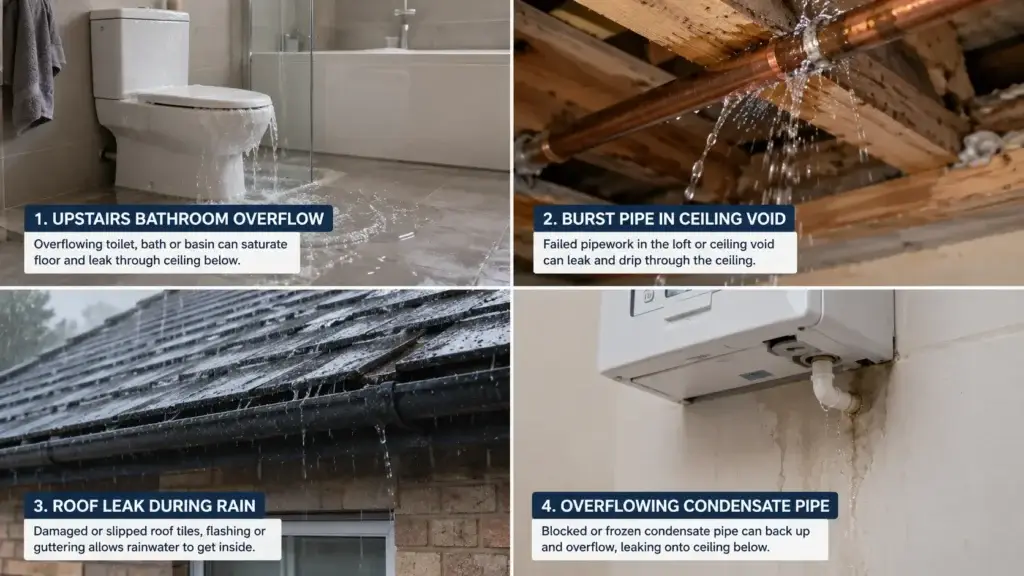
| Source | What It Means | Who Typically Responsible | Immediate Action |
| Flat or room above | Water escaping from plumbing, appliance, or bath overflow in the property directly above | Upstairs leaseholder or tenant if within their property; freeholder if shared pipe | Contact upstairs occupant and managing agent immediately. Ask them to check for overflows, burst pipes, or running appliances. |
| Burst or leaking pipe in your ceiling void | A pipe running through the ceiling void between floors has failed. Water is pooling above the plasterboard. | You as the property owner if it is your pipe; freeholder if it is a shared service pipe | Turn off water supply at the stopcock. Call a plumber urgently. |
| Roof or flat roof leak | Rainwater is entering through a failed roof covering, blocked gutter, or damaged flashing and running down to the ceiling below | Typically the freeholder in a block; the homeowner in a house | Contact freeholder or managing agent if in a flat. Contact a roofer if in a house. Document weather conditions at the time. |
| Overflow or condensate pipe | A boiler condensate pipe or appliance overflow pipe is discharging where it should not be, or is blocked and backing up | Property owner or the party responsible for the appliance | Check the boiler and any appliances with overflow pipes. A plumber or boiler engineer can diagnose and resolve. |
Which Source Makes You Responsible and Which Does Not
Whether you are responsible for the damage depends on where the leak originates. If the source is within your own property, such as a burst pipe in your ceiling void or a leaking appliance that you are responsible for, you are typically responsible for the repair and for any consequential damage.
If the source is within another leaseholder’s property, above you in a block of flats, that leaseholder is typically responsible. If the source is a shared or common service pipe, the freeholder is typically responsible. If the source is the building’s roof or structure, the freeholder or management company is responsible in a leasehold block.
Responsibility determines which insurance policy is relevant, whose obligation it is to arrange the repair, and who can be held liable for consequential damage. In practice, the most efficient approach is to notify your own insurer immediately regardless of who is responsible, and allow the insurers to establish liability between themselves.
When to Call an Emergency Plumber vs When to Call a Specialist
The correct call depends on whether the source of the water is visible and accessible, or whether it is hidden and requires specialist detection to locate.
Call an emergency plumber when: the source is a visible burst pipe that you or the plumber can access directly, a boiler or appliance overflow that can be isolated, or any situation where the pipe causing the problem can be seen and isolated with the stop tap.
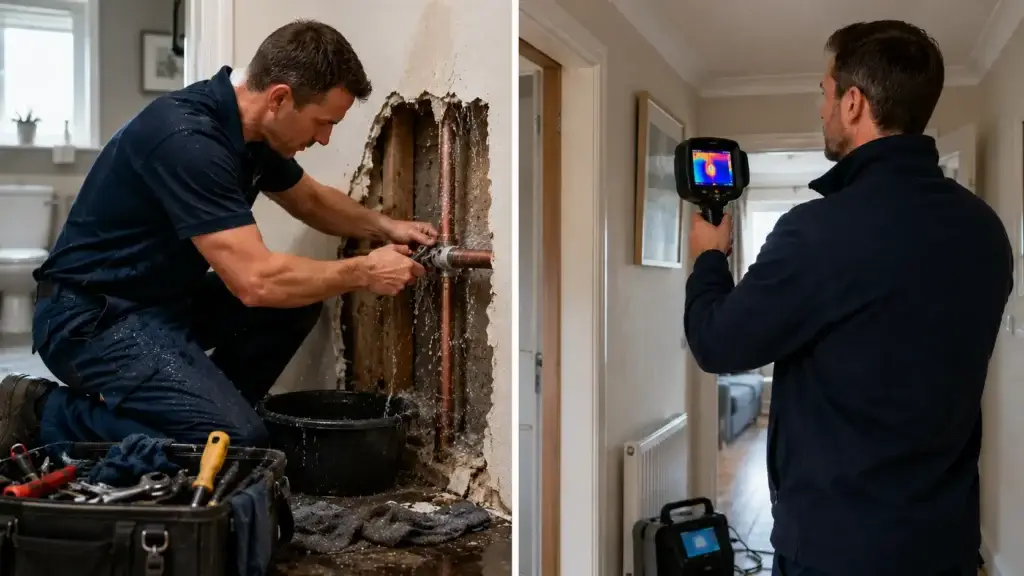
Call a specialist leak detection service when: the source cannot be seen, the water is entering through the ceiling from an unknown location in the floor construction above, a plumber has already investigated without finding the source, or a specialist report is required for an insurance claim or leasehold dispute.
In a flat situation where water is coming from the property above and the upstairs neighbour cannot identify the source in their flat, a specialist detection survey is the appropriate next step. The survey identifies the source with precision and produces the written report that insurers, managing agents, and parties in dispute require.
How to Tell If the Leak Is From a Flat Above or From a Burst Pipe
The distinction matters for knowing who to contact first and what action to take.
Signs pointing to the flat above: the water entry point in the ceiling corresponds to the floor area of the flat above, particularly the kitchen or bathroom area. The water started during or after audible activity from above such as running water or a bath. The upstairs occupant reports having had an overflow, a burst pipe, or a plumbing problem.
Signs pointing to a pipe within the ceiling void: the water entry point does not correspond to any wet area in the flat above. The upstairs flat has been unoccupied and no water was running there. The leak has developed gradually rather than appearing suddenly. A plumber investigating the ceiling void finds a failed pipe joint or corroded pipe section.
When neither is obvious, a specialist investigation is the most reliable way to confirm the source.
What to Do If You Cannot Locate the Source
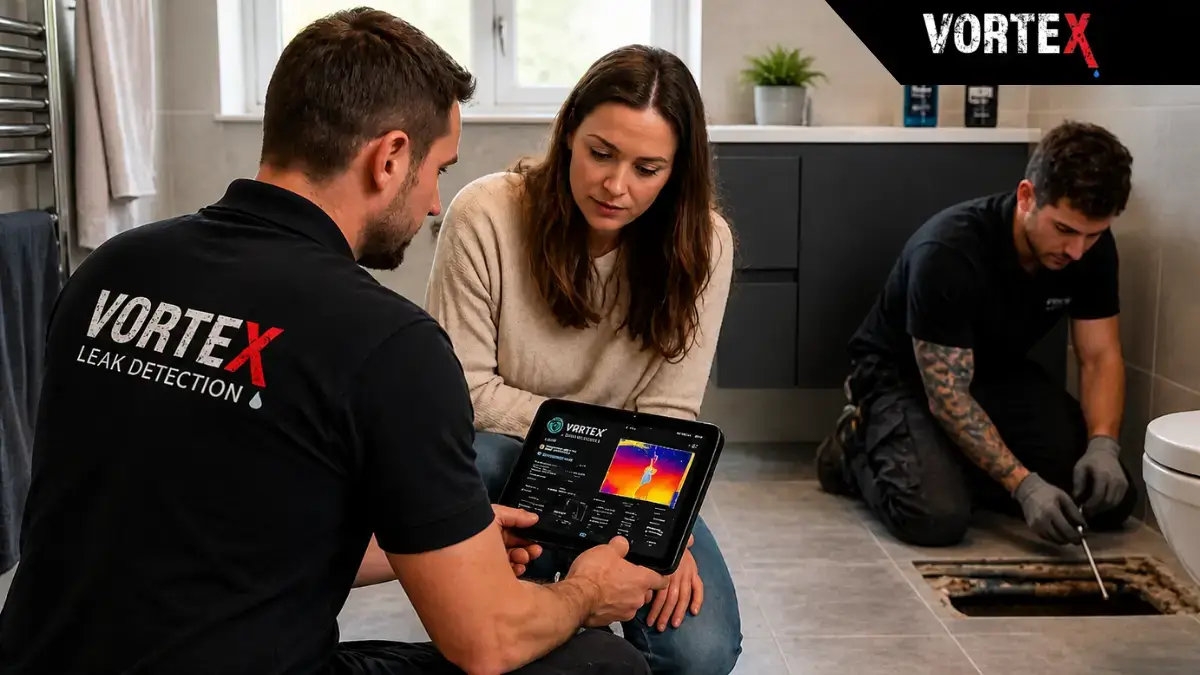
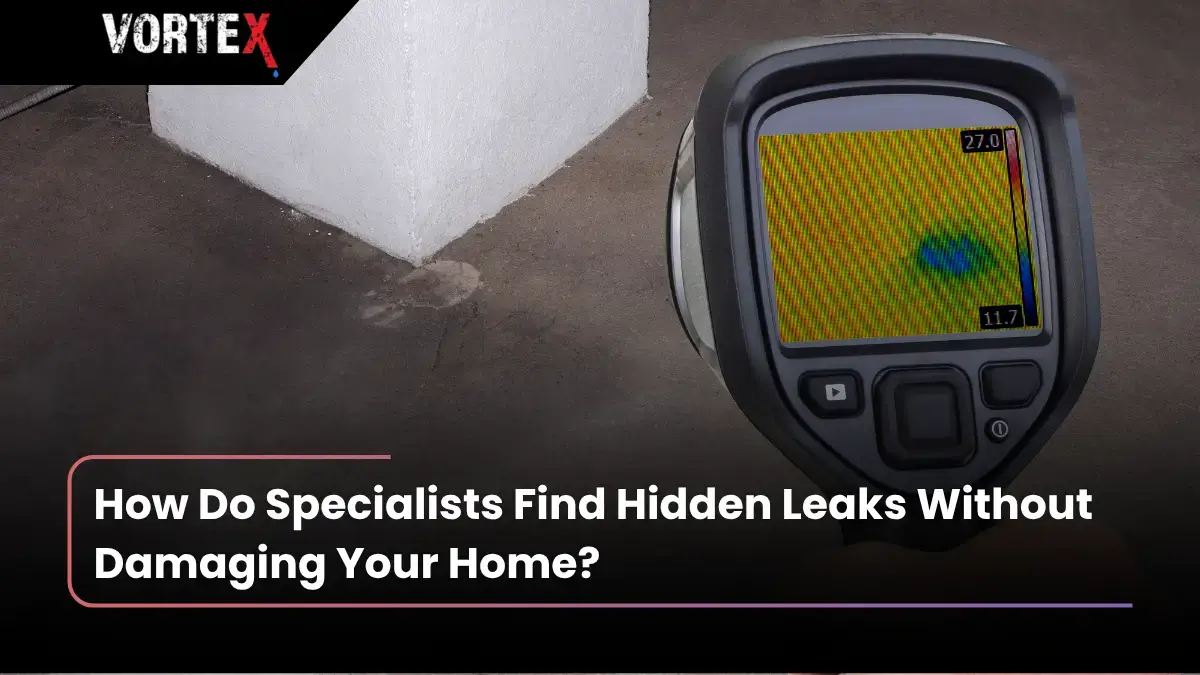
If the source of the ceiling water cannot be identified through visible inspection, the investigation needs to escalate to specialist detection. A leak that cannot be located by visual means is almost certainly originating from concealed pipework that requires thermal imaging, acoustic detection, or tracer gas to identify.
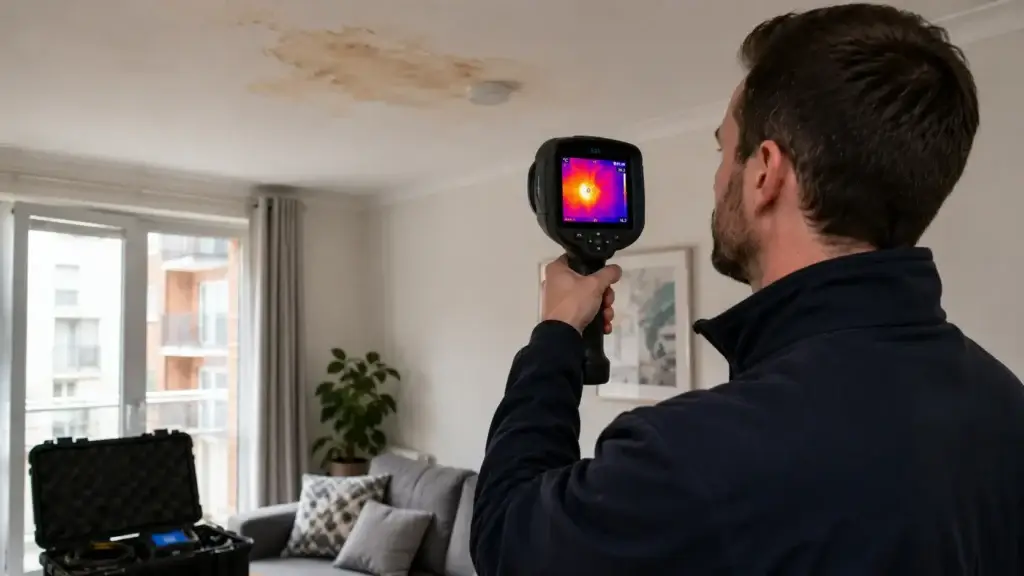
Document everything while the investigation is arranged: the location of the water entry points, the rate of water entry, any sounds from above or within the ceiling, and the timing of when the leak started or worsened. This information is useful to the specialist when they arrive.
Do not delay arranging a specialist survey because you are uncertain who will pay for it. Most home insurance policies cover investigation costs under a trace and access clause if such cover is included. Confirm with your insurer before the survey is commissioned whether trace and access cover applies.
Documenting the Damage: Why It Matters for Insurance
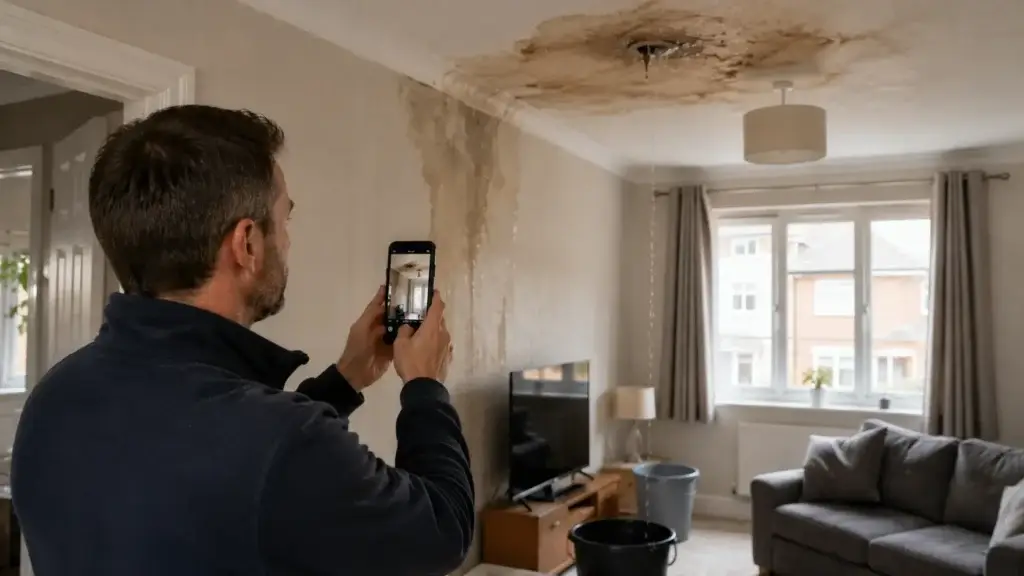
The photographs and records you make at the time of the incident are the foundation of any insurance claim. Insurers need evidence of the extent of damage at the time of discovery, not after cleaning up and drying out have altered the picture.
Photograph every affected surface, every item damaged, every stain, and every wet area before anything is moved or cleaned. Video walk-throughs of the affected rooms are useful. Record the date and time of every photograph. Keep all records of every communication with the upstairs occupant, the managing agent, your insurer, and any contractors.
How Buildings Insurance Works for Ceiling Leaks
If you own the property, your buildings insurance may cover the damage to the ceiling, walls, and floor structure caused by the leak. If the source is within another leaseholder’s property, your insurer may process the claim and recover the cost from the responsible party’s insurer.
In a leasehold block, the freeholder’s block buildings insurance is often the relevant policy for structural damage. Your own buildings insurance may cover your flat specifically if you hold a separate policy. The relationship between these policies and which excess applies is worth confirming with both your insurer and the freeholder before repair work begins.
Contents damage, including furniture, electronics, and personal possessions, is covered by contents insurance rather than buildings insurance.
Why a Specialist Detection Report Is Often the Critical Next Step
Across all ceiling leak scenarios where the source cannot be confirmed by visible inspection, a specialist detection report is the piece of documentation that moves everything else forward. Without it, insurers cannot process a trace and access claim. Freeholders and managing agents cannot assign responsibility. Leaseholders in dispute cannot establish the facts.
The report documents the detection methods used, the evidence gathered, the confirmed location of the leak source, and the recommendations for repair access. It is typically produced within one to three working days of the survey and provides the precise information that allows the repair to be targeted, the insurance claim to be processed, and any dispute about responsibility to be resolved.
What Happens to the Ceiling After the Leak Is Fixed
Once the leak source has been fixed, the ceiling and affected structure need to dry fully before reinstatement. The drying period depends on how much water entered and how long the leak was active before it was stopped. A ceiling that has absorbed water for days may take several weeks to dry sufficiently. A ceiling saturated over a longer period may require a specialist drying programme with monitored equipment before plasterwork and decoration can begin.
Do not rush to replaster and redecorate. A ceiling reinstated before it is fully dry will show further damage as residual moisture works its way to the surface.
Quick Reference: Who to Call and When
| Situation | First Call | Why |
| Water actively entering, source known and accessible | Emergency plumber | To stop the water at source immediately |
| Water near electrical fittings | Electrician or power off first, then plumber | Electrical safety is the priority before any investigation |
| Source is in flat above, upstairs neighbour reachable | Upstairs occupant and managing agent | They need to stop the source; managing agent has authority if unresponsive |
| Source cannot be found | Specialist leak detection service | To identify the source with equipment before repair |
| Insurance claim needed | Your insurer immediately | To open a claim and confirm what cover applies |
| Upstairs neighbour disputes responsibility | Specialist leak detection service | Written report confirms source and resolves the dispute |
| Trace and access claim needed | Specialist detection service, then submit report to insurer | Report is the evidence the insurer requires |
What to Do Next
If water has come through your ceiling and the source has not been confirmed, or if you need a written report for an insurance claim or a dispute with a neighbour, Vortex Leak Detection provides specialist surveys and written reports for exactly these situations. Get in touch at vortexleakdetection.co.uk/contact-us-vortex/ to discuss your situation and arrange an assessment.