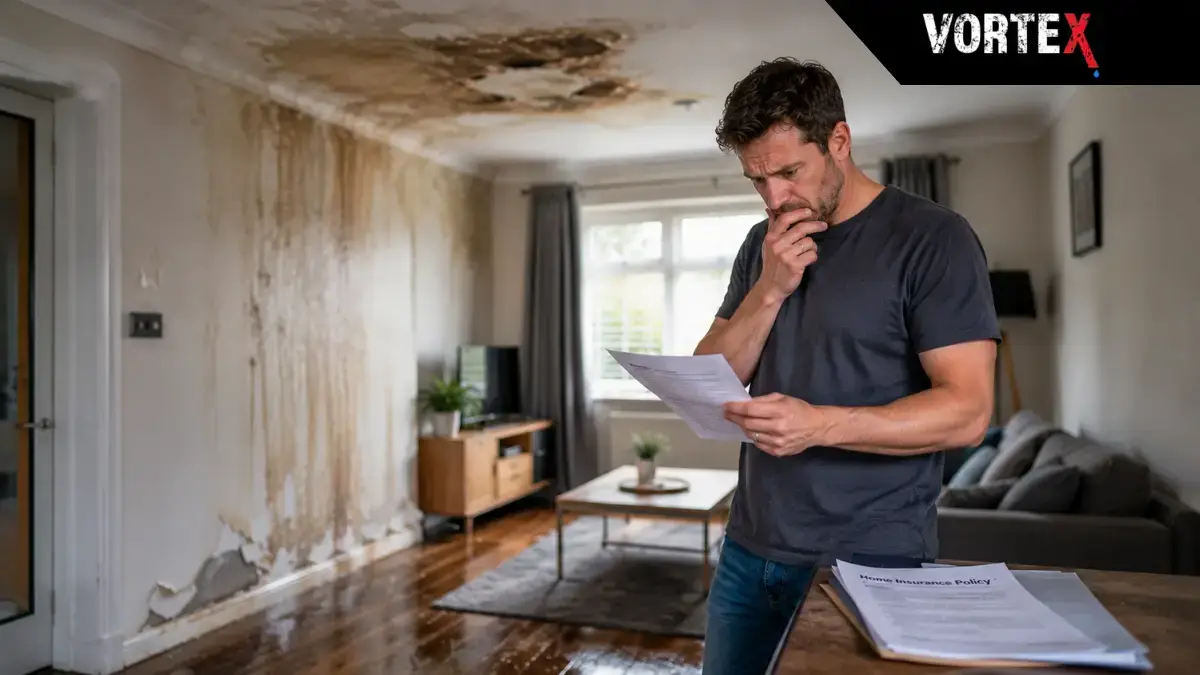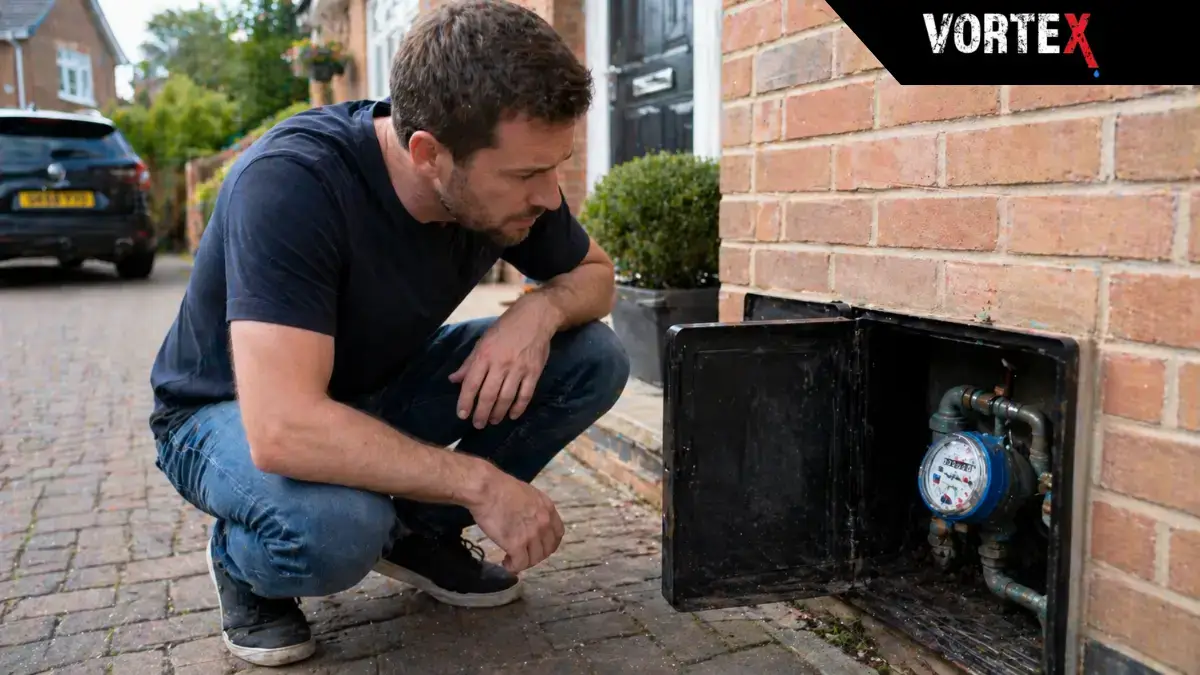

Suspecting a water leak but not being certain creates a particular kind of anxiety. You do not want to call a plumber or a specialist on the basis of a hunch and find that nothing is wrong. But you also cannot ignore signs that suggest something is happening. The good news is that five practical checks, most of which take under fifteen minutes and require no tools or specialist knowledge, can tell you whether water is leaving your system, roughly which type of leak is involved, and what information to have ready when you do call someone.
These checks are not a substitute for specialist investigation. They are the diagnostic starting point that tells you whether you have a problem worth investigating and saves you from either ignoring a real issue or overreacting to a false alarm.
| Quick Answer – Five home checks can confirm or rule out a water leak before you call anyone: the overnight meter test, the stop tap test, the boiler pressure check, a systematic visual inspection, and the toilet cistern dye test. Together they can confirm whether water is leaving your system, whether the loss is on the supply side or the internal plumbing, and whether the heating circuit is involved. They cannot tell you exactly where the leak is. |
Why Checking First Saves Time and Money
Running these checks before calling anyone gives you three things. First, it confirms whether a leak is actually present, which prevents unnecessary callouts for situations that turn out to be normal system behaviour. Second, it gives you information that helps the specialist or plumber you eventually call to focus their investigation immediately rather than starting from scratch. Third, it gives you confidence in the decision to proceed with investigation rather than continuing to tolerate symptoms that might indicate a serious problem.
The checks are also free. The only resource they require is a few minutes and attention.
Check One: The Overnight Meter Test
This is the most reliable first check for any suspected water leak. It confirms whether water is leaving your system when nothing is in use.
- Locate your water meter. In most properties it is in a small covered chamber set into the pavement or path outside the front of the property. In some properties it is inside near the stop tap.
- Before going to bed, turn off all taps, appliances, garden irrigation, and anything else that uses water. Make sure no one will use water overnight.
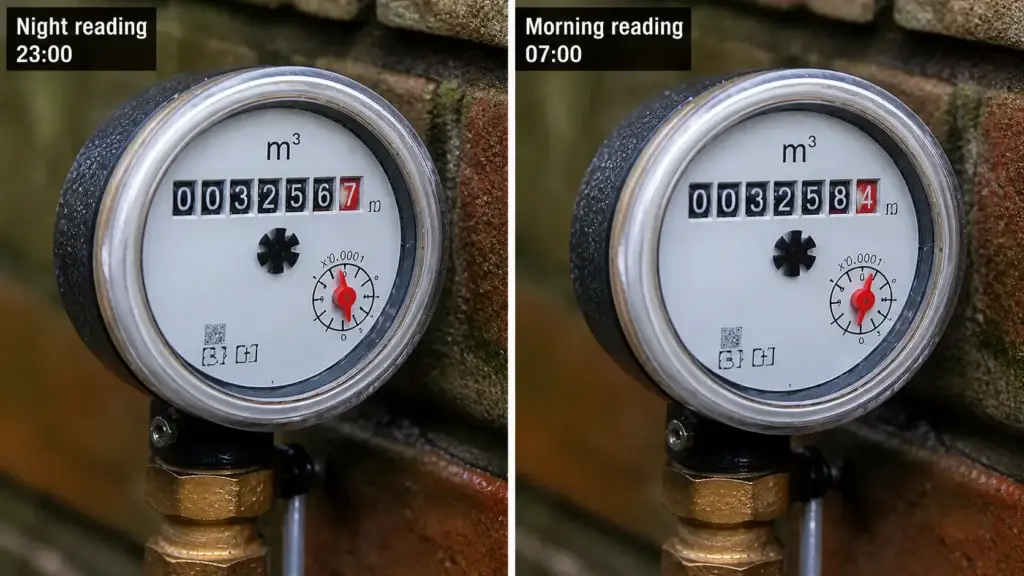
- Note the meter reading precisely, including all digits and any decimal places visible. Photograph the display if that is easier.
- In the morning, before any water is used, check the meter again.
- If the reading is the same as the night before, water has not left the system overnight. A leak is much less likely.
- If the reading has changed, water has left the system while everything was off. A hidden leak is the most probable explanation.
The size of the overnight movement gives you a rough sense of the rate of loss. A small movement suggests a slow leak. A large movement suggests a faster one. Either warrants investigation.
Check Two: The Stop Tap Test
If the overnight meter test shows movement, the stop tap test helps narrow down whether the leak is on the external supply side or the internal plumbing side.
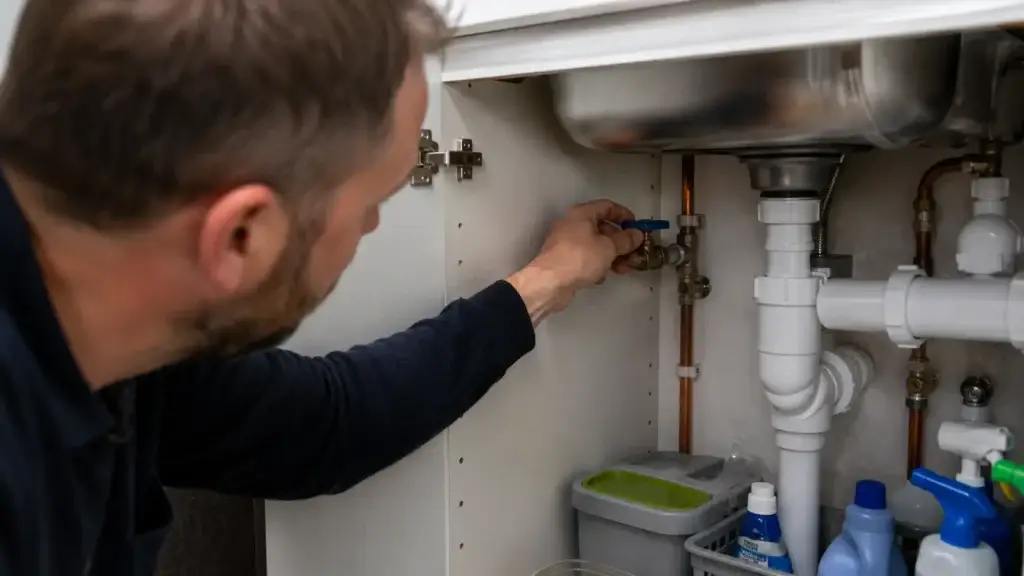
- Locate the internal stop tap. This is usually under the kitchen sink or where the supply pipe enters the building.
- Turn the stop tap off fully. For a gate valve, turn clockwise until it stops. For a lever valve, turn it perpendicular to the pipe.
- Note the meter reading.
- Wait 30 minutes with the stop tap off and no water used.
- Check the meter again.
- If the meter has moved with the stop tap closed, the leak is between the water main in the street and your stop tap. This is the buried supply pipe, and specialist acoustic detection is typically required to locate it.
- If the meter has not moved with the stop tap closed, the leak is within your internal plumbing. A plumber or specialist can investigate the internal system.
Note: if your stop tap does not close fully because it is old or partially seized, the result of this test may not be reliable. A plumber can test whether the stop tap is functioning correctly.
Check Three: The Boiler Pressure Check
This check is specific to sealed central heating systems and helps identify whether a leak is present in the heating circuit rather than the water supply.
- Locate the pressure gauge on your boiler. It is typically a circular dial or digital display on the front of the unit.
- Note the current reading. For a cold system at rest, normal pressure is between 1 and 1.5 bar.
- If the pressure is below 0.5 bar, the system has lost a significant amount of water.
- Repressure the system to the correct level following your boiler manual instructions.
- Check the pressure again after 24 to 48 hours without running the heating.
- If the pressure has dropped again measurably, the heating circuit is losing water somewhere. This is a heating system leak rather than a supply pipe or plumbing leak.
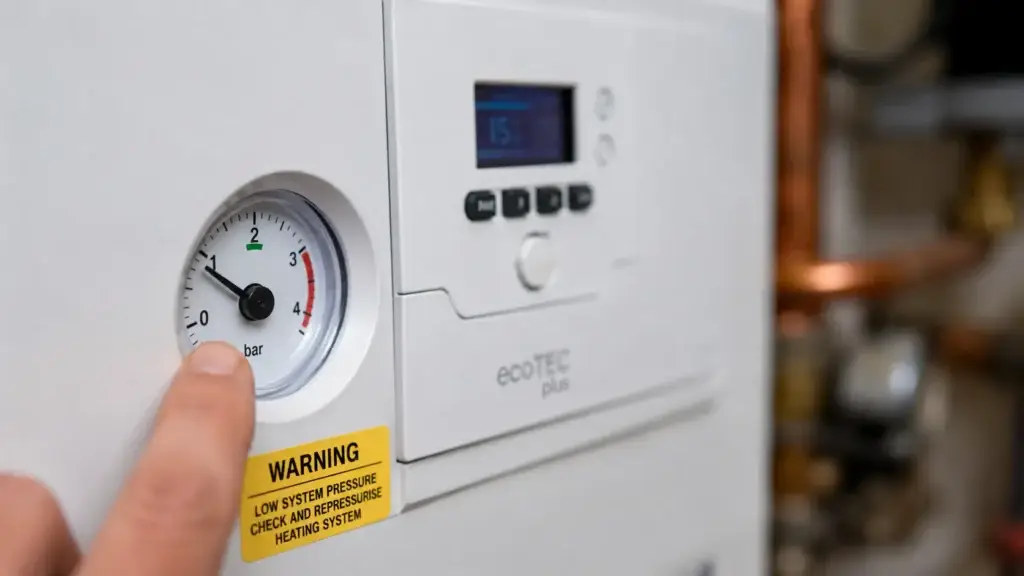
A pressure drop of more than 0.3 bar over 48 hours without any obvious cause such as recent bleeding of radiators is significant and warrants specialist investigation of the heating circuit.
Check Four: The Visual Inspection
A systematic walk around your property looking for specific signs takes ten to fifteen minutes and often confirms or changes the direction of the investigation.
Check outside: walk the route of the supply pipe from the boundary of the property to the building. Look for any soft, wet, or unusually green patches of lawn or any damp sections of path or driveway. In dry weather a patch of unusually lush growth above a buried pipe can indicate a slow supply leak feeding that area.
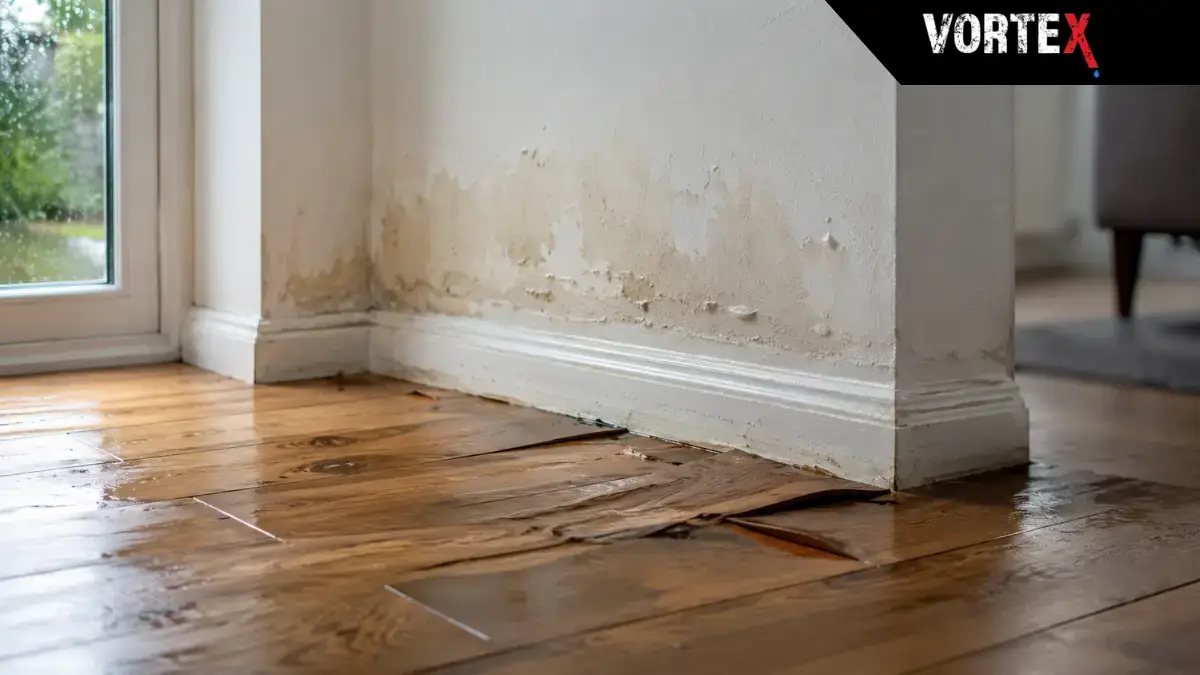
Check inside at floor level: press the heel of your foot firmly on the floor in different areas, particularly near where pipework runs. Any patch that feels noticeably softer, springier, or more yielding than the surrounding floor is worth noting.
Check inside at wall level: look at the lower sections of walls, particularly around skirting boards and at the base of walls where pipework might run. Any discolouration, soft plaster, lifting paint, or tide marks at a consistent height suggest sustained moisture from below.
Check under sinks, behind the bath panel, and under the washing machine for any moisture, mould, or water staining that suggests a slow surface leak.
Check Five: The Toilet Cistern Dye Test
A leaking toilet cistern is one of the most common causes of unexpectedly high water bills and elevated overnight meter readings. It is silent, invisible, and easy to miss.
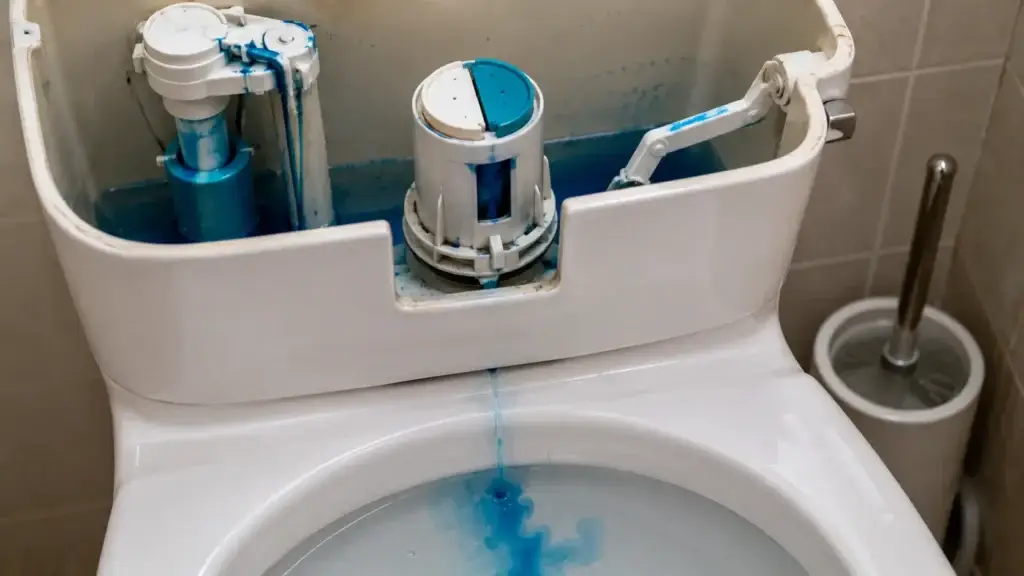
- Add five to ten drops of food colouring to the toilet cistern. Any colour works as long as it is not clear.
- Do not flush the toilet.
- Wait 15 minutes.
- Check the toilet bowl without flushing.
- If the colour has appeared in the bowl, water is seeping from the cistern through the flush valve into the bowl continuously. This is a leaking cistern and is causing your meter to move.
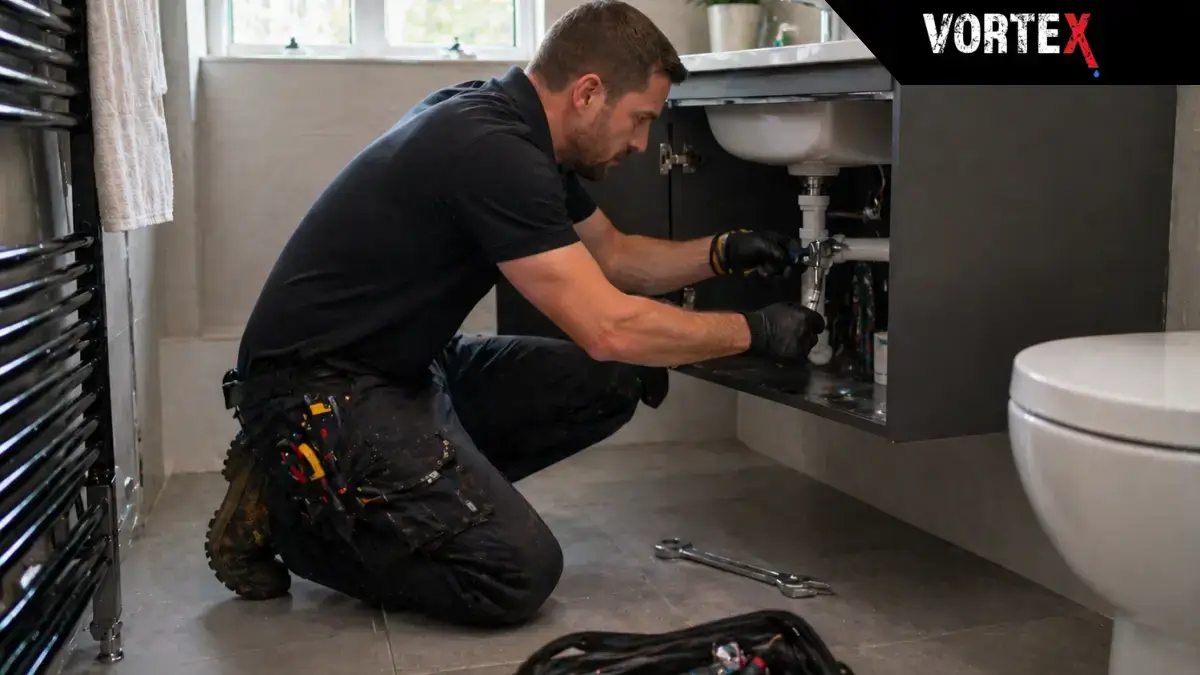
A leaking cistern is a simple plumbing repair. A plumber can replace the flapper valve or flush valve typically within an hour. If this is confirmed as the source of your meter movement, a specialist leak detection investigation is not required.
What Your Results Mean: Reading the Pattern
| Test Result Pattern | Most Likely Cause | Recommended Next Step |
| Meter moves overnight + stops when stop tap closed | Internal plumbing leak within the property | Plumber to inspect internal system; specialist if no visible source found |
| Meter moves overnight + continues with stop tap closed | Mains supply pipe leak between street and stop tap | Specialist acoustic and tracer gas investigation of supply pipe |
| Meter does not move overnight | No continuous water leak from supply or plumbing (heating and cistern still possible) | Check boiler pressure and run cistern dye test |
| Boiler pressure drops repeatedly | Hidden heating circuit leak | Specialist thermal imaging and acoustic investigation of heating system |
| Cistern dye test positive | Leaking toilet cistern | Plumber to replace flush valve |
| Soft floor patches + meter movement | Internal plumbing or underfloor pipe leak | Specialist detection with moisture mapping and thermal imaging |
| Wet ground above supply pipe + meter movement | Mains supply pipe leak with surface evidence | Specialist acoustic and tracer gas investigation; evidence supports diagnosis |
What These Checks Cannot Tell You
These five checks are a starting point, not a complete investigation. There are important things they cannot confirm.
They cannot tell you the exact location of a hidden leak. The meter test confirms water is leaving the system. The stop tap test narrows it to supply-side or internal. But neither can tell you which section of pipe has failed or where within that section the failure has occurred. For that, specialist detection equipment is required.
They cannot confirm a leak is absent with certainty. An intermittent leak that does not run during the overnight test period will not be detected. A very slow leak may produce a movement too small to notice on the meter display. A heating circuit leak will not appear on the water meter at all.
They cannot assess the extent of any structural damage that may already have occurred. A hidden leak that has been running for months may have caused significant damage to building materials that is not apparent from visual inspection.
If the checks produce a positive result, specialist investigation is the appropriate next step. If the checks are negative but your concern remains based on other symptoms such as a high water bill, a damp smell, or soft flooring, those symptoms still warrant professional assessment.
When to Stop Checking and Start Calling
Stop running self-checks and call a professional when any of the following apply.
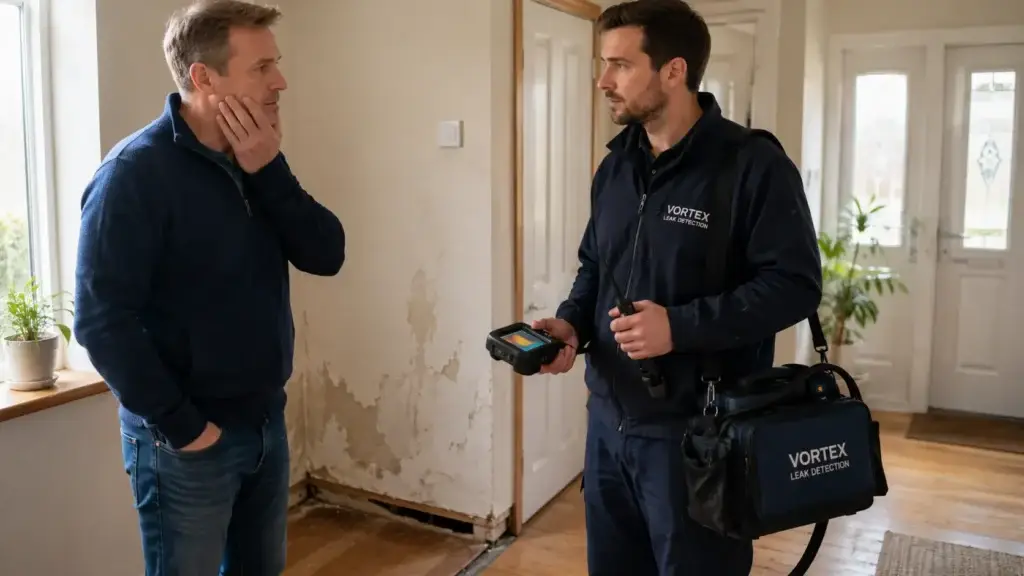
- The overnight meter test has confirmed water movement and no simple cause such as a leaking cistern has been identified
- The boiler pressure has dropped again after repressuising
- You have found soft flooring, damp skirting, or unexplained moisture during the visual inspection
- The meter continues to move with the stop tap closed, pointing to a supply pipe leak
- You have already checked multiple times and the results are inconclusive or contradictory
- Any symptom is worsening or a new symptom has appeared
What to Tell a Specialist When You Call
The information you have gathered from these checks is valuable to the specialist and allows them to focus the investigation immediately. When you call, be ready to describe:
- The results of the overnight meter test: how much movement was recorded and over what period
- The result of the stop tap test if you ran it: whether the meter continued to move with the tap closed
- The current and recent boiler pressure readings and how quickly the system is losing pressure
- Any soft patches, damp areas, or other visual signs you found and where they are located
- How long the symptoms have been present and whether they are getting worse
- The approximate age of the property and any recent plumbing or building work
What to Do Next
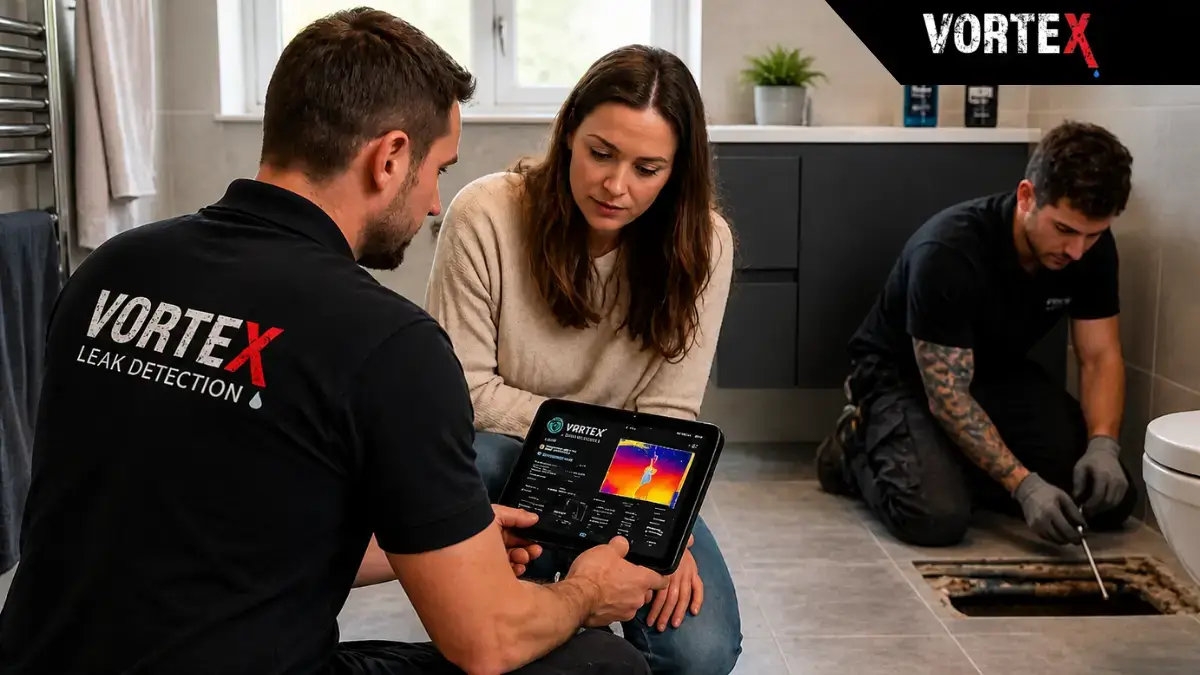
If your checks have confirmed or suggested a hidden water leak, the Vortex Leak Detection team can investigate using specialist equipment to identify the source precisely. Get in touch with the results of your checks and we can advise on the most appropriate type of investigation for your situation.